
Journalist Chelsea Conaboy discusses her book “Mother Brain”
October 23, 2026
 Abigail Hebert
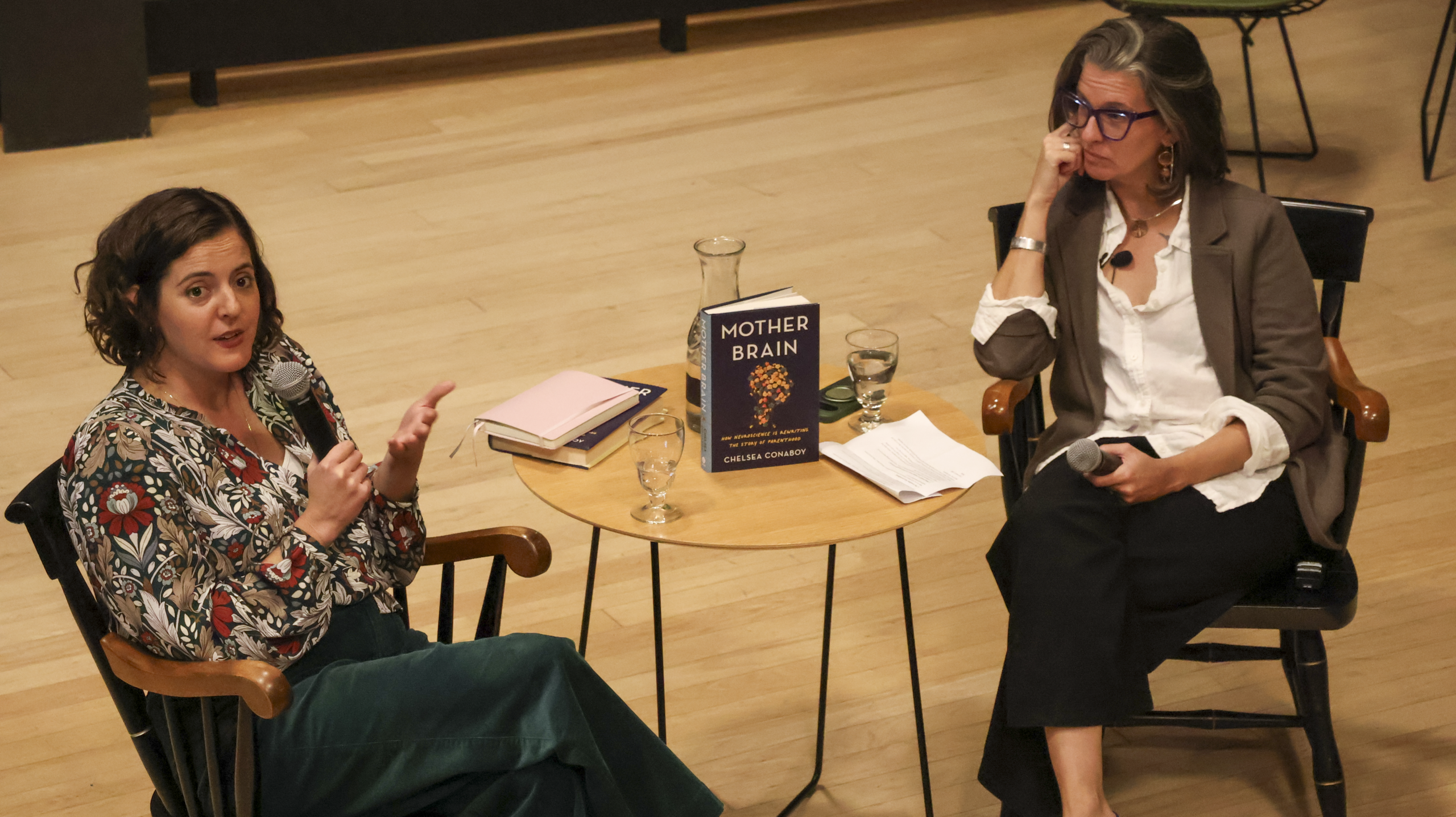
On Thursday evening, health and science journalist Chelsea Conaboy discussed her book “Mother Brain: How Neuroscience is Rewriting the Story of Parenthood” in the Roux Lantern Room. Conaboy spoke with Paula Norcott, founder of Maine Mother and Company, about changes that occur in the brain during parenthood.
Associate Professor of Neuroscience and Psychology Erika Nyhus invited Conaboy to speak on campus after reading “Mother Brain” in a book club.
“For me, [the book] was very interesting because I both have children and then also have a perspective from neuroscience,” Nyhus said. “The book makes neuroscience really accessible to people who are not neuroscientists.”
Conaboy has an extensive background in science writing, particularly in health. She used her journalism skills to understand the hard science when writing the book.
“When I started writing this book, I hadn’t really written about neuroscience at all,” Conaboy said. “But I think I had the right interview skills and research skills and the humility to know what I didn’t know and how hard I had to work in order to learn [the material] before I could explain it to someone else.”
Conaboy also recalled the story of why she started to write “Mother Brain” after her first child was born.
“I was ready to be a parent. I was still completely blindsided by the experience of new parenthood, and went looking for something that could tell me what was happening,” Conaboy said.
Starting the discussion, she explained that the concept of “maternal instinct” is cultural disinformation rather than a scientific fact.
“It comes from religious ideas of what a woman and mother [are] that were embedded into early psychology in the early part of the 20th century and that have been repeated over and over again in different forms by a long list of experts who have peddled this idea,” Conaboy said.
Backed up by updated research, Conaboy then went on to discuss studies in her book on hormones that cause changes in the parents’ paternal brains.
“The dramatic changes in brain hormones that we experience during pregnancy or in exposure to children make the brain more plastic, and then we’re exposed to babies who are these intense stimuli for the brain. In the very early months postpartum for parents, research shows pretty dramatic changes in function and structure in brain areas that are related to meaning-making and hypervigilance. So our brains are really driving us to pay attention to a baby,” Conaboy said.
Beyond science, Conaboy and Norcott spoke about the barriers in identifying risk factors for postpartum depression and providing quality care. They’ve found that current standards often rely on insufficient screening tools and brief appointments.
“Our standard of care is one visit at six weeks postpartum with a pretty lousy screening tool for postpartum depression…. It’s barely a visit. And to me, what we’re missing is time and conversations, and not just ‘How’s it going? Okay, great.’ It should be like, ‘No, really. How are you?’” Norcatt said.
To improve outcomes, the pair suggested moving toward collaborative care models where various specialists such as dietitians, lactation consultants and therapists work together to provide more holistic care.
“The idea of collaborating makes everybody better, and I do see it happening more and more,” Norcott said.
Neuroscience major Sofia Bacolas ’28 came to the talk expecting to hear mostly about the mechanisms of how pregnancy, childbirth and childcare impacts women’s brains, but ultimately thought hearing perspectives from mothers such as Conaboy was important.
“Hearing from Conaboy was interesting given that she didn’t have a pure science background,” Bacolas said. “At times, I wished she could go into more detail about the mechanisms of how pregnancy, childbirth and childcare changes women’s brains. However, I still think it was important hearing her perspective as a mother having gone through this experience and wanting to educate and advocate for others.”
Comments
Before submitting a comment, please review our comment policy. Some key points from the policy: