
Conversion therapy
November 13, 2026
 This
piece represents the opinion of the author
.
 Mia Lasic-Ellis
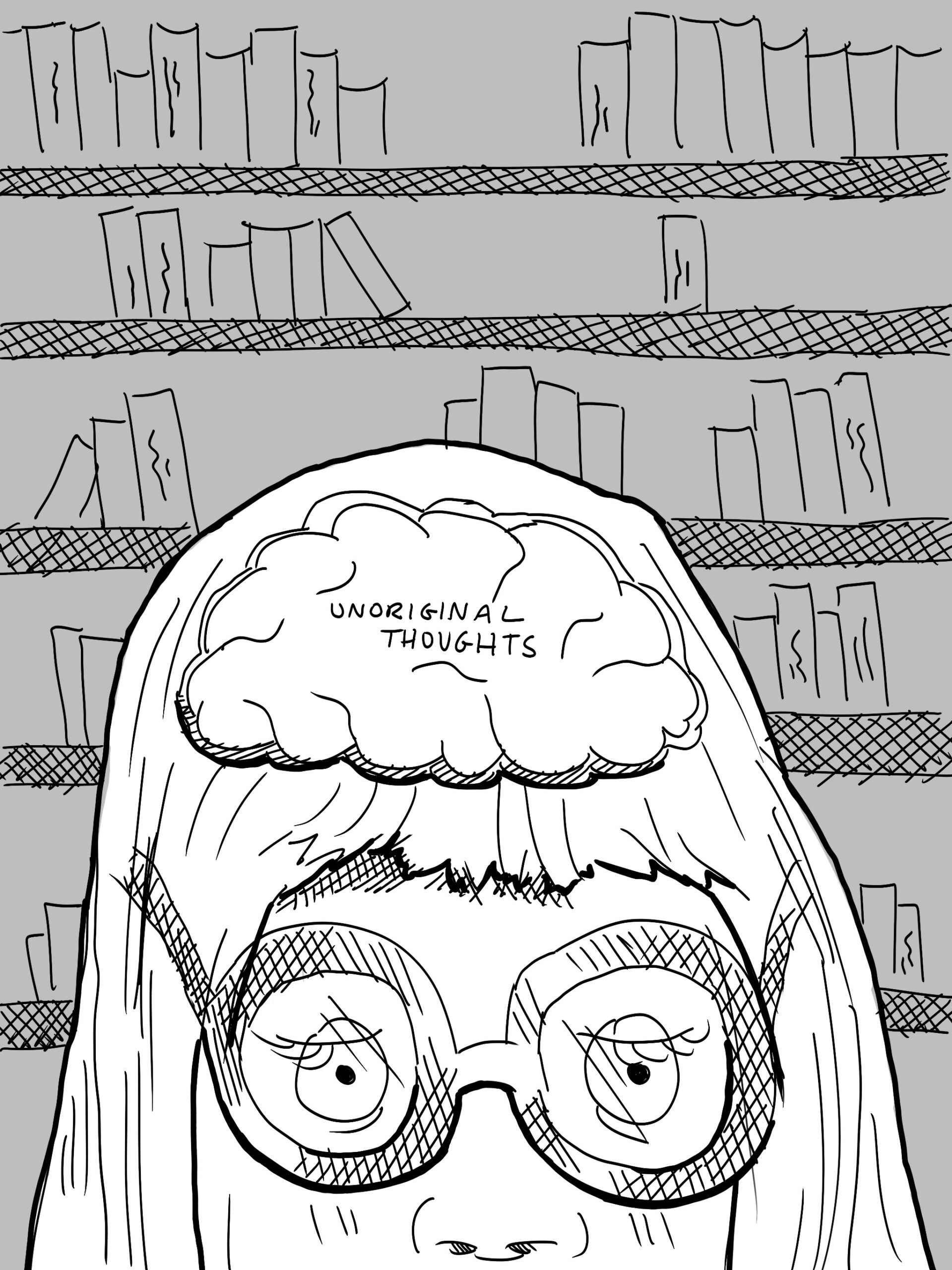
Indoctrination is an extremely polarizing term. To older folks, it may give flashbacks to Duvalier or Ceaușescu, figures who were able to shape the upbringings of an entire generation in order to align them with their dictatorial goals. In the present, I’ve heard constant debates about libraries indoctrinating children by allowing access to “suggestive” material. Either way, the consensus seems to be that since indoctrination subverts the agency and rationality of another person, it is deserving of its stigmatized status. I’m not here to say that Bowdoin is shielded from indoctrination. In fact, it is just as infused as all the other institutions around the world. Not only am I satisfied with the indoctrination that I soaked up from my professors, I wouldn’t have it any other way.
I’ll use Professor Peggy Wang as an example. When I enrolled in ARTH 1605: The Body in East Asian Art with Professor Wang, I was unprepared for the emotional roller coaster that laid before me. Over 15 weeks I learned about Shintoism, Terracotta warriors, Tori Gates and, most importantly, visual analysis. Professor Wang clearly came to class brimming with experience deciphering and contextualizing the world around her. If you’ve had the pleasure of taking the class, I’m sure you know how frustrating—then rewarding—the experience of writing your visual analysis essay on Buddhist reliefs can be. Through the class, Professor Wang taught me how to see.
The Oxford Dictionary defines indoctrination as “the process of repeating an idea or belief to someone until they accept it without criticism or question.” While I agree that repetition was a tenet to her success, Professor Wang never stifled any criticism or questioning of her teachings. In my mind, her encouragement of dissent only strengthened her charm. Of course she had a narrative arc through the class, leading us to consider our bodies—spiritually, spatially, culturally and physically—and in the end, there was a conclusion (surprise: We shape spaces and spaces shape us). However, this repetition, this indoctrination, encouraged me to be more reflexive, which, as I understand it, seems to be antithetical to traditional indoctrinatorial stereotypes. Because of Professor Wang, questioning became instinctual, and pausing became habitual. Does this count as its own form of indoctrination? If so, that’s OK by me.
Another reason I’m so pleased and content with the “indoctrination” I received from Bowdoin is because it made me kinder. It’s so easy to think of things in black and white. When I came into Bowdoin, people would say things like, “gender is a social construct,” and I would roll my eyes!! What do you mean, “a social construct?!” I was mentally preparing for four years of pretending to go along with all the idealistic progressive ideals Bowdoin purported. However, once I was able to let my guard down and listen to my professors (who spent more time studying than I’ve been alive), SHOCKER, I was able to expand my awareness and perspective.
I recall reading the art history learning goals, and something that clicked for me was to “challenge the initial subjective response to a work of art by exerting effort to inform themselves about cultures and art traditions that are unfamiliar to them.” This still gags me to this day. Even asking a person to challenge their initial subjective response to a work will usually elicit some hostility; however, what really stuck with me was how faculty members at Bowdoin are sincere in their campaigns to expose students to foreign and uncomfortable topics and ideas. I think it’s a privilege to have pluralism, critical thinking and intersectionality banged into your head for four years. It’s better this than prejudice. In the end, I emerged as a more patient and open-minded person than when I entered.
All in all, you can never escape indoctrination. Whether you go to Bowdoin, Hong Kong International School, West Point or no college at all, people in power will always try to pass down values and morals that are important to them. I’m just glad that I was force-fed love.
Neiman Mocombe is a member of the Class of 2026.
Comments
Before submitting a comment, please review our comment policy. Some key points from the policy: