
Consider the photo
April 17, 2026
 Mia Lasic-Ellis
“Debí tirar más fotos de cuando te tuve / Debí darte más besos y abrazos las veces que pude.”
Undoubtedly, Bad Bunny is one of the most popular musical artists in the world right now. He has been named Spotify’s Top Global Artist four times in the last five years, accumulating over 125 billion total streams and over 106 million monthly listeners. He even performed at this year’s Super Bowl, if you hadn’t heard. But he is no photography expert, contrary to what the title of his sixth studio album and corresponding hit single might suggest. Indeed, “DeBÍ TiRAR MáS FOToS” has little to do with photography specifically and is far more concerned with general themes of memory, nostalgia and identity. Of course, the album also has political implications, but those, sadly, fall beyond the scope of this essay. Or maybe not, you’ll have to let me know.
“I should’ve taken more pictures when I had you / I should’ve given you more kisses and hugs whenever I could.”
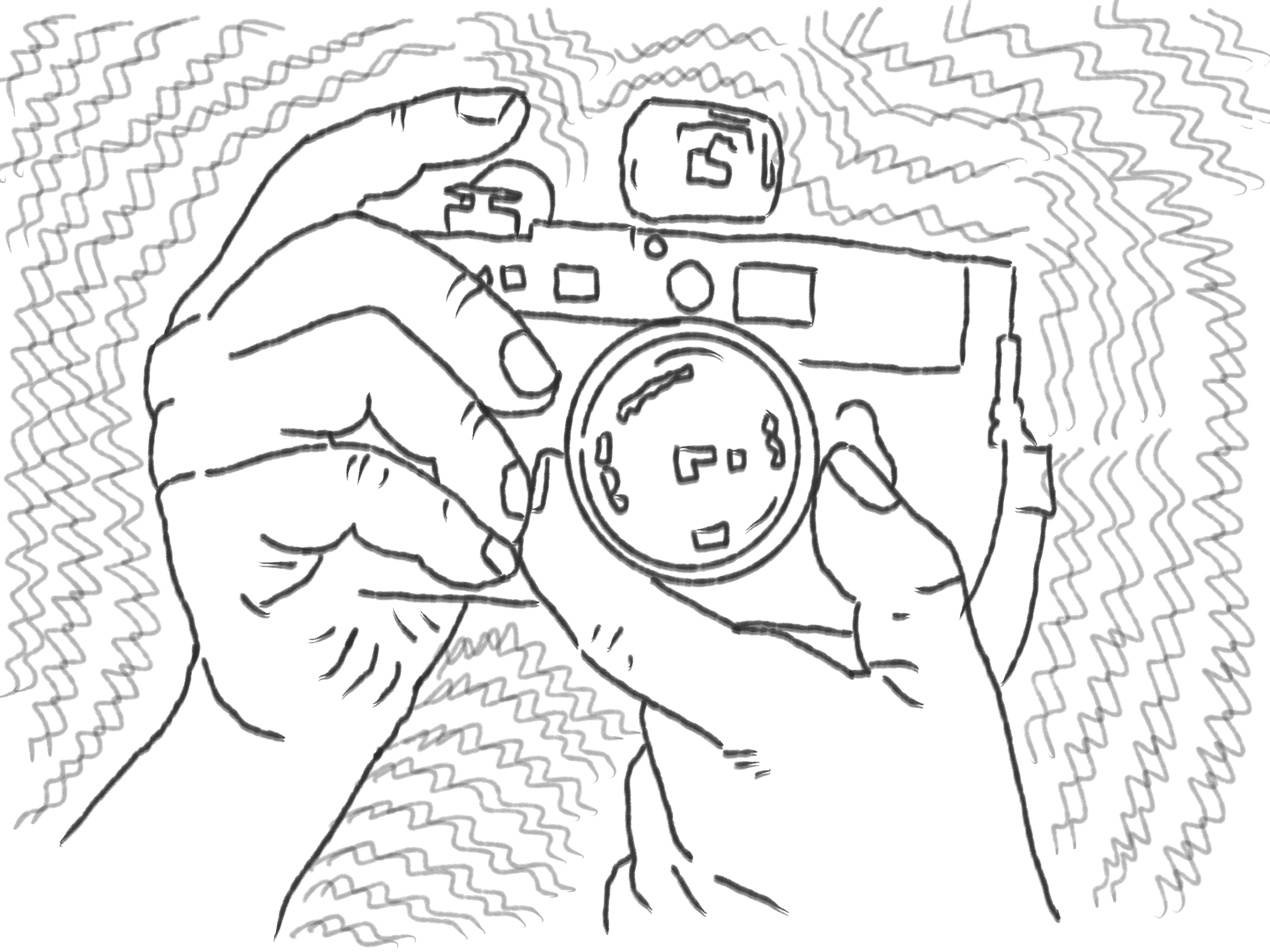
Like Bad Bunny, I too sometimes feel I should have taken more pictures. Especially now, as I inch ever nearer to the end of my time here in college, I wonder if I would be better off with more pictures to enjoy. Would I be able to remember experiences more vividly? Would I have noticed the little things more frequently? Would I be more connected to the people and places around me? Would I be more comfortable with and sure of myself? One of the most common critiques of photography is that it removes us from the present moment. While I am inclined to agree, such critiques often stop short of explaining why this matters.
When we turn our attention toward the act of taking a photograph, we do more than momentarily step away from the present—we alter our future relationship to that experience. Although we may later return to the image, our absence from the moment itself limits our ability to fully recognize what we are seeing. The photograph comes to represent not only a time that has passed but a time we never fully inhabited in the first place. And beyond freezing its subject, the act of photography also isolates its author, setting them apart from the experience, if only briefly. Yet, even these brief interruptions are not insignificant; they fundamentally reshape our participation in the world.
We still look to photographs to be reminded of ourselves and our existence in the world. At first glance, a photograph might seem to capture the subject truly, but what it actually reveals is the photographer’s perspective. Small choices, such as framing, timing, lighting and subject matter reflect what the photographer values, what they notice and generally how they see the world. If anything, the subject is merely an instrument of the photographer’s own representation of themselves. A photograph, like any artistic medium, can never be purely objective; it is always, in some sense, a self portrait.
Thus, to photograph something is not to know that thing. The process might just alienate you, the author, from the subject, eliminating any possibility of exchange or understanding.
This might not always be the case. Photography can present opportunities for interpersonal communication that might otherwise be impossible. During her career, Diane Arbus learned “the camera is a kind of passport that annihilates moral boundaries and social inhibitions, freeing the photographer from any responsibility toward the people photographed. The whole point of photography is that you are not intervening in their lives, only visiting them.”
As a summer intern at a marketing and event planning agency, I encountered this aspect of photography firsthand. Tasked with composing weekly Instagram posts to promote the program, I was also responsible for photographing the concerts each week, which quickly became one of my favorite elements of the internship. As Arbus suggests, being “the photographer” grants a kind of permission, allowing you to enter the personal space of strangers and ask questions they might not otherwise entertain. I came to appreciate this suspension of ordinary social barriers, and I had countless conversations that summer that I will remember—all because of my role as the event photographer.
What photographs can do, however, is gesture toward something that once was. They remind us not of the moment itself but of our distance from it. And in doing so, they reveal the limits not only of photography but of memory as well. The greater risk, then, is not that we take too few photographs, but that we begin to orient our lives around them, that we substitute documentation for experience and confuse the image with the thing itself.
So perhaps Bad Bunny is right: I should have taken more photos. Not because they could have saved those moments, but because the impulse to take them reflects something fundamental: our resistance to the passage of time.
And yet, no image can fully arrest what is always already slipping away.
In the end, it is not the photograph that preserves the moment, but the moment that gives the photograph its meaning.
Michael Bagnoli is a member of the Class of 2026.
Comments
Before submitting a comment, please review our comment policy. Some key points from the policy: