
“Love Drought” by Beyonce
February 19, 2026
 This
piece represents the opinion of the author
.
This
piece represents the opinion of the author
.
 Celeste Mercier
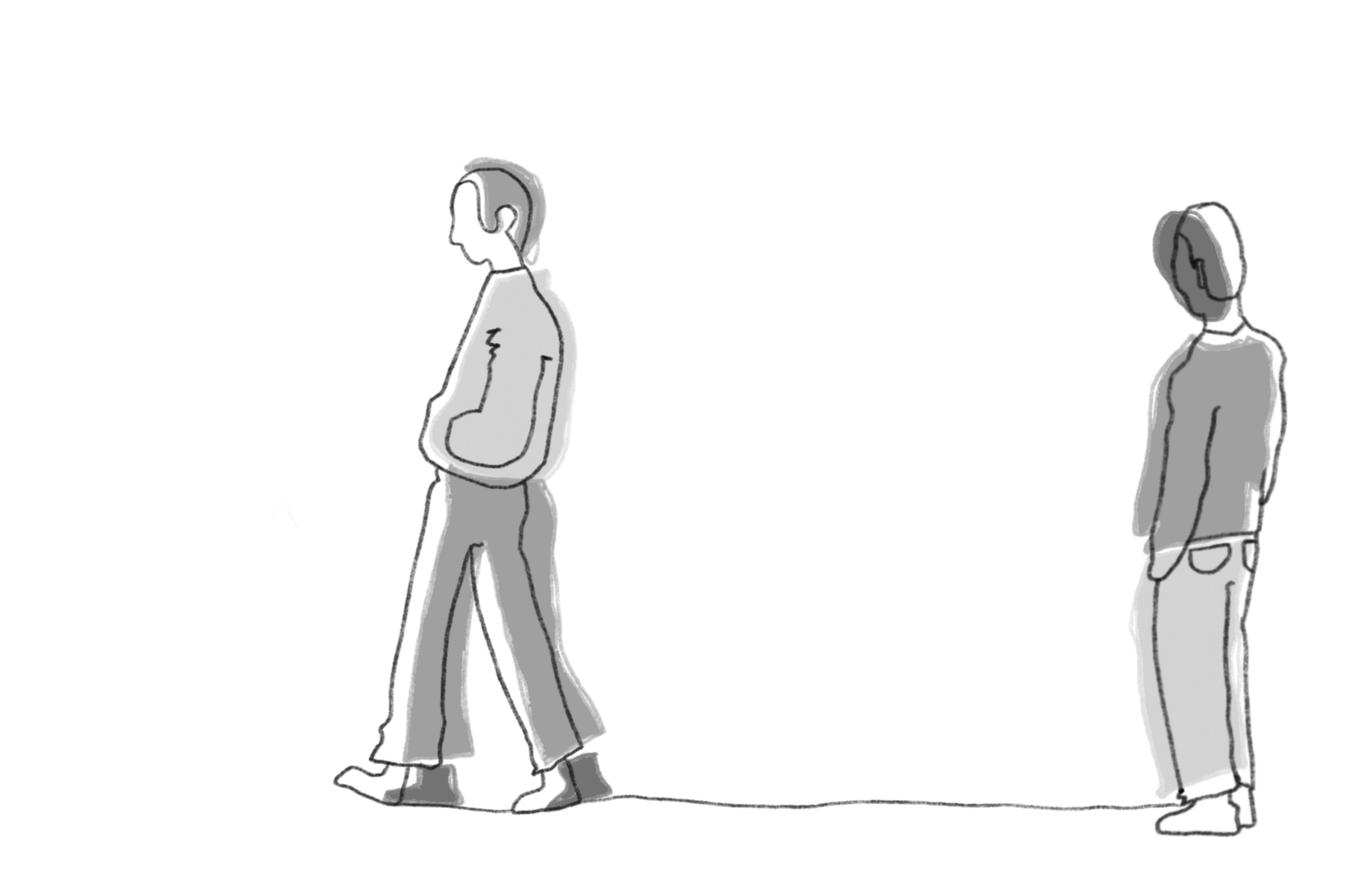
During my six semesters here at Bowdoin, I’ve become all too familiar with the ebbs and flows of the social life here. People make up, break up, make out and everything in between. Because many people spend time with certain friends and friend groups, the bonds they share run deep. If one friend throws up on another, yells at another or is codependent on another, these things can be rationalized and accepted in the name of preserving the group’s peace and stability. That said, people still have limits. There comes a point when a person’s actions can make them a pariah. To preserve the continuity of the community (or the peace of the individual), there usually comes a point when one must remove access from another. I’ll call this the cutoff. Obviously, this is not a Bowdoin-specific phenomenon. However, I think Bowdoin has provided us with a wonderful test case of when, how or why we decide to cut off some people from our lives.
First, just like everything else, cutoffs are subjective. For me, rape and sexual assault are enough for me to distance myself from another person. I don’t need to hear your thought process, your sobriety level—none of that really matters to me because in my mind, rape is wrong. To my surprise, the title of rapist, sexual assaulter or Title IX offender isn’t a scarlet letter here on campus. Many people who are known offenders still have very healthy social lives with men and women. Whether it’s rape, the use of racial slurs, theft, gossip or abandonment, everyone has an internal limit of what is unacceptable. One of the hardest things for me to accept has been the fact that my limit is my own; it’s not shared. This sense of dread really sets in when there is tension within a group. If you are in a friend group, there is a certain understanding of honesty. You can invite these friends into your home, tell them your secrets, share your location with them, the works.
There comes a point where the ties that bind become strained. Maybe one person shared sensitive information, maybe someone cheated on another; there are endless scenarios of why a person would want to sever a relationship with another. However, since this severance takes place in a group setting, I’ve realized that lines are drawn in the sand between those who are willing to accept a certain attitude or action and those who are not. This divorce is painful. You reflect on the times that you had together, thinking that you had found your people, like-minded individuals, but after such a rupture, it’s easy to second-guess the authenticity of the relationship you once had.
One thing that I believe has been consistent in the cutoffs, however, is inequity. If you’re dealing with a rich ass b-tch, most people let them get away with things that they shouldn’t. During my reflection, I’ve realized that I hold women to a higher social standard than men. To no one’s surprise, I don’t expect much from men to start. Because of that cynicism, though, I unconsciously have lowered my tolerance for “unacceptable behavior” (behavior that is worthy of being cut off) and unfairly judged women more harshly than men. This is obviously problematic, but I’m happy I could at least acknowledge it in my life and move forward, giving women the grace they deserve.
I’ll close with a bit of optimism. As a b-tch who’s cut b-tches off on this campus, I understand how empowering it feels. They hurt you, and in turn, you hurt them. It feels righteous, you feel validated and the people around you are cheering you on. That said, I do think that there are healthier ways to resolve such conflicts. The stress and anxiety you experience post-cutoff is terrible. There’s no reason you should feel a shock to your nervous system when you see or hear about a certain person or group. And the biggest reason of all for avoiding the cutoff is that it eliminates the possibility of redemption. If we condemn a person based on an action, then that unfairly limits their potential for growth and reform. Again, I’m saying this as someone who cuts b-tches off—this is a “do as I say, not as I do” thing! I’m working on it too! I know, deep down, that there are more mature ways to navigate tumult in our relationships and to ensure they thrive long after we graduate from Bowdoin. But, believe me, I understand how difficult it can be when dealing with unfavorable characters.
Neiman Mocombe is a member of the Class of 2026.
Comments
Before submitting a comment, please review our comment policy. Some key points from the policy: