
On the campaign trail with Graham Platner
April 23, 2026
 Courtesy of Maiara Rebordáo
The Democratic primary was never supposed to be close. And for months now, it hasn’t been—just not in the way that most people had predicted when rumors began to circulate that Gov. Janet Mills was planning to challenge Sen. Susan Collins for one of the country’s most hotly contested U.S. Senate seats in 2026.
Over the past few months, Graham Platner, an oyster farmer and community organizer, has emerged as an unlikely frontrunner in an election that has captivated reporters, small-dollar donors and members of the Bowdoin community. Last week, The Bowdoin Orient spent an evening shadowing Platner on the campaign trail.
In the backseat of a truck (and during a brief detour to Advance Auto Parts) driving between two packed events—a meet-and-greet in Yarmouth and a town hall on campus—Platner spoke to the Orient about his upbringing, his time in college and his thoughts on how to reach young people in today’s political environment.
A son of eastern Maine, Platner was born in Blue Hill, raised in Ellsworth and Sullivan and graduated from John Bapst Memorial High School in Bangor.
“It was an idyllic childhood. We had the ocean on one side of the house and unbroken forest on the other,” Platner said. “I don’t know how old we were when my mom first took us blueberry raking, but it was silly young. We always worked. My mom had a smoked salmon business with my stepdad and ran a bed and breakfast.”
After high school, Platner enlisted in the Marine Corps against his parents’ wishes and deployed on three successive tours to Iraq. He then enrolled at George Washington University on the GI Bill but struggled to find his place.
“A lot of my buddies were still deploying. So that’s when I reenlisted, because I just felt so out of place,” Platner said.
After his fourth (and final) tour with the Marines, this time to Afghanistan, Platner returned to college. The toll of combat made the transition back to school challenging.
“I was drinking a lot.… I either got As, or I had dropped classes,” Platner said.
But he still found meaning in several classes he took for his history major.
“[It’s] when I first got exposed to the writings of Edward Said around Orientalism—a deeper anticolonial critique and an anti-imperial critique—I suddenly began to see,” he said.
A class on the history of Indochina was especially fascinating for Platner and pushed him to question his foreign policy views.
“It’s like the f**king justifications [for war] are the same. And the way that the violence is used is the same. And I was like, ‘Oh, so we were just engaged in a colonial war,’” Platner said.
Struggling with post-traumatic stress disorder and depression, Platner didn’t complete his second stint at college and moved back to Maine. He bought a house and began oyster farming upon his return, building his own business and becoming the harbormaster of Sullivan, the 1,219-person town where he grew up. It was back in Maine that Platner also took up community organizing, joining the Penobscot chapter of the Maine People’s Alliance, a progressive community organization.
With a number of fellow activists in eastern Hancock County, Platner started Acadia Action, a grassroots group focused on social and economic justice. He attended events with the Maine American Federation of Labor and Congress of Industrial Organizations (AFL-CIO) and built Acadia Action into a mutual aid hub in Hancock County. Platner’s deep roots and experience made him a prime candidate for local office—he had reportedly turned down previous requests from local activists to run for the state legislature.
But when progressive campaign strategists Daniel Moraff and Leanne Fan approached Platner last summer in Sullivan to ask if he’d consider running for U.S. Senate, he reached a different decision.
After deliberating with family and friends, he agreed to run, knowing that it would be far from easy.
“We worked really, really hard to build [this] really fulfilling life, and it brought us a lot of joy, and we knew that the moment we said yes to this thing, no matter where the future goes, we’re not going back to a totally simple life,” Platner said to attendees at his meet-and-greet in Yarmouth.
The course of the primary campaign seems to have proven him right.
 Courtesy of Maiara Rebordáo
As a veteran of the Iraq and Afghanistan wars, Platner’s campaign rhetoric is inflected with the vocabulary of combat.
“I’m not afraid to name an enemy, and the enemy is the oligarchy,” Platner said in his campaign launch video.
And as unsavory revelations about Platner’s past have come to light, he’s leaned on his service to offer voters an explanation.
“When I got out, I still had the crude humor, the dark feelings and the offensive language that really was a hallmark of the infantry when I was in it,” Platner said in a reference to past comments he made on Reddit.
Platner is not the first candidate to contend with an unflattering past on the campaign trail. What seems to set him apart—to the fascination of national media—is that each new revelation has done little to shake Platner’s support, despite the best efforts of Mills, his primary opponent, who has eagerly seized on some of his most incendiary remarks. In many ways, the barrage of attacks on Platner’s past has only burnished his credibility as an outsider candidate.
“I cannot tell you the amount of folks who have come up to me over the past few months, who were like ‘You know, the moment I knew that you were not full of sh*t was the moment they came after you,’” Platner said.
However, Platner does not believe that his past makes him uniquely able to connect with young men, a demographic whose support for Democrats has declined in recent years.
“I definitely don’t think I’m uniquely qualified for it. I do understand that because of my journey, I think my voice on the issue can be more accessible, just because I’ve been angry on the internet as a younger man,” Platner said. “I get it. I also get that it wasn’t anger on the internet that got me out of it. It was quite literally, community. It was building healthy, normal relationships with people.”
Platner lamented what he saw as the incoherence of a political system that treats comments like his as disqualifying while hemorrhaging youth support.
“I do think that it is ironic that we consistently talk about this, and they just did it to Hasan Piker, right? They’re all like, ‘How do we reach young people?’ And then the moment there’s a younger person who isn’t their exact perfect version, they’re like, ‘Absolutely not’. Well, that’s not gonna work, man. People are imperfect,” Platner said.
“You want to try to be accessible? You’ve got to be f**king compassionate and empathetic and forgiving in some ways. But we have a political system that doesn’t actually want to reach those people or any people, for that matter. They just want to complain as they slowly lose power,” Platner said.
Polling indicates that Platner’s response to this controversy has done little to shake his support. Since a week-long stretch of controversy and turnover on Platner’s campaign last October, his lead over Mills has only grown, widening to 27 points in the most recent outside survey of the race.
In the last few weeks, he’s landed an endorsement from Sen. Elizabeth Warren (D-Mass.), raised more money than both Mills and Collins and released a slew of TV ads as Mills pulled hers from the air. The success of his campaign even led to Sen. Chuck Schumer (D-N.Y.) reportedly making peace with Platner winning the Democratic nomination over Mills, a candidate he recruited.
Andy O’Brien, the communications director of the Maine AFL-CIO and former Maine State Representative, attributed Platner’s resilient support to his campaign style.
“If you feel like you know somebody and you’ve met them and looked them in the eye, it helps inoculate you in some ways, particularly [with] a person like [Platner], who comes off as very authentic, very sincere,” O’Brien said. “[Platner’s] not afraid to take questions. He doesn’t dodge voters like Mills and Collins. The [attack] ads don’t necessarily work because Maine is a different kind of state.”
Amid Platner’s rise, national media reporting has zeroed in on this election as a key gauge of the Democratic electorate’s appetite for a new crop of more combative candidates under the second Trump administration. Journalists have seized on the stark contrasts in this race—old versus young, establishment versus outsider and, to a lesser degree, moderate versus progressive. And for good reason—few elections this cycle exemplify these differences as well as this one. But crucial policy differences between Platner and Mills may also explain why Maine Democrats favor an outsider candidate with sizable baggage over a twice-elected governor.
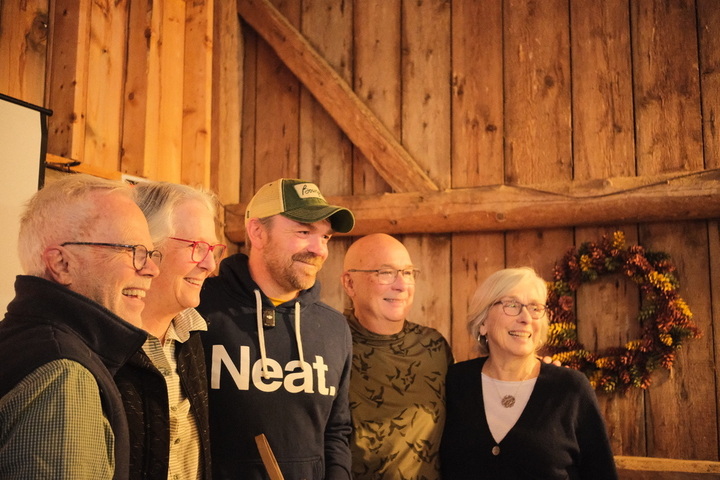
At a meet-and-greet at a barn in Yarmouth, an attendee asked Platner to detail some of these differences. He identified three: tribal sovereignty, taxing the rich and organized labor.
“The first bill I want to put in in the Senate is a companion bill to [H.R. 6707], the one Rep. Jared Golden put in a few years ago, which would extend for the Wabanaki Nations of Maine the same tribal sovereignty powers that all other 570 federalized tribes have, but it was killed in committee in the Senate because neither of Maine’s Senators would show up to support [the bill],” Platner said.
“I think we can get that done. I also think it’s a moral imperative. The governor has opposed expanding tribal sovereignty literally every single time,” he said, presumably referencing Mills’ vetoes of bills affirming tribal sovereignty in 2023 and 2025.
The campaign trail seems to have only amplified this contrast. Platner, along with candidate David Costello, attended a candidate forum held last weekend by the Wabanaki Alliance. Mills was invited but declined to attend, as did Susan Collins.
But no issue seems to highlight this contrast between Mills and Platner as much as the question of organized labor. Despite Mills’ stated pro-labor stances, including a pledge to support the Protecting the Right to Organize Act listed on her website, Platner has won every labor union endorsement made in the Democratic primary.
“We’ve endorsed [Mills] in the past. We’ve gotten some good reforms under her watch, but a lot of our most important priorities have been thwarted by the governor,” said O’Brien.
“One of our major issues with [Mills] was [her] refusing to reverse Governor Paul LePage’s tax cuts for the rich, which were directly taken out of state worker pensions…. We’ve put in bills to require a minimum wage and overtime for [farm]workers. The governor repeatedly vetoed [them],” O’Brien said. “She’s vetoed legislation to strengthen collective bargaining rights for teachers, firefighters and public employees.”
Other members of Maine’s labor movement echoed this sentiment.
“Nurses passed a gold-standard nurse-to-patient ratio bill with a bipartisan majority in the Maine State Senate in 2024. [Mills] actively opposed that bill and made sure that it could not pass in the Maine House. Her opposition was very disappointing,” Taylor Wescott, a registered nurse at Maine Medical Center in Portland and a member of the Maine State Nurses Association, wrote in an email to the Orient.
“[When] somebody like [Platner] comes around, it’s very exciting for union workers to have somebody fighting on our side,” O’Brien said.
Closer to campus, enthusiasm for Platner was clear. His town hall in Mills Hall was filled to capacity, with 80 attendees turned away.
But will this support translate to votes in the Democratic primary? Most graduating Bowdoin students leave Maine before alumni return for reunion. When asked if he had a specific message for students at Bowdoin—a largely out-of-state, transient demographic—Platner encouraged them to look at the national political landscape.
“It’s a U.S. Senate seat. U.S. Senate seats don’t just impact the state of Maine. U.S. Senate seats impact the future of the country. And more so, this is very much a movement building exercise. We’re doing it in Maine because we have the opportunity to do so,” Platner said. “And [if] we win with this kind of politics, and maybe we beat Susan Collins with this kind of politics…, we are showing that this is the politics of the future.”
“So it isn’t just about an impact on Maine. This is about building an entirely different vision of America’s future,” Platner said.
On Bowdoin’s campus, Henry Risch ’28 and Ian Bridges ’28 are leading the charge to get students on board with this argument. Risch, a South Portland native, is employed by the Platner campaign as a student fellow. He supervises other student volunteers, such as Bridges, liaises with the campaign regularly and hosts weekly meetings with Bowdoin Students for Graham, an unofficial group supporting the Platner campaign.
Maine’s Democratic primary will be held on June 9, weeks after campus housing closes and most students leave Maine for the summer—which is a crucial obstacle to their work.
“We’re trying to make a strong initiative for early voting and mail-in ballot voting,” Risch said. “A lot of our students aren’t from Maine. So how do we convince them to say that, ‘Hey, the primary here might be a little more important than the primary back home?’ It’s purely subjective. [But] that’s kind of what we’re working around.”
Comments
Before submitting a comment, please review our comment policy. Some key points from the policy: