
Conor Williams ’05 reflects on his journey to getting up on a rainy Tuesday morning
November 20, 2026
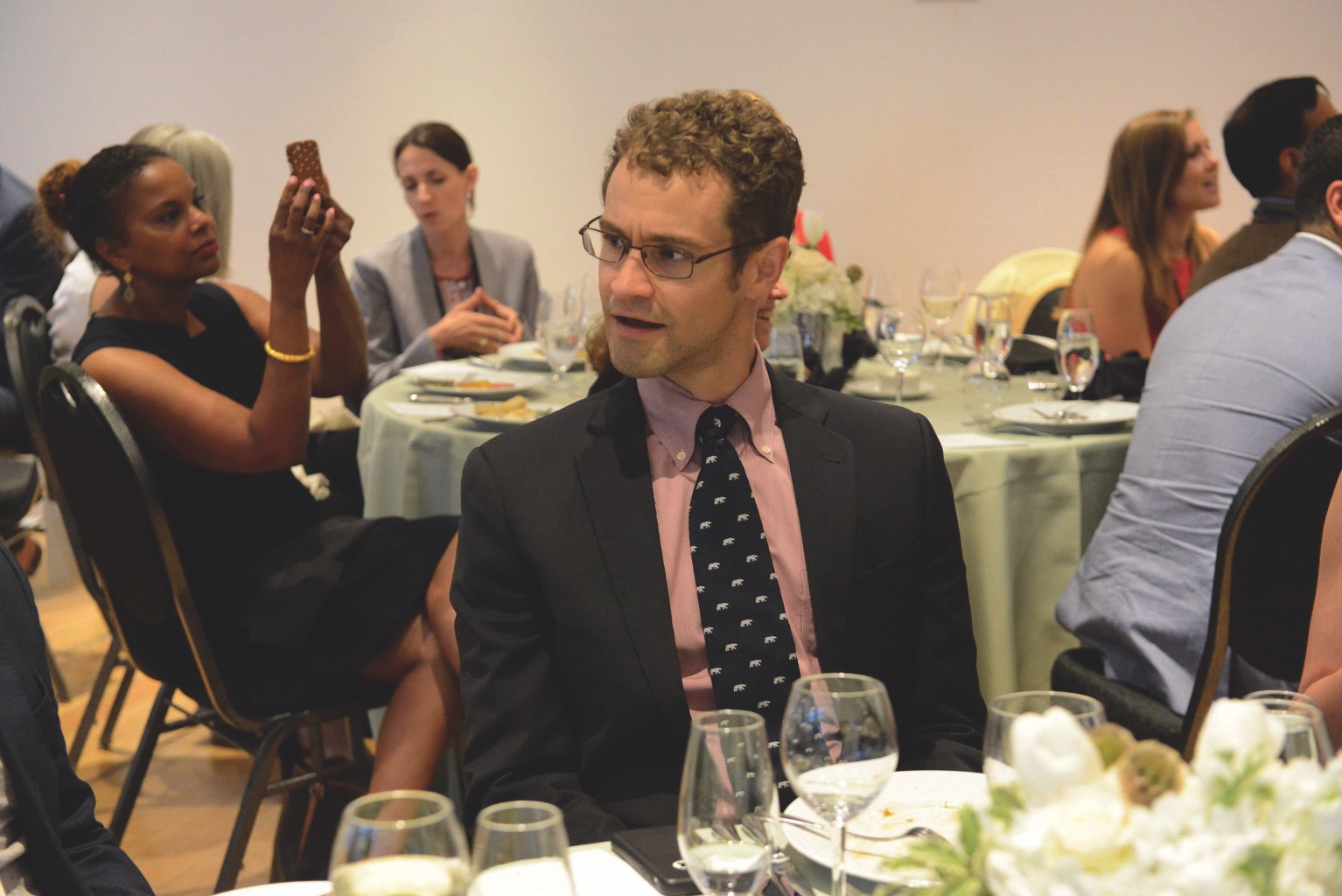 Courtesy of Conor Williams
What gets you up on a rainy Tuesday morning in February? Conor Williams ’05 did not know his answer when he first arrived at Bowdoin.
Williams grew up in Kalamazoo, Mich. in a big family, rich in what he called “cultural capital”. His parents were both first-generation college graduates. His mom received a master’s degree in occupational therapy and his father earned a Ph.D.
“There were a lot of books in the house, and it was a very intellectual, erudite house to be in,” Williams said. And we had no money.”
Williams applied to Bowdoin without visiting, drawn by its reputation and government program. When he saw campus for the first time, he was sold.
“I loved the state of Maine. I could have lived the rest of my life in Hubbard Hall,” Williams said.
His first year was academically harder than expected, and he almost did not return, even after being elected class president. Kalamazoo Central High School did not carry the same weight as the East Coast boarding schools many other students at Bowdoin attended.
“I just didn’t have any concept for how much better prepared a lot of my peers were for an elite, rigorous academic college experience,” Williams said. “I had maxed out everything academically my school district had to offer, and I was still way behind.”
Sophomore year changed things. He started dating his future wife, Gwennan Hollingworth ’06, found community in the club frisbee team and living in Baxter House and he fell in love with political theory in Professor of Government Paul Franco’s classes.
“Most of the rest of my career was just trying to find a way to get to be [like Franco], and the only thing that I had going for me was we had kind of similar hair,” Williams said.
After graduating with a degree in Government and Legal Studies and Spanish (now called Hispanic Studies), Williams joined Teach For America as a founding first-grade teacher at a Brooklyn charter school, while earning a master’s degree in teaching at Pace University in Brooklyn N.Y. Many people with his background were going into political blogging or advocacy at the time.
“I remember thinking that that seemed like a very privileged way to get at this work, and so I thought I’d go and teach kids to read,” Williams said.
Once in the classroom, he avoided a savior mindset and came to see teaching as a two-way relationship with families.
“The kids that I worked with, the families that I worked with … knew so much more than I did about so many of the things that their kids needed and that their school was offering. It wasn’t that I had all of these gifts to give them and there was nothing in return,” Williams said. “It was that we were learning together.”
During his time in Brooklyn, Williams was assaulted and robbed. Although he returned to the classroom that same week and tried to move on, he realized he needed a place to heal. He left to pursue a Ph.D at Georgetown University, where he could study political theory, spend his time reading old books and become more like Franco.
After Georgetown, Williams joined New America’s early education policy team and has stayed in the field ever since, most recently as a professor of practice at Arizona State University’s Children’s Equity Project, where he studies English learners and the children of immigrants in the educational system.
“At the beginning of first grade…, you give kids pretests, and then at the end of the year, you give them posttests, and the gap between those is what you did that year,” Williams said. “At the beginning of a year as a policy researcher, you’re working, you’re writing, and at the end, you’re still doing it, and very rarely has a law changed or a regulation shifted.”
Williams said policy research does make an impact for kids, especially in the fight to close opportunity and achievement gaps, but this change is more systemic and hard to measure. But over time, while he realized it might sound selfish, he also realized that goal was not what got him up in the morning.
“For me, it turns out that [it] isn’t [the] impact. What gets me out of bed in the morning is really answering a question all the way, and being able to articulate that in a way that other people recognize as conclusive,” Williams said. “Choosing a career is as much about choosing how you spend a 24-hour period of time as it is about choosing the outcomes that you get from the work you do.”
Williams believes that finding your path is difficult in college, especially with so many others’ expectations lingering.
As students are still figuring that out, Williams is concerned about cognitive offloading with artificial intelligence (AI), since he feels it takes away much of the privilege of learning and struggling.
“It is about exploring the final depths of the darkest pages of Marx or Hegel or John Dewey; it’s about doing the work in part, because even though it can feel tedious, that focus and that diligence of doing interesting, complicated, hard thinking is in and of itself a deeply human thing,” Williams said.
Answering hard questions is what drives Williams in his work now. Had he skipped this struggle in college, he may have never learned that.
“You should ask when you default to AI, or you offload to AI, you should ask, what am I giving up?” Williams said. “It’s not just sparing you more time to go sit out on the quad and look pretty. It’s also taking something from you that you might never get back.”
Comments
Before submitting a comment, please review our comment policy. Some key points from the policy: