
The Fine Print
September 25, 2026
 Mia Lasic-Ellis
There are two kinds of research I conduct regularly: the kind that requires JSTOR and the kind that requires TikTok rabbit holes.
The latter recently involved determining which shade of Merit concealer most closely resembles Haus Labs 13 Neutral, a question that led me through swatches taken in suspiciously different lighting, outdated Reddit threads and testimonies of women who appear to have devoted their lives to understanding undertones. I approached the whole thing with embarrassing sincerity. There were conflicting sources, comparative analysis and a conclusion.
I don’t usually lead with this information.
I am better at telling people the other things. Cognitive neuroscience has me obsessed with how experience is constructed somewhere behind our eyes. I can lose myself designing pages in InDesign until moving something three millimeters feels consequential. Somewhere on my bookshelf is Laurie Halse Anderson’s “Speak,” not far from “The Feminine Mystique.”
There. Much better.
I do this often: offer something up and immediately reach for its qualification. I love makeup, but I read. I love shopping, but I care about important things. I have spent an indefensible amount of time choosing between two nearly identical pictures of myself, but I promise…
It is the “but” that bothers me now.
The defense is anticipatory, and assembled for a jury that, as far as I can tell, has not convened. Still, I know the case by heart.
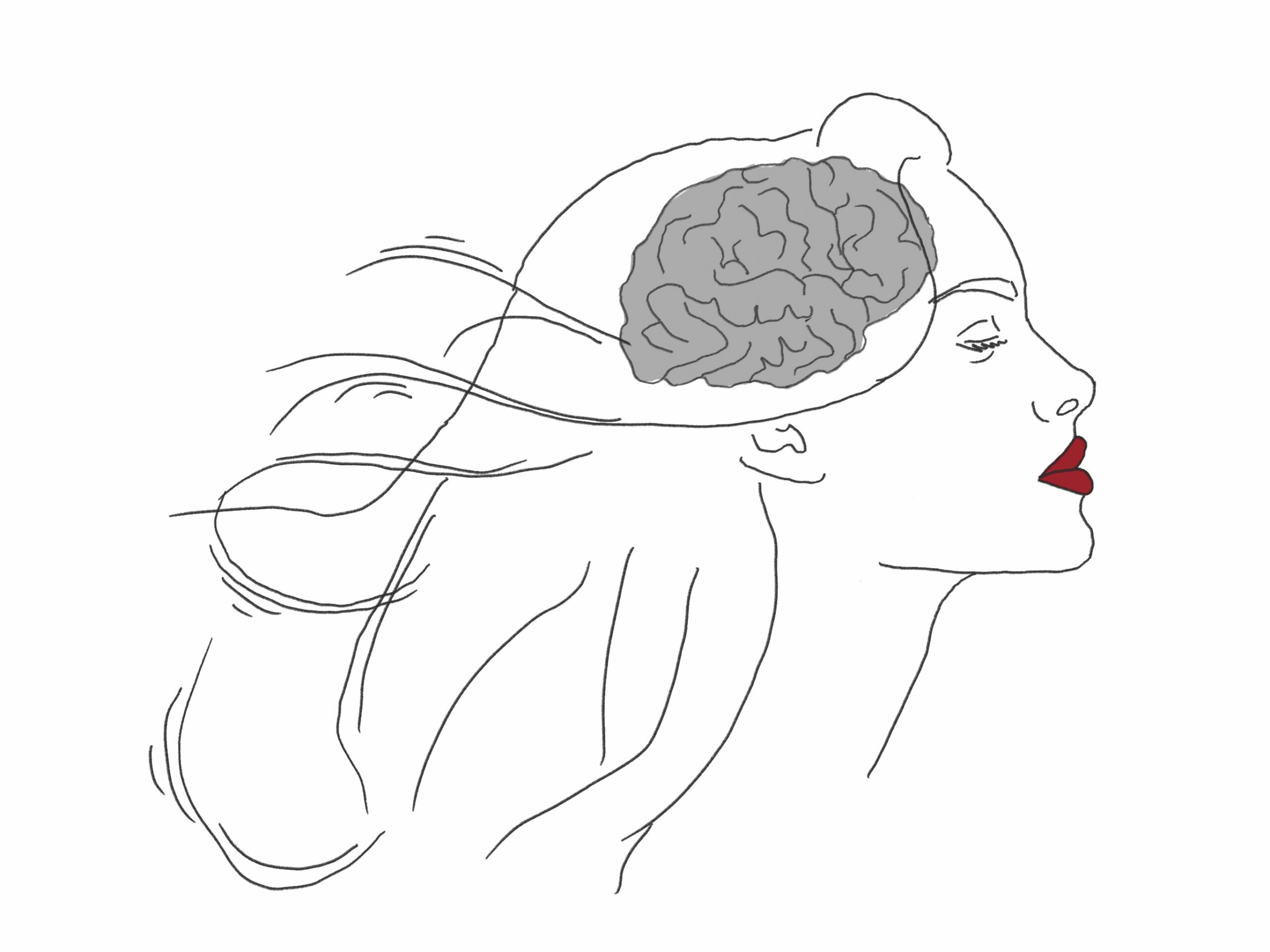
There is a particular exhaustion in being this conscious of your own femininity. Not of being feminine, exactly, but of watching yourself be feminine and wondering what it means. There are so many ways to get it wrong. Care too much about beauty and you risk seeming shallow; care too loudly about not caring and that, too, feels like a performance. Be soft without being weak, confident without being vain, ambitious without becoming intimidating. Trying to obey it all begins to feel almost funny.
Almost.
I grew up with language for resisting it. Mine is a generation raised amid feminism’s many reinventions, inheriting decades of arguments over who women were allowed to be. I read Betty Friedan describing a prescribed version of womanhood and Laurie Halse Anderson writing a teenage girl back into possession of her own voice.
After losing my father, I grew up in an all-female household. Maybe that should have made all of this obvious sooner. The two women who raised me were funny and serious, emotional and pragmatic, interested in things both consequential and completely inconsequential. They moved between serious things and ridiculous ones without noticing the difference. Their contradictions never struck me as contradictions.
Perhaps that’s why “The Breakfast Club” still feels familiar nearly forty years after Molly Ringwald walked into detention as “the princess.” Before Claire can explain herself, the category has done it for her: pretty, popular, polished. The pleasure is watching those labels become increasingly useless as the people inside them get messier.
We are still very good at labels.
Fourth-wave feminism has given my generation an expansive—and sometimes dizzying—vocabulary for questioning them. We can reclaim girlhood, interrogate beauty standards, reject femininity, embrace it, perform it, subvert it, monetize it and critique its monetization. Sometimes I think this vocabulary has left me unusually skilled at examining my own femininity.
I can tell you what I am doing and what it might signify. I can critique the category while checking whether I fit inside it. I know there is no correct way to be a woman and I still, somehow, wonder whether I am doing a good job.
College is a funny place to discover this because freshman year is an exercise in deciding how you would like to be perceived. Nobody knew me before August. I keep answering the same questions—where are you from, what are you studying, what do you like to do—and noticing which pieces of myself I offer first.
Eventually, people just know you. They know the stories you repeat, what makes you laugh, what your face does when something’s wrong. Most nights, somewhere between my actual home in Moore 403 (goodbye privacy) and the unofficial one next door in 402, conversations wander without much respect for hierarchy. Something painful gives way to gossip; gossip to somebody’s family; somebody’s family to an urgent consultation over which picture to post.
There, nobody needs a coherent theory of me. The women becoming my friends are complicated in the same unremarkable way the women who raised me were. We are earnest until we aren’t, ridiculous until we are suddenly not. The shift requires no disclaimer.
I still catch myself adding the “but.”
The other night, somebody asked me about makeup, and I answered with the unnecessary level of detail you now know I am capable of. For once, I didn’t offer more. No qualification, no evidence to balance it out.
We talked about something else.
Lyder Reksten is a member of the class of 2030.
Comments
Before submitting a comment, please review our comment policy. Some key points from the policy: