
The Craft Center connects to the ancient world through pottery workshops
November 20, 2026
 Ana Beatriz Lopes
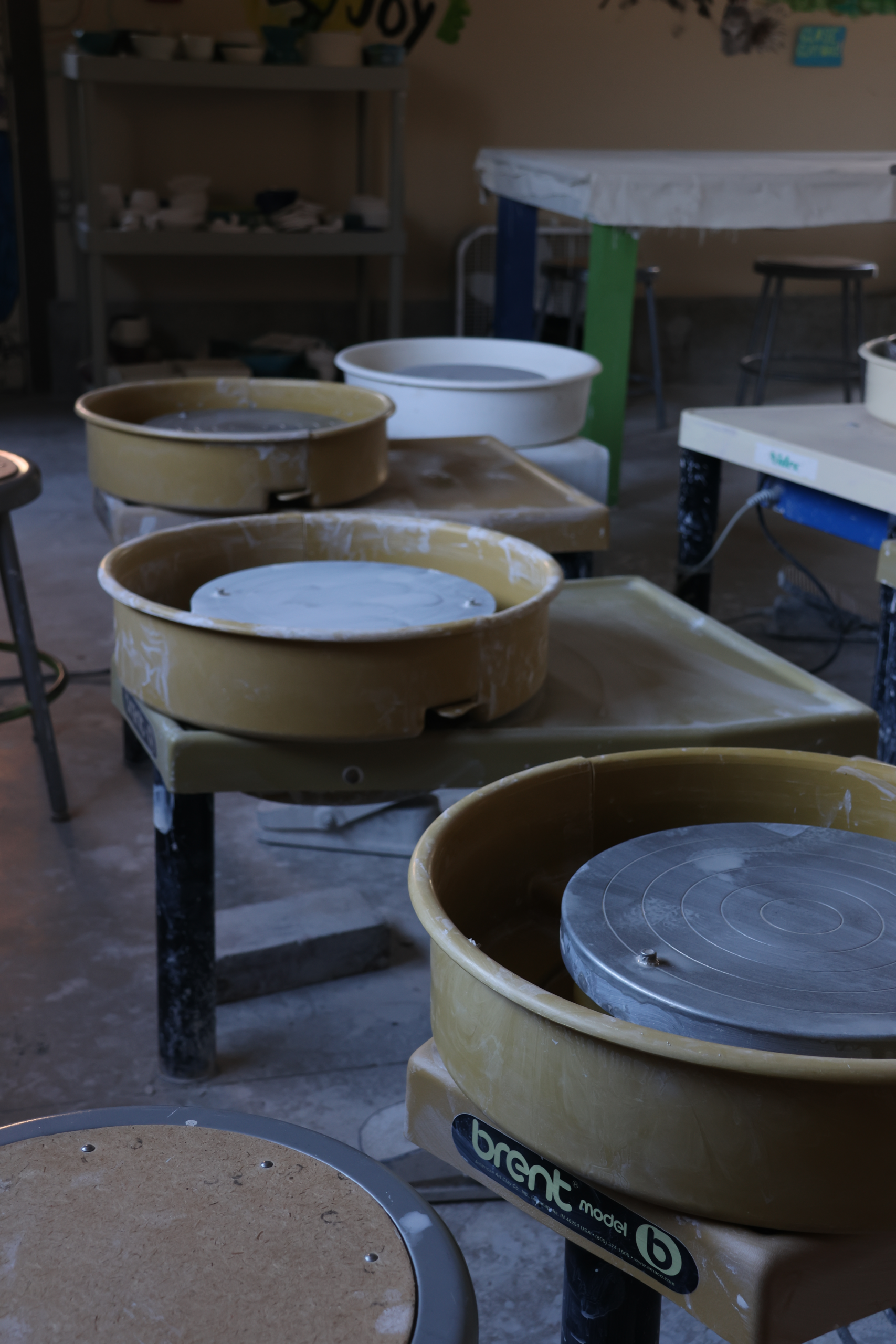
Last Thursday, students gathered in the Bowdoin Craft Center to shape small vessels and figures in a workshop on Egyptian faience. Led by Craft Center manager Emmy Madden ’28 in collaboration with the Department of Classics, this event was part of an ongoing series of workshops that aim to bring together studio art and classical studies.
Madden, a classics major, hopes these classes will provide students with a connection to artifacts and histories that are typically held out of reach behind glass.
“A lot of times when people are interacting with art from antiquity, it’s very impersonal. You’re in a museum, you’re reading a label, you’re looking at some object that was created … thousands, hundreds, whatever years ago and that’s just what it is. [You’re] very disconnected,” Madden said. “But whenever you have the experience of taking a class and learning about [it] …you have a better understanding of … how cultures took forged materials and created objects that told stories about mythology, about everyday life in the ancient world, about what makes us human, things that still matter.”
Classics student River Vermillion ’28, who had prior experience with Egyptian faience and other methods of shaping antiquarian pottery, helped Madden plan and lead the workshop. Vermillion took a class in high school called Historical Pigment Making, which introduced him to the world of creating materials through various techniques in the modern day.
Often, these practices push Madden and Vermillion to adjust their techniques and seek out adjustments that can be made to current practices to help replicate and produce works reminiscent of classical pottery. Vermillion noted that ancient Greek pottery, done in a previous event, is particularly difficult because the Craft Center is unable to replicate the exact temperature and oxidation process that the ancient Greeks used in their pottery creation.
“We obviously can’t do it the way they did it…. We just have a regular electric kiln, so because of that, we can’t really get the effect,” Vermillion said. “It means [the process is] not exactly very historically accurate, but some of the process is still the same…. Smoothing down the tiles by burnishing it, painting onto it, feeling the kind of difference in how fine you can get your strokes and stuff like that and the difficulties of trying to get the color all even by painting…, there are some things about it that are accurate.”
To bring the technique of Egyptian faience into the studio, Madden collaborated with Visiting Assistant Professor of Classics Brigitte Keslinke to create an experience that introduces students to the historical contexts behind the pieces they construct.
“I bring to [the workshop] my expertise in the material and technologies of the ancient world, and I use that to provide context to what participants are doing in these Craft Center classes,” Keslinke wrote in an email to the Orient. “But [the Craft Center], of course, needs to devise a way for students to replicate ancient objects and techniques using modern materials and tools, which are sometimes quite different. Before working with [Madden] and [Vermillion], I had never actually tried to replicate these particular materials.”
For students attending these workshops, the Craft Center acts as a way to bridge the divide between history and craftmaking, allowing students to partake in techniques they had never engaged with before. The Craft Center’s student-led atmosphere creates a welcoming environment that lessens the barriers often associated with unfamiliar studios.
“You’re a lot more likely to have a personal connection to the people running the class,” Brian Tilford ’28, an attendee of the Egyptian faience workshop, said. “And I mean, in places like Portland, there are a lot of great studios for all kinds of arts, but it can just be a little bit more unfamiliar.”
For Madden and Vermillion, this sense of connection and discovery is what drove them to begin these classes that intersect historical techniques with time in the studio. They hope to create experiences that stay with students long after the workshop ends.
“I think [pottery] is a big marker of humanity,” Vermillion said. “Every culture has their own style of pottery, has their own techniques [and] there’s kind of infinite methods out there. We’re still doing it today, even though we don’t need to.”
Madden echoed similar sentiments when discussing her role as a Craft Center manager.
“I’m giving students a space to be in community and to learn new techniques and overcome challenges that they face when trying these new things,” Madden said. “I choose to do classes on the historical techniques [to give] people the experience that they can use to then relate to other things they see in their future.”
Comments
Before submitting a comment, please review our comment policy. Some key points from the policy: