
To love is to become
November 6, 2026
 This
piece represents the opinion of the author
.
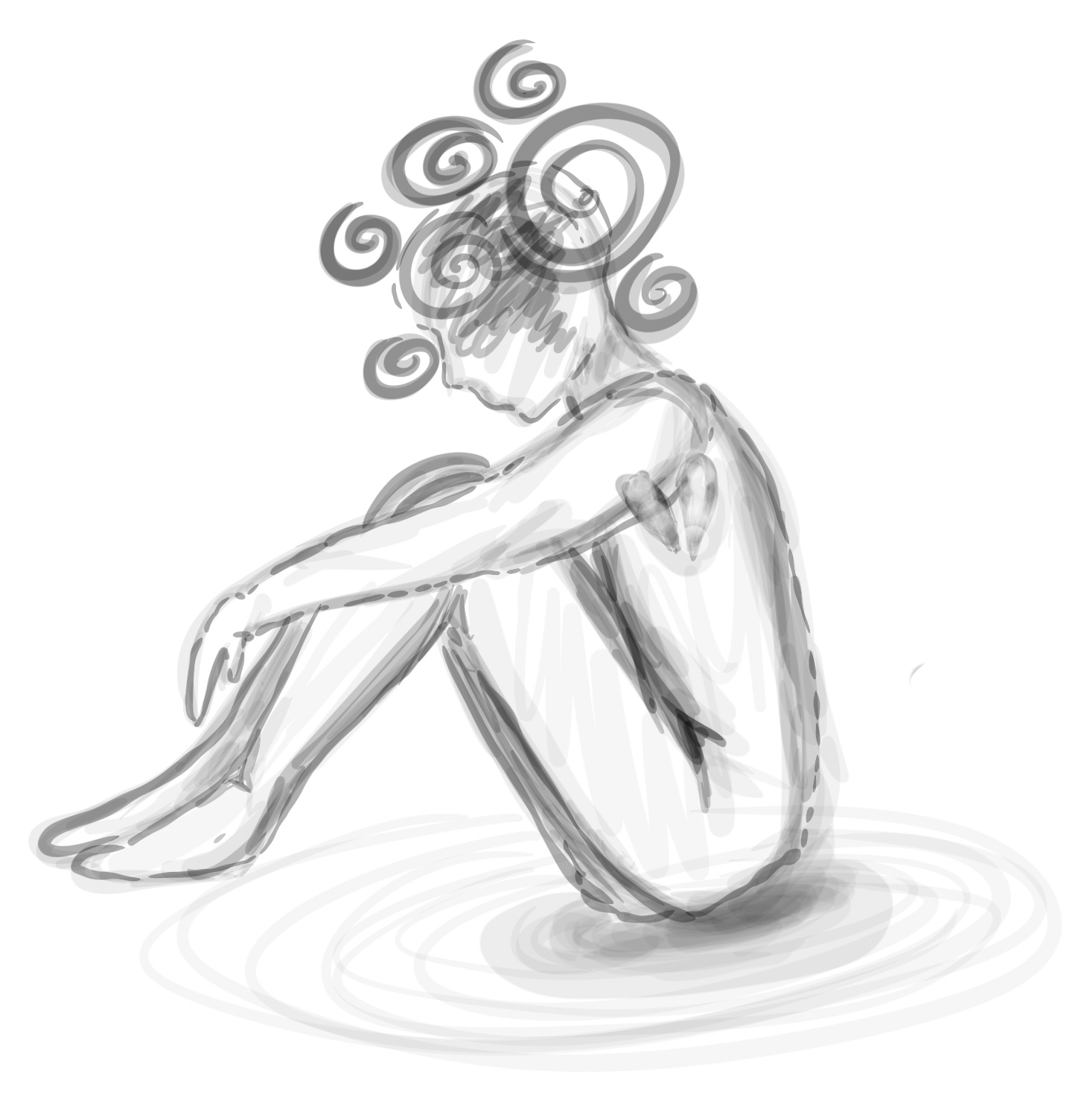 Brigit Len Tabuena
The insatiable thirst for logic when it comes to the sentimental is misguided. We analyze the unexplainable risks turning us into spectators of our own lives, like scientists whose experiments are their own experiences. How much might we refrain from doing so and how many feelings would we force for the pursuit of knowledge? Yet complete understanding is neither possible nor necessary. Even formal systems of logic have their limits, as Gödel’s incompleteness theorems demonstrate. The pursuit of exhaustive understanding, then, is not only unsatisfiable but also paralyzing in thought. Love, more than most experiences, exposes the limits of what rationality can explain.
Love is a creative force, and it is thus not surprising that it has inspired a lengthy tradition of philosophers’ desire to explain it. Expressions of love, often intertwined with knowledge and curiosity (variations of ‘to love is to know’ in classical philosophy), are not entirely far-fetched. Those we love are generally those we desire to hold dearest, whose lives we want not only to share but also to understand. We take an interest in how they move through the world. What if love does not merely deepen our understanding of another, but also changes our understanding of ourselves? The idea that ‘to love is to know’ should be taken one step further: ‘To love is to become.’
‘To love is to become’ captures something that knowing alone cannot. It suggests that knowledge of another is not passive, but sufficiently meaningful to change who we are. Without this additional dimension, ‘to love is to know’ risks disqualifying forms of love that persist even when knowledge of the beloved is incomplete or outdated. Consider a mother who loves her son but does not know how he behaves at school or among his friends. Her blind spots when considering the dimensions of his personhood do not disqualify her motherly love. Similarly, we may no longer know the person someone has become but still carry parts of them within ourselves. Even in grief, when the passage of time makes it difficult to articulate who the beloved was, our love remains expressed in how having known them shaped us.
This transformation could be as subtle as adopting someone’s mannerisms or outlook on life, discovering a new interest through them or moving more fearlessly and unapologetically through the world. When love is tied to becoming, love holds an eternal expression regardless of the form a relationship takes or the time it occupies. Love is not necessarily sustained through continued proximity or action but through the ways in which another’s existence has become interwoven with our own.
This is not to say that actions are irrelevant to love, but that the idea that ‘love is a verb’ overstates the extent to which love must be sustained through continued commitment and devotion to a relationship. This applies to non-romantic relationships: consider a family member with whom you hardly keep in touch. To love someone who is no longer actively nurturing a relationship is proof that love does not hinge upon continued presence. Unreciprocated love is perhaps the clearest example: it asks nothing of the other person to sustain itself, requiring neither continued proximity nor the possibility of reunion, but resting instead on an appreciation of what another person has made of who you are.
The maxim ‘to love is to become’ does not suggest that transformation alone constitutes love, but rather that love, in its many forms, leaves some imprint on the being of those who love. While we cannot define love without succumbing to incompleteness, we can recognize the ways it changes us. Maybe that is as much as reason can tell us about love, and perhaps more than enough.
Comments
Before submitting a comment, please review our comment policy. Some key points from the policy: