
Record-size class pushes Bowdoin to rethink first-year housing
September 4, 2026
 Isa Cruz
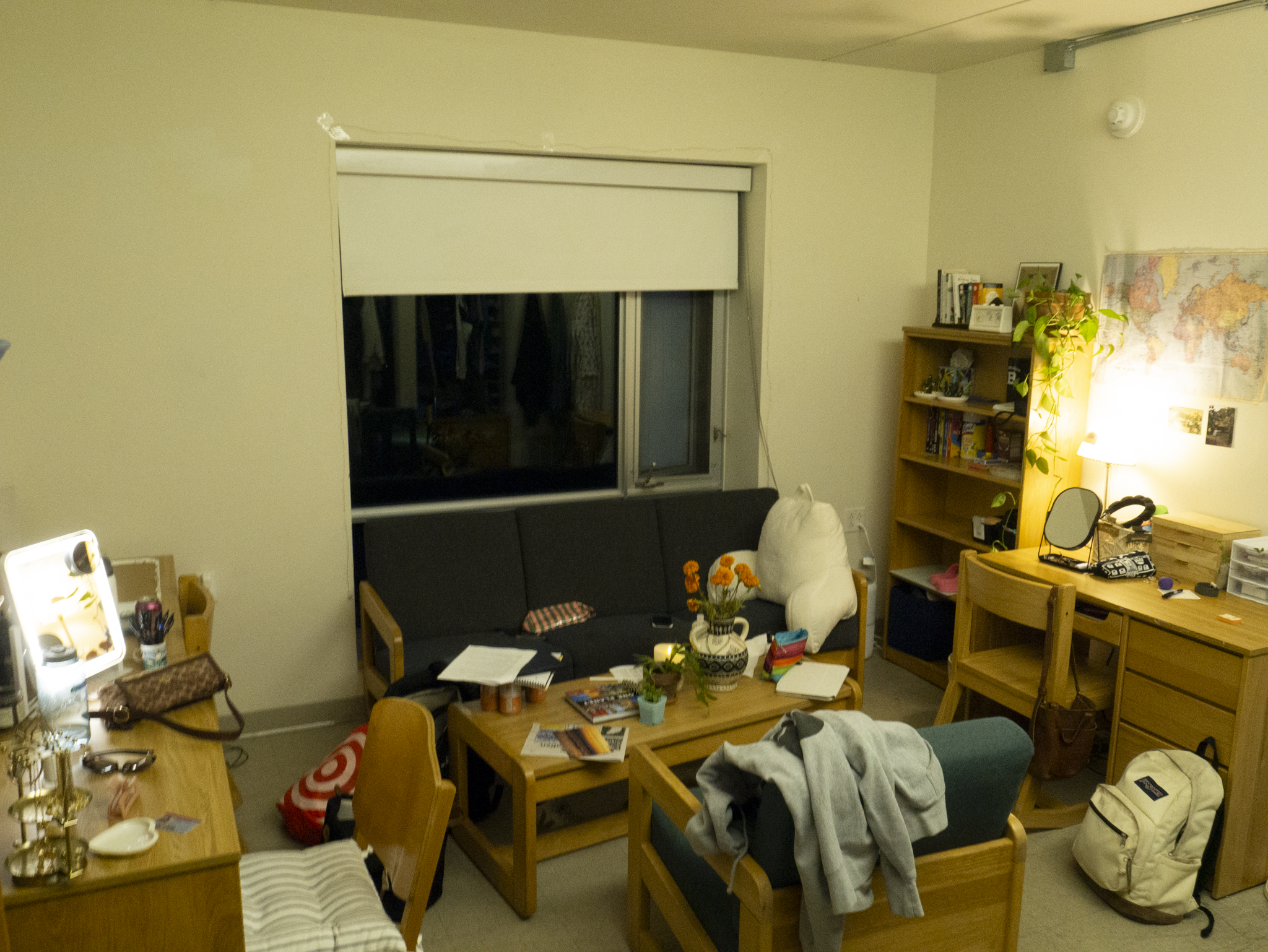
Bowdoin’s Class of 2030 arrived last Monday with 554 students, well above the roughly 515 first years the College typically enrolls. The jump has meant triples in Osher Hall and West Hall, more quints in Coleman Hall and Moore Hall and a scramble across the Office of Admissions, The Office of Residential Life and the Division of Student Affairs to keep the first-year experience intact.
The College did not admit more students this year, according to Claudia Marroquin, senior vice president and dean of admissions and student aid. The larger class is the product of a higher yield, as a greater share of admitted students chose to enroll.
“The increase is based on student interest and excitement about Bowdoin, because the yield has increased quite a bit,” Marroquin said. “It’s not that we admitted more, but it’s the excitement that there is among the first years for Bowdoin.”
Bowdoin’s enrollment committee, which includes ResLife, the registrar’s office and student affairs, tracks enrollments every spring. This year, Marroquin said, the numbers ran well ahead of pace almost immediately, and by April and May it was clear the College needed to prepare for a much larger class. However, the committee does not plan for future classes to be as large.
“We are a place that generally welcomes about 515 students,” Marroquin said. “There are no plans to grow the incoming class going forward. We can’t have another super large class, because that would affect many parts of campus life.”
ResLife did not learn the final class size until May, leaving about a month to settle on a housing plan. Director of Residential Life SJ Tinker said the team weighed options like using a college house or a nearby building before deciding to keep the entire class in the eight bricks.
That meant leaning harder on quints and, in some buildings, triples for the first time. Tinker said the team caught a break partway through the preparation: Osher and West were originally built with triple-occupancy capacity in mind.
“We discovered that Osher and West were actually built as triples,” Tinker said. “They were built for triple capacity, because they knew at the time that they were going to be taking other bricks offline, one at a time. The building capacity in Osher and West is much closer to 150, and it’s usually more like 80-something.”
ResLife spread the additional students evenly across floors while maximizing square footage per person. This year’s median is 118 square feet per person, well above the 70-square-foot guarantee Tinker said many peer institutions use.
To manage the more tightly packed floors, ResLife added a proctor each for Osher and West and promoted returning staff to head staff, giving Osher, West and Coleman three head staff apiece. The office also brought on Olivia Sackler as interim assistant director, a new nine-month position to support student staff.
Senior Vice President and Dean for Student Affairs Jim Hoppe said his office made a parallel hire, bringing on Rebecca Banks as interim assistant director for student affairs and first-year experience.
The larger class has reshaped life outside the bricks too. With Reed House closed and more first-year students overall, the College Houses have taken on more affiliates this year. Tinker said ResLife secured funding for additional student workers dedicated to first-year programming, building on the committees each house already runs. The Outing Club and McKeen Center also added more orientation trips to accommodate the larger class and help first years connect outside their dorms.
Hoppe added that it’s still too soon to judge the overall impact to the first-year experience.
“I think it’s probably too soon to tell if there have been changes to their experience. Time will tell,” Hoppe said.
ResLife is also working on launching a program this fall called “3rd Space,” converting empty offices on the second floor of Dudley Coe into private rooms first years can use for phone calls, telehealth appointments or a quiet break from a crowded room.
“When it feels like you’re in tight quarters, it’s important to know that you have other places to go and be comfortable on campus,” Tinker said.
ResLife staff say roommate conflicts so far look similar to any other year’s: mismatched sleep schedules, unclear boundaries and the ordinary friction of sharing a space. Tinker said the difference is how that friction lands on students in triples that used to be doubles, even when the conflict itself would have happened regardless of room size.
“It feels unfair in that way, even if it would have been the same conflict with two people in a double,” Tinker said. “So I have a ton of empathy for this situation.”
Hoppe said his office is trying to get ahead of disagreements this year rather than just respond to them. “We’re trying to be even more attentive to helping students respond to conflicts early and to spot students who might be struggling with the adjustment,” he said.
Tinker said the decision to keep every first year in a traditional brick, rather than moving some students into a college house or an off-site building, was the hardest call ResLife made over the summer.
“Leadership is when you take all the information you have and stack it up against your values and what you’re trying to accomplish, and you make a decision based on what you’ve got at the time,” she said.
Marroquin acknowledged the tradeoffs from the admissions side as well.
“I recognize that it will create some friction points potentially on campus,” Marroquin said, “but I think it speaks volumes of the opportunities that students see themselves having here.”
Both Marroquin and Tinker described the larger class as, on balance, a good problem to have. Hoppe noted that despite the tighter dorms, the total number of students on campus is close to last year’s, since a large group of upperclassmen are studying abroad this fall.
“It’s exciting that so many people have seen Bowdoin as the place they want to continue their education,” Marroquin said.
Tinker said her hope is that students in triples and quints come to see the arrangement as less of a squeeze and more of an unplanned source of new friendships.
“A lot of students are realizing that they can live well with these new people,” Tinker said. “You don’t need to spend all your time in your room.”
Comments
Before submitting a comment, please review our comment policy. Some key points from the policy: