
New pollinator garden situated on Dudley Coe Quad aims to support local ecosystem
September 4, 2026
 Abigail Hebert
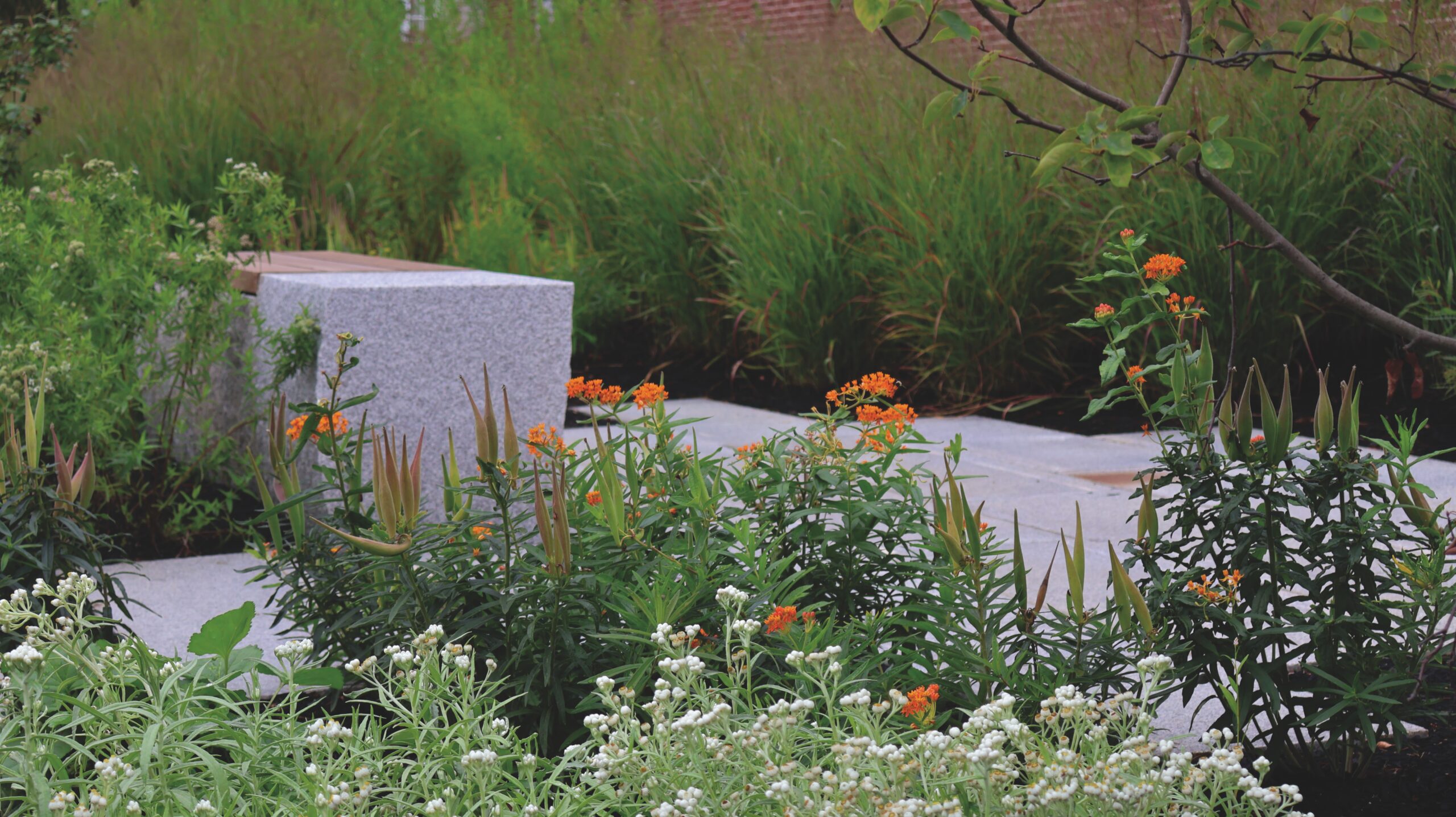
As students arrived back on campus, a new sight on Coe Quad greeted them: a pollinator garden brimming with native flowers. This project was completed over the summer, but the decision to create it arose out of a prior campus plan brainstorming what to build after the planned demolition of Dudley Coe Hall.
Capital Projects Manager Sharon Ames, who oversaw the garden’s design and implementation, shared information about the building process in an email to the Orient.
“During the campus plan development, the area of Coe Quad was being explored for other potential buildings. We delayed constructing the garden while that work was ongoing and were able to implement it this summer,” Ames wrote.
After the College decided to create the pollinator garden, it began working with the landscape architecture firm STIMSON, and a program committee including faculty and staff, to create a concrete vision of what the garden would look like. Associate Professor of Biology Patricia Jones worked with the committee and met with the landscaping team to advise native plant selections. The College also repurposed granite previously used for the stairs to Cleveland Hall to create the pathways around the garden.
“We explored various design concepts, from meadows to adding more trees in the lawn. The design outcome is a blend of concepts and committee feedback,” Ames wrote.
Both Ames and Director of Sustainability Keisha Payson hope the pollinator garden will support campus biodiversity and the College’s broader climate goals.
“The Sustainability Office is of course very supportive of the project, as we see this as a great way for campus to support local wildlife and pollinators, use less water and maintenance by choosing native species, as well as reduce our environmental impact with less mowing and fewer chemicals, cutting emissions and pollution runoff,” Payson wrote.
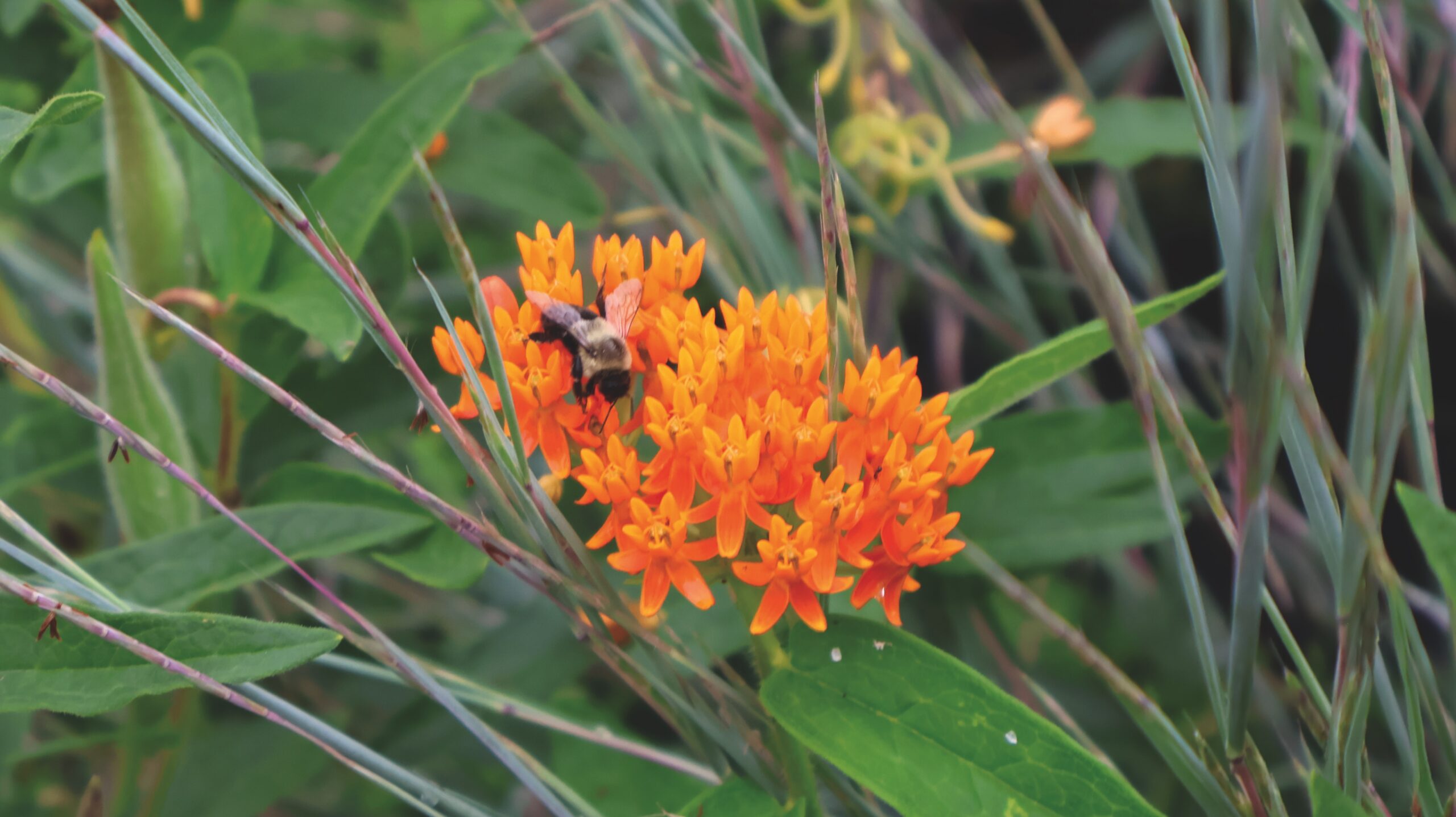
Ames noted that native plants will also support populations of local insect and bird species. Lisa Beneman, the organic garden supervisor, agreed with Ames and added that the pollinator garden will provide broad support to the ecosystem, attracting insects that benefit both the Bowdoin Organic Garden and local tree pollination. Specifically, the garden could attract parasitic wasps, native pollinators in Maine that feed on common garden pests like aphids and hornworms.
 Abigail Hebert
Beneman also hopes that the pollinator garden can serve as an outwardly-facing environmental initiative that maintains the College’s beauty.
“There’s a beauty standard of college campuses … of the pristine lawn. I’m excited about [what] that beauty standard, that picturesque northeast college, might look like [if it were] to shift a little bit to include things that are ecologically really important,” Beneman said.
Beneman noted that although the garden may seem like a big change to many students, she hopes that they will respond well.
“Bowdoin has a lot of mowed lawn, which is really great for recreating, for all sorts of events that happen on campus,” Beneman said. “It’s totally an important part of a college campus to have lawn space, but I’m super excited about … taking some smaller slices of lawn area, especially right along buildings or some spots that might not be the premiere lawn area and creating more diverse habitat on campus. ”
Ames encouraged students to embrace the garden as a space to make nature part of everyday life.
“My favorite section is along Studzinski Recital Hall, where the pocket garden benches add permanent seating to the quad and a way to be immersed within the plants.… I hope students experience the garden as [a] place to find calm, to enjoy a meal with friends and to experience the change of seasons on campus,” Ames wrote.
Payson also hopes that the garden will allow students to learn more about the natural world.
“One piece that I’d love to see us add to this project is some educational signage somewhere along the garden that explains what we’ve done … and spell[s] out what the benefits are, for those that might not be knowledgeable about the ideas I mentioned above. As people learn about the benefits then maybe they too will be inspired to try this in their own yards,” Payson wrote.
Ames stated that the College will be sharing more information about the types of native plant species in the garden during the sustainability fair on September 18. She also noted that Facilities is currently in the process of planning signage for a later installation.
Comments
Before submitting a comment, please review our comment policy. Some key points from the policy: