
Executive overreach and aristocratic rule
October 30, 2026
 This
piece represents the opinion of the author
.
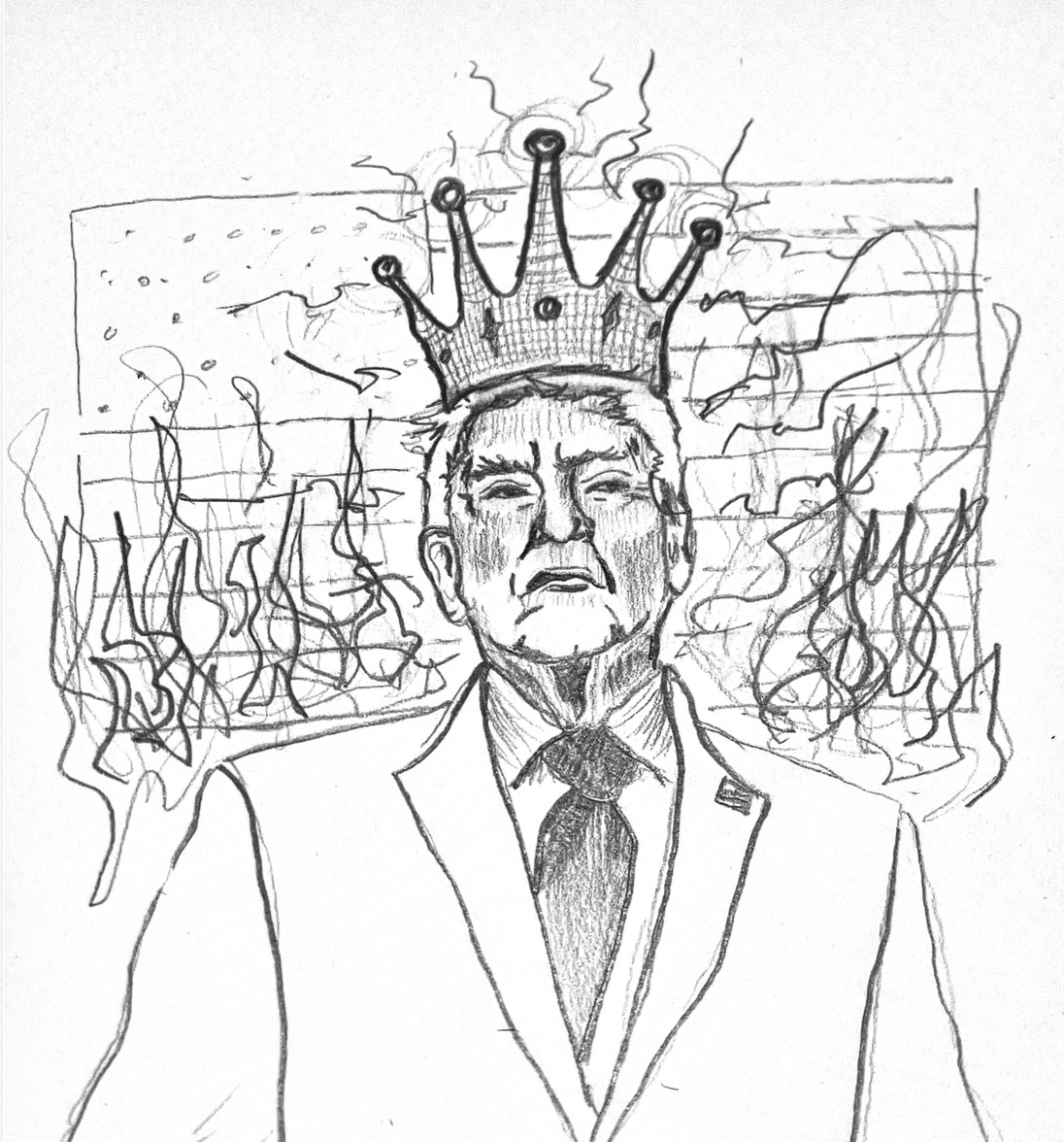 Juliet McDermott
Political scientists Steven Levitsky and Lucan Way recently released a paper on how the United States slid into a state of competitive authoritarianism.
“The United States descended into soft, competitive authoritarianism during Donald Trump’s second presidency. Regime change occurred with striking speed,” they wrote.
The authors argue that this occurred due to the U.S. crossing the threshold of several criteria they used to measure competitive authoritarianism, a concept first outlined in their 2010 book. Under the current U.S. administration, this has occurred via a tilting of the electoral playing field (via national gerrymandering), frequent harassment of the media, attacks on individual civil liberties (via legal harassment of critics), a modest packing of the media and skewing of campaign finance.
“The U.S. case is thus broadly comparable to Hungary under Orbán, albeit with greater civil violations and a less tilted playing field,” Levistsky and Way wrote.
The Trump administration also weaponized the state by pushing out career professionals from key positions in the federal government and replacing them with loyalists. The widely regarded V-Dem index, which measures democracy worldwide, demoted the U.S. from a liberal democracy to an electoral democracy this year, which has not been the case since the early 1970s.
Although the past two years have seen rapid democratic erosion, there is a much longer bipartisan undercurrent in administrative centralization of the executive branch that has paved the way for contemporary executive overreach. As articulated in his book “Bomb Power” (2010), Gary Wills described how the invention of the nuclear bomb dramatically changed the meaning of the presidency, which is evident in the proliferation of references to the president as the “Commander-in-Chief.” The traditional concept of the “Commander-in-Chief” took on new meaning when the president took discretion over the most powerful military device in the republic.
“Washington flaunted no military symbols at Mount Vernon—modern presidents have assumed military affairs. Since Ronald Reagan’s time they have taken to being saluted and answering the salute, though salutes are supposed to be only to military superiors recognized by their rank in uniform… In the atomic era, the President as Commander in Chief has taken on a mystique that makes him a power apart” (Wills, 54).
The substantive and ceremonial adoption of military posture, outside of periods of war, reflects an extra-constitutional shift in how we perceive the presidency. Presidents of both parties have expanded the scope of executive power through the use of military actions overseas without formal declarations of war from Congress since the Second World War.
The degree to which our understanding of the presidency has changed is evident in the application of the unitary executive theory, which was born in the Reagan-era Department of Justice, and found its most powerful champion in Vice President Dick Cheney. Following 9/11, the Bush Administration used the unitary executive theory to conduct mass surveillance without warrants, claimed that the president’s Commander-in-Chief power could override Congress’ statutory ban on torture and attached signing statements to the Patriot Act, reserving the administration’s right to withhold from Congress how the executive branch used its new powers. In 2026, the Supreme Court largely embraced the unitary executive theory in deciding that the President may fire FTC commissioners at will in Trump v. Slaughter and overruled Humphrey’s Executor (1935). Trump v. Cook (2026) only prevented the firing of a Federal Reserve Governor, without evidence for cause, by a 5–4 margin.
The Founding Fathers in the Federalist Papers warned against the tyranny of the majority, and sought to restrain the president sufficiently through checks and balances. Anti-Federalist Patrick Henry warned that the presidency “squints toward Monarchy.” The institutional and widely-held popular deference to the President for national security measures at the sacrifice of individual liberties is part of a broader shift in how Americans view the presidency, and the role of the state in serving as the source of security and meaning.
In his book “Regime Change: Toward a Postliberal Future” (2023), political theorist Patrick Deneen contends that the current state of liberalism calls for regime change, for “a better aristocracy brought about by a muscular populism, and then, in turn, the elevation of the people by a better aristocracy” (Deneen, 147). He argues for a class of aristocrats to guide the people toward an understanding of the common good, via aristo-populists, whom Vice President J.D. Vance models himself after. Predicated on this type of mixed regime, Deneen calls to his aid the beliefs of the ancients in which the best regime was tri-part, with a monarch, aristocracy and democracy. He praises the Romans who, through the “benefits of kingship, were manifested in the unitary rule of the emperor, but the tendency of the monarch to become overbearing and tyrannical was restrained by the political power of the common citizens. They in turn were ennobled by the aristocracy” (Deneen, 130).
On the back of the book is a quote from then-Senator Vance offering much praise for the work. Although Deneen does not outrightly call for a U.S. mixed regime with a monarch, his reliance on the classical tradition of mixed regime is dangerous, and he evidently calls for an aristocracy to enlighten the citizenry.
This view, that the centralizing state or a self-appointed aristocratic class should direct citizens toward moral outcomes of a top-down understanding of the common good, is undemocratic, does violence to the U.S. Constitution and undermines the belief that every individual is the best judge of their own affairs. The centralization of executive authority, its intellectual justification in unitary executive theory and the directing of citizens’ morals by aristo-populists point to a collapse in the democratic norms and traditional separations of power. In the past, it constrained the presidency and the federal government, protected our rights and reflected popular sentiment without treading on the rights of others.
Political thinker Alexis de Tocqueville feared liberal states’ growth into paternalistic states that would infantilize citizens and offer security and meaning in place of the “burdens” of self-government. The U.S. executive branch now clearly trades liberty for security, as well as the threat of a rise of aristo-populists who seek to further this end through an overt top-down guiding of morals by a self-appointed higher class. The two point to an urgent need to strengthen democratic institutions and checks and balances and to constrain executive power.
Jack Higgins is a member of the Class of 2027.
Comments
Before submitting a comment, please review our comment policy. Some key points from the policy: