
First-year survey: Class of 2030 talks AI usage, social media and future careers
October 2, 2026
Over the past month, the Class of 2030 has been settling into new routines. From a record-breaking applicant pool, the Class of 2030 broke records again as one of Bowdoin’s largest first-year classes ever, bringing with them a diverse set of talents and experiences. The Orient sent out the seventh annual First-Year Student Survey (FYSS) to understand the first-year class’ academic identities, lifestyles, belief systems and more.
A total of 164 students responded to the survey, representing nearly 30 percent of the class. Here, we dig through the data and present some exciting takeaways on this year’s first-year class.
Demographics
Thirty-six percent of respondents are from the New England region, followed by the Mid-Atlantic with 24 percent and the Western region with 13 percent. In those states, almost 60 percent of respondents describe their home environment as suburban, while 30 percent are from urban areas. These numbers are nearly identical to the responses from the Class of 2029.
When asked about racial and ethnic identity, 70 percent of respondents self-identified as white. Fifteen percent identified as Asian, 12 percent as Hispanic or Latinx and seven percent as two or more races.
In regards to sexual orientation, this year’s responses were similar to last year’s first-year class. Sixty-six percent of respondents identify as heterosexual, 18 percent as bisexual, eight percent as queer and seven percent as homosexual.
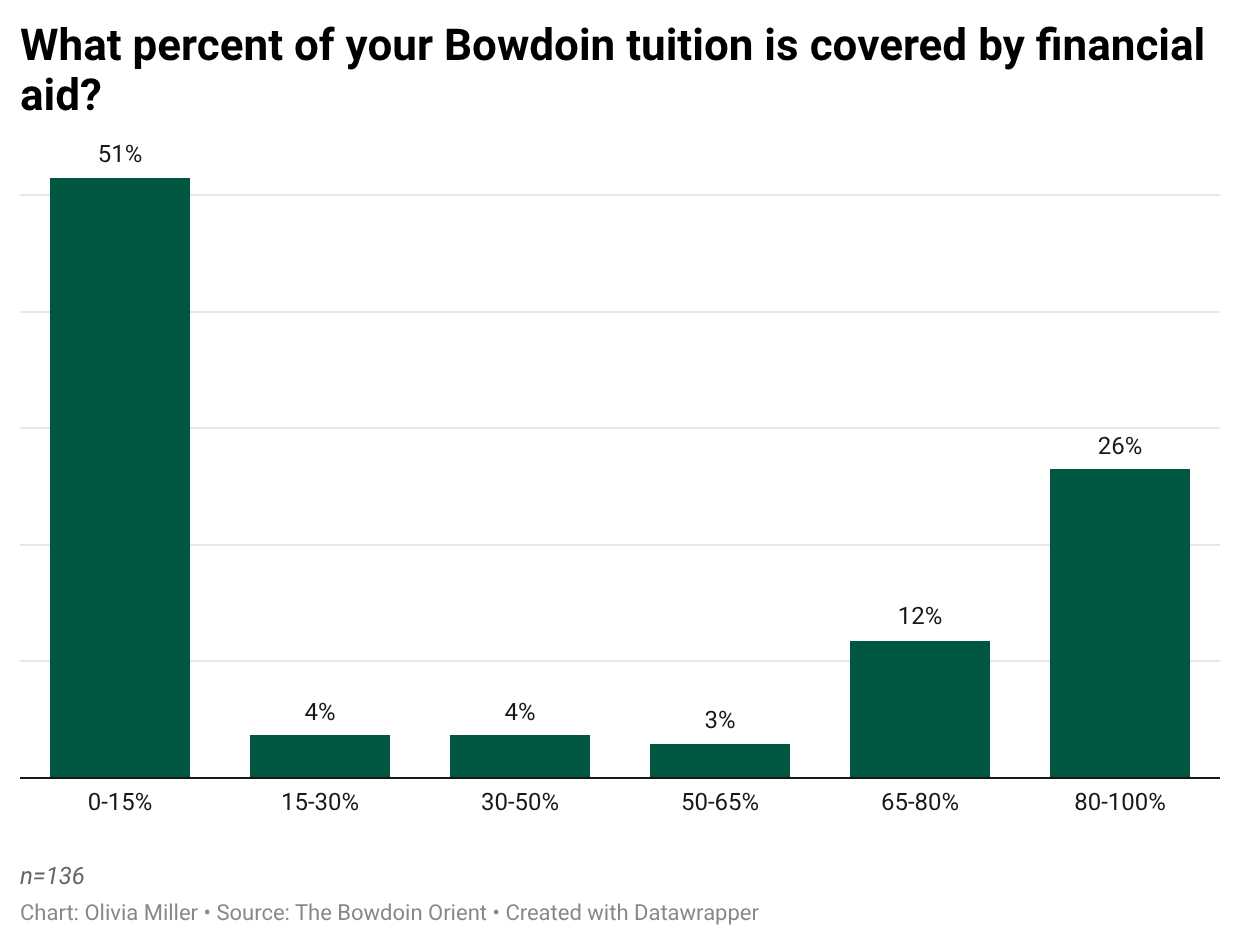
When it comes to financial aid, 52 percent of respondents indicated that they receive aid while 48 percent do not. Just over half of those who receive financial aid, 51 percent, have between zero and 16 percent of their tuition covered by the College. In contrast, 27 percent of students who receive financial aid have between 80 and 100 percent of their payments covered by financial aid.
While the College does not use loans to calculate financial aid, students may still take out loans to meet the cost of their education. Fourteen percent of the Class of 2030 intends to take out loans, down from twenty percent for the Class of 2029.
While the College does not use loans to calculate financial aid, students may still take out loans to meet the cost of their education. Fourteen percent of the Class of 2030 intends to take out loans, down from twenty percent for the Class of 2029.
Academics
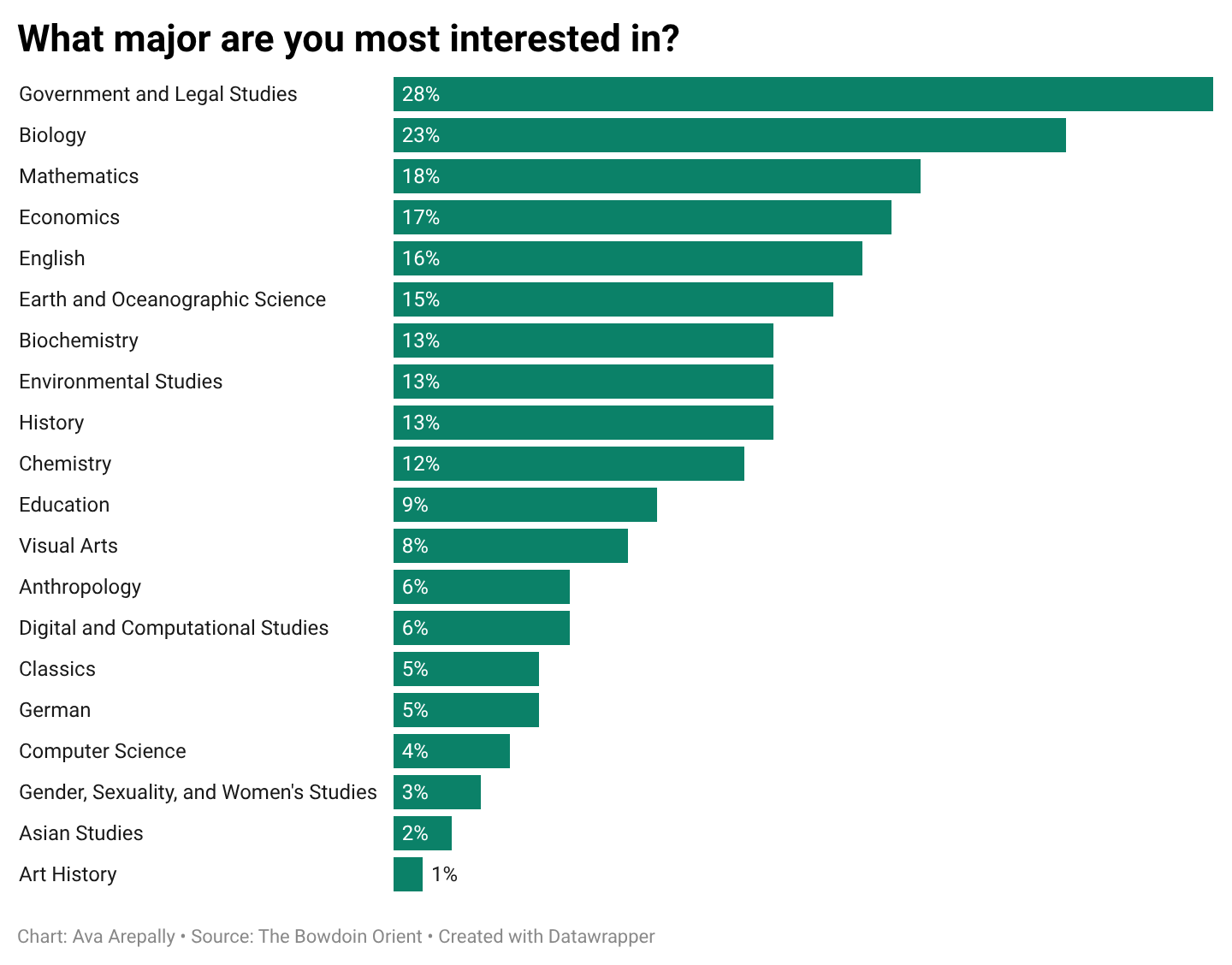
The members of the Class of 2030, much like the classes of 2029 and 2028, are most likely to be prospective majors in Government and Legal Studies or Biology. When asked to choose three majors of interest, 28 percent chose Government and Legal Studies while 23 percent chose Biology. This is a slight decrease compared to the class of 2029 who ranked Government and Legal Studies first with 34 percent and Biology second with 24 percent.
As with the classes of 2029, 2028 and 2027, 33 percent of respondents reported uncertainty over their future career field. However, the second most popular selection after “unsure” for one’s potential career field was science research, which was selected by 16 percent of respondents. This is a change from last year’s FYSS, where 14 percent of respondents selected law and another 14 percent opted for healthcare, with science research ranking fourth on the list.
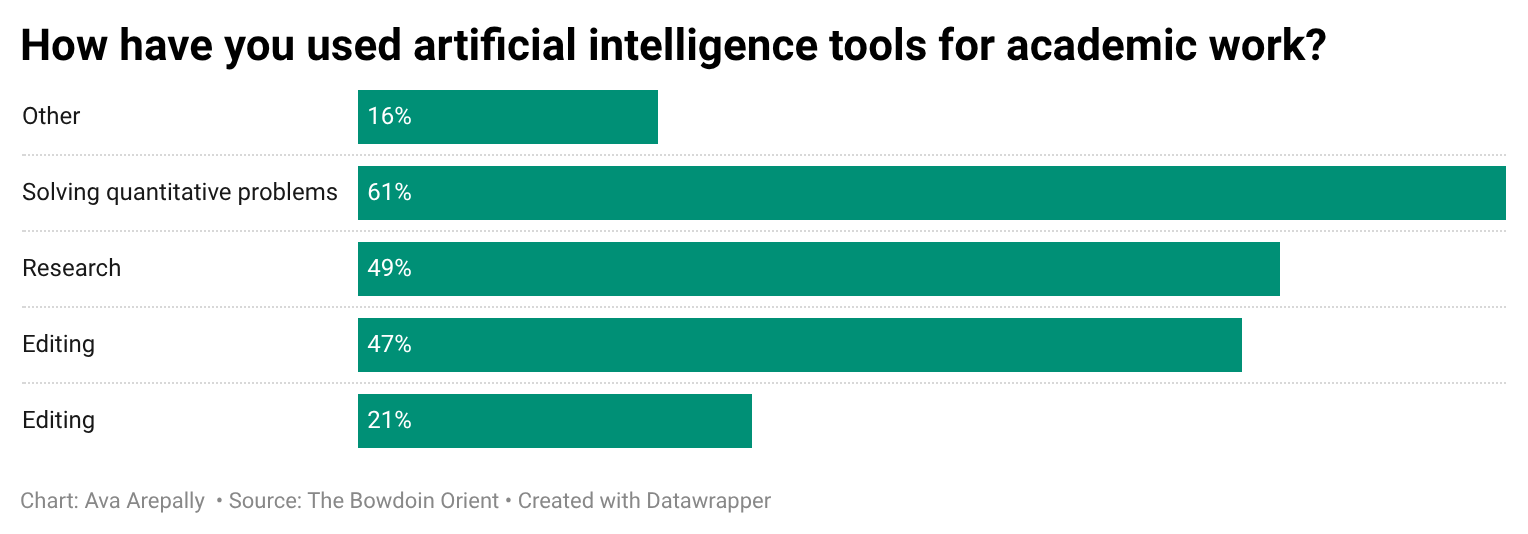
This is only the third year the Orient has surveyed first-year students on their usage of artificial intelligence (AI). This year, respondents say they use ChatGPT and other AI platforms mostly for quantitative problems, followed closely by research and editing. However, 39 percent of respondents report never using AI on academic assignments and only 1 percent report using it most of the time. Around 69 percent of respondents use AI sometimes, an increase from last year where 53 percent of respondents sometimes utilized AI and 47 percent had never used it for assignments. 59 percent of respondents surveyed said they do not believe AI usage constitutes cheating, with about 24 percent saying they are unsure.
Lifestyle and Beliefs
Instagram continues to be the most popular social media platform on campus, with 92 percent of respondents reporting using it. Snapchat and YikYak are the next most popular platforms, with TikTok just barely falling out of the top three. The least popular assessed social media platform continues to be Threads, with only two respondents reporting usage. Respondents report spending an average of two and a half hours a day on social media platforms.
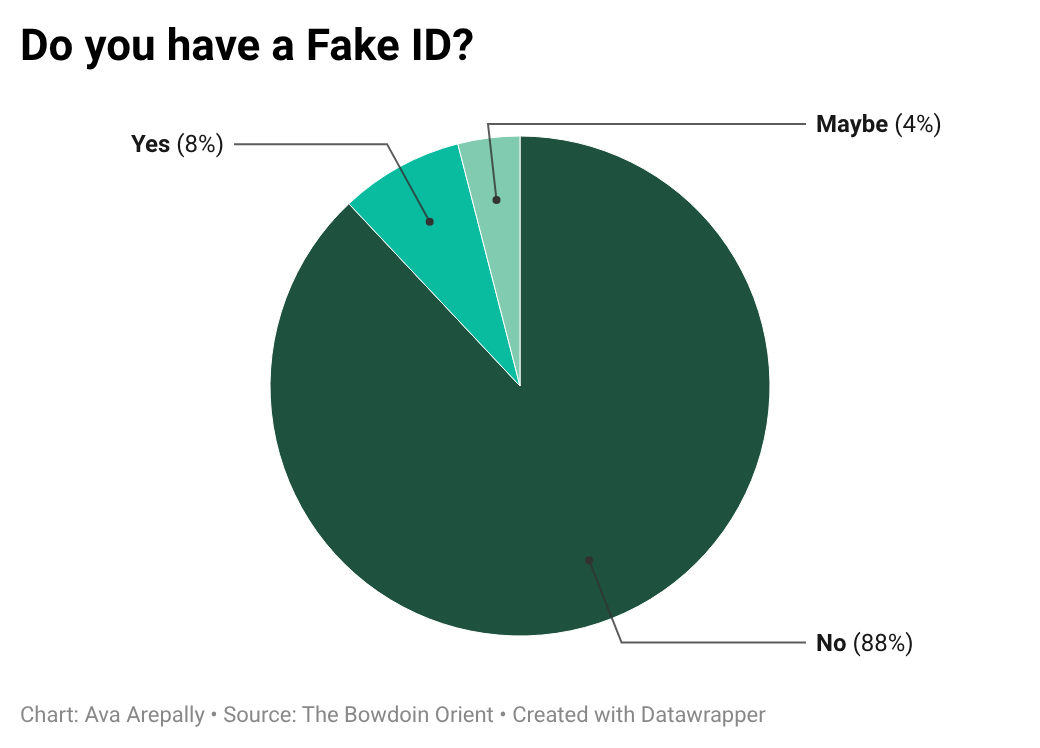
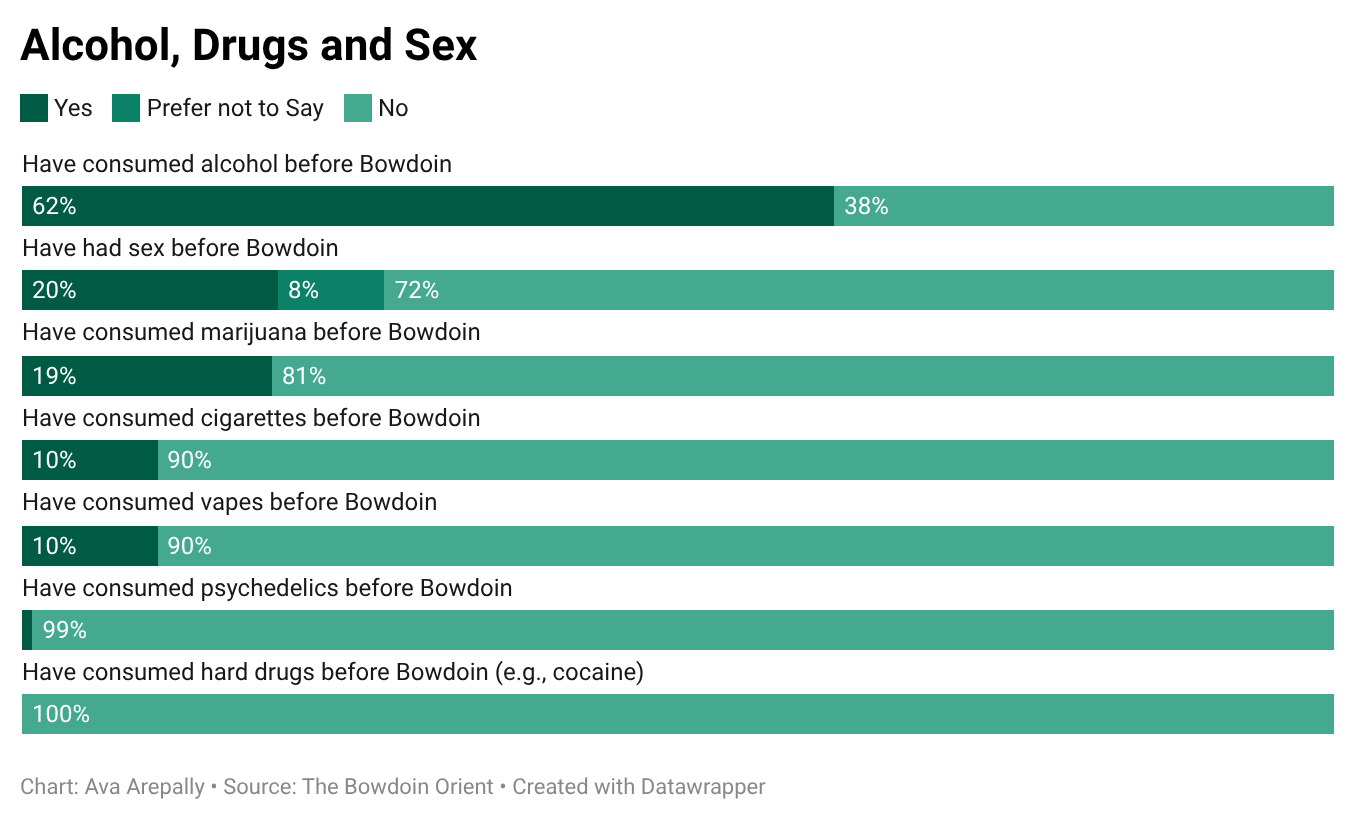
A large majority of first years arrived on campus with drinking experience; 62 percent reported having consumed alcohol before. Fewer students have experimented with other substances, as 19 percent have smoked marijuana before, but only 10 percent have smoked cigarettes or a vape and none have tried harder drugs. Only eight percent of students claim to own a fake ID this year, down from 14 percent and 12 percent in the previous two years, respectively. For the four percent who marked “maybe” this year, we can only wonder.
Only 20 percent of respondents reported having sex before coming to Bowdoin, a decrease from 36 percent of the Class of 2028 and 28 percent of the Class of 2029. The amount of respondents preferring not to answer that question increased to eight percent, from five percent and six percent in the previous two years.
The first-year class leans liberal, with an average of 29 on a 0–100 scale, with 0 being “very liberal” and 100 “very conservative.” This marks a four-point increase from last year.
As students think about life beyond Bowdoin’s four years, those interested in a career in finance ranked a 37.2 on average on the political scale, consulting a 49.5, healthcare a 35.7, technology a 46.8, law a 29.7 and government a 27.2. With the upcoming election in mind, those who are eligible to vote in Maine ranked on average 27.7, compared to 36.9 for those not planning to vote, 27.6 for those planning to vote in their home state and 37.5 for those ineligible to vote in the U.S.
Miscellaneous
Now, on to the hard-hitting facts.
In true Bowdoin fashion, the Orient asked first years if they own or plan to purchase Blundstones during their time at Bowdoin. Fifty-seven percent of respondents said no, 23 percent said yes and 23 percent responded maybe. This is a similar, yet slightly increased result compared to last year, where only 17 percent of respondents from the Class of 2029 claimed they owned or planned to own Blundstones.
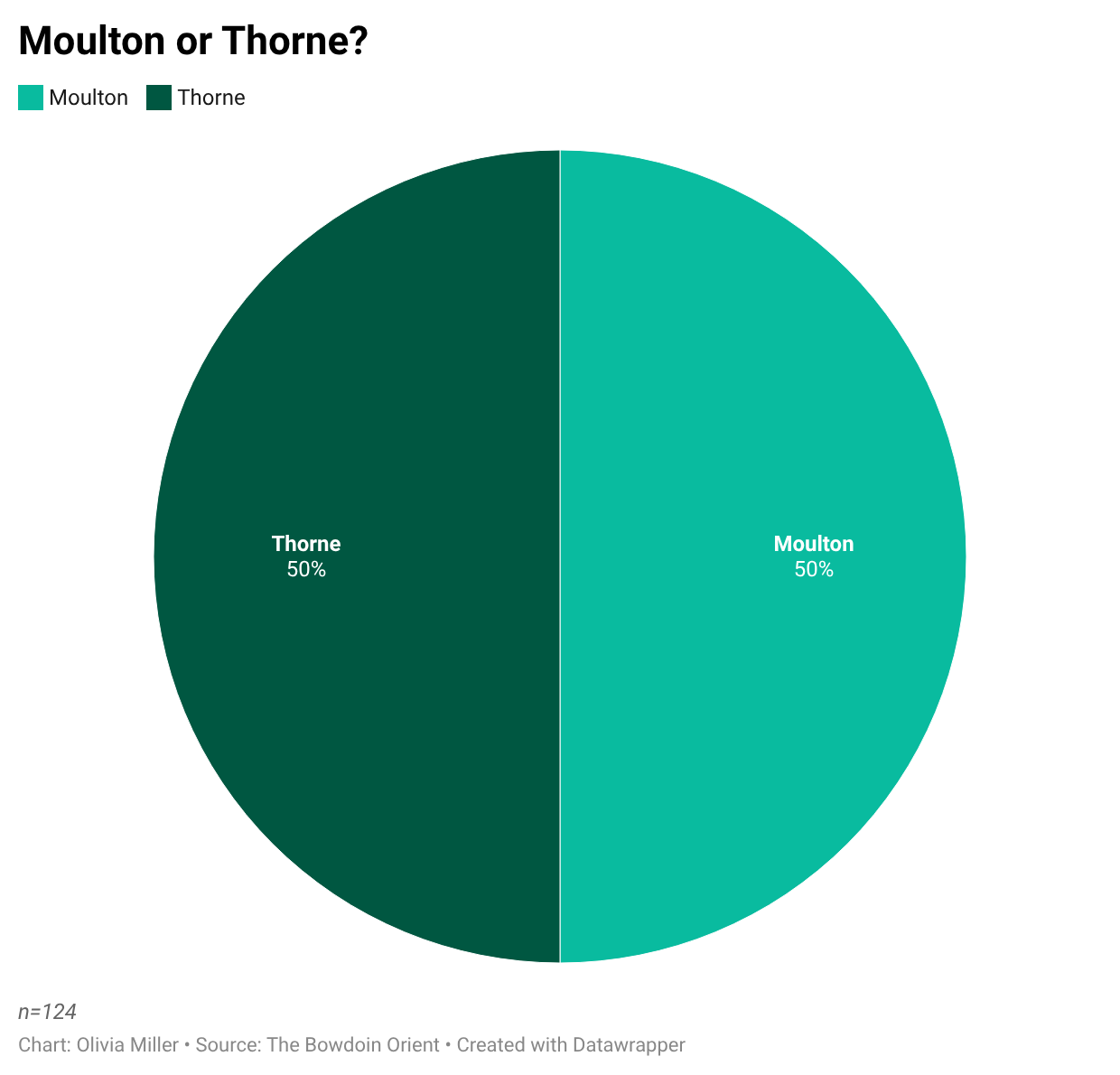
Finally, one of the most controversial questions has seemingly reached a stalemate. Preference for dining hall has an exact 50-50 split, leaving Moulton Union and Thorne Hall tied amongst Class of 2030 respondents.
Ava Arepally, Greta Colloton, Linley Grosman, Olivia Miller, Andy Robinson and Alex Stein contributed to this report.
Comments
Before submitting a comment, please review our comment policy. Some key points from the policy: