
Are we experiencing a social currency crisis?
September 25, 2026
 This
piece represents the opinion of the author
.
This
piece represents the opinion of the author
.
 Cline McConnell
Somewhere between telling our stories and listening to someone else’s, we seem to have lost the art of conversation.
I don’t mean to indict the Bowdoin student body. If anything, I’m writing from a place of curiosity. But after enough dinners and late-night conversations, I’ve begun noticing a pattern in the way we speak to each other.
I knew this guy. He was charismatic, very extroverted and interested in building community. His charm often blinded others to his self-importance, which aided his social standing, and made everyone want to be his friend. Initially, I was uninterested in building some type of camaraderie with him. My first impression of him: righteous, self-motivated and just straight-up annoying. Still, I decided my first impression might have been premature. But instincts always seem to know best, and after spending a few weeks in the same circle, he asked me where I was from.
“Maine,” I said with a sassy tone, highlighting the offense I felt that he didn’t know. Had he not asked me where I was from before? Can we even call each other friends? Our friendship was based on social gain, and since I provided few popularity points, I felt like I was somehow kicked out of his club.
I’ve found myself paying closer attention to what happens around the dinner table: who gets spoken over, what stories get told and the topics people find worthwhile. I’m lucky enough to have filled my table with people who bring questions worth sitting with, ideas worth chasing and conversations that carry us well beyond the surface.
Nevertheless—like anything—every rose has its thorn, and I’ve also heard my fair share of self-important conversations.
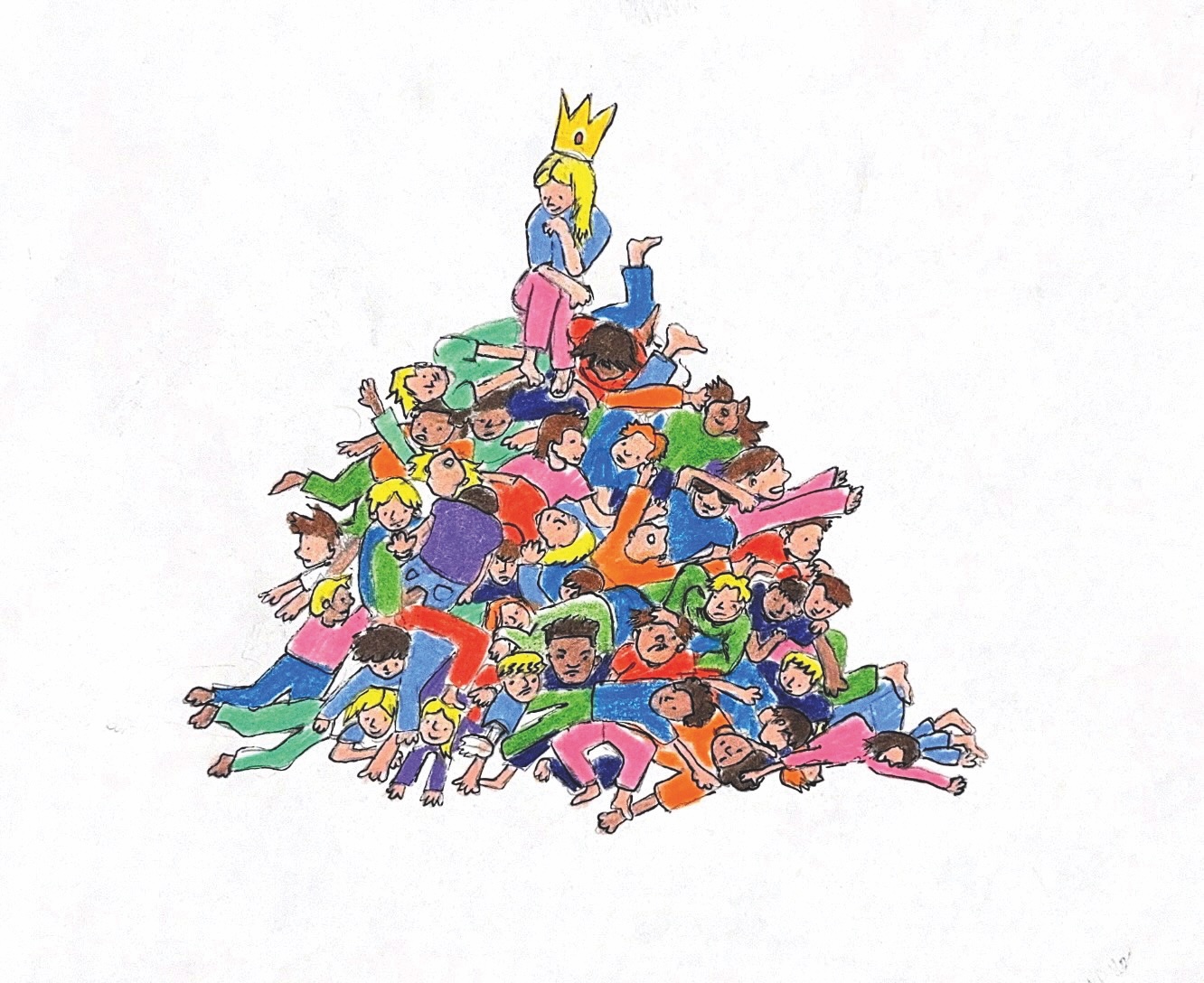
Often, entire meals can be filled with people bouncing off one another, telling stories about their lives without necessarily stopping to take in what the other person just said. It’s a competition about whose life is the most entertaining. Who is the funniest at the table? Who has the best story? It becomes a motive of social capital rather than genuine curiosity about truly knowing someone.
The scary part is when these conversations extend to family or academics. We start talking about our parents as if they were our bosses and our classes as if they were our credentials. At a school so academic, sometimes I wonder if we’ve forgotten how to read the room. Conversations and hangouts seem transactional rather than relational. I laughed the other day when my friend said, “I should just put up a discussion post. Three points for responding to me with a creative question or comment about what I just said.” In all seriousness, I related. Could it be that college is teaching me more about social status than what I’m learning in the classroom?
This weaves its way into our relationships with hometown friends too. The recaps of their time at school often center on the “big markers of life:” love life, classes, living situations and parties. I put quotations there to mock the irony that this is what makes up who we are.
There’s no time carved out to sit and hear the thoughts we never share. Perhaps it’s a matter of asking the right questions to people. Instead of “How’s school?” it can be “What’s changed about you since I last saw you?” There’s a difference between hearing what happened to someone and hearing what it did to them. To be let into someone’s brain is an exclusive invite, one we should accept as often as we can.
Our culture is designed to make us fear intimacy. It puts independence and our future at the center of the compass. But what if we stopped treating people like stepping stones? What if we had time to hear our own thoughts without the distraction of technology and scheduling? What if we let a conversation be something other than an exchange? Questions, questions, questions…
“A Ballad of the Kingsman,” a silly song I like to play, goes like: “And I’m not trying to preach to ya either, I’m just trying to sing to ya a tune, you know string a few words together.” Maybe that’s what I’m trying to do here, too.
Lily Mott is a member of the Class of 2028.
Comments
Before submitting a comment, please review our comment policy. Some key points from the policy: