
Organizing Principles
September 12, 2026
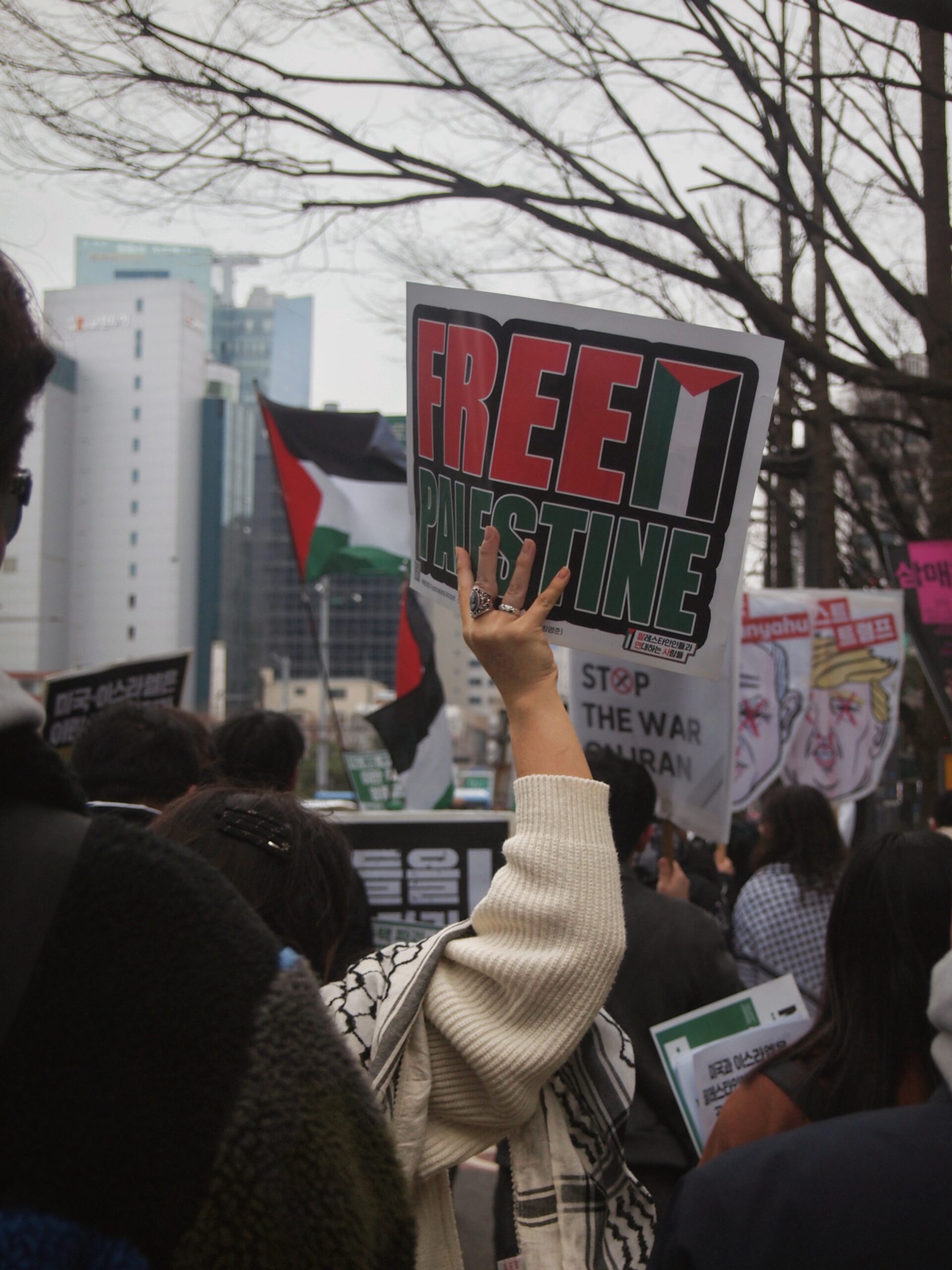 Courtesy of Samantha Lonie Tecson
I studied abroad at Yonsei University in Seoul, South Korea last spring, an endeavor that introduced me to a range of new experiences. I discovered the simultaneous ultimate freedoms (best public transport in the world) and ultimate limitations (everything costs money) of living in a large city. I witnessed new and beautiful landscapes, food, plants and animals. I made lifelong connections with people from all across the world, but also somehow found new friends from right beside me, from my home city of Pittsburgh. All of this was life-altering and important, but what changed me most was what I had least expected from a historically conservative country like South Korea—leftist organizing around Palestine.
I have spent most of my college career involved with Bowdoin’s Students for Justice in Palestine (SJP) chapter, and it is from this experience that I must admit something: many of us SJP organizers dropped the ball after the encampment.
What we needed, in the year after the encampment, was energized forward momentum, direct action, consistent protests and strong efforts toward first year recruitment. This did not happen for a variety of reasons, many of them inherent in SJP’s position at the time—dechartered, many of our most effective leaders having graduated and the rest of us largely unsure of the next strategic move. By the time I left campus for winter break last year, I worried what the future would hold for leftism at Bowdoin. Going back to the suburbs of Pennsylvania—where political movement outside of the cities feels dead upon arrival—certainly didn’t help my frustrations.
I landed in South Korea fearing and expecting the worst. At the time, I didn’t know much about the state of South Korea’s political arena outside of their infamous alt-right movement and cultural conservatism. Instead, upon the first time I entered the Yonsei library to finish some readings, I came upon a student who was a member of Yallah Yonsei, the student advocacy group supporting Palestine, taping up a statement in both Korean and English regarding the recent bombing in Iran.
“The ‘support’ and ‘solidarity’ offered by [President Donald Trump], who reduces everything within reach to a means of lining his own pockets and maintaining power can never be anything more than deception…. Our sole purpose is to stand in solidarity with the Iranian people as they reclaim the spring of democratization entirely by their own hands,” part of the statement read.
My education in Korea involved a deeper understanding of the country’s past political movements—how leftist and student movements have a long, troubled history, how the United States has had an outsized hand in shutting down said movements and how many of them have persisted despite that pressure. Or perhaps, I realized, it was because of that pressure.
South Korean leftists have had to be extremely organized, in a way that my experiences in the U.S. have not yet matched. Not only did Yallah Yonsei produce consistent statements both online and written on large papers, flyers and zines immediately following world events, it also worked with other leftist groups to hold weekly protests every Saturday afternoon. This coalition also held screenings, town halls and post-event dinners where students from multiple universities and community members were able to connect. These groups worked quickly, and they planned three events in advance so that they could announce and hand out flyers for two upcoming events during the current one.
The post-event dinners were one of the most connective moments I had during my time abroad. I met fellow students from all over South Korea—and the world—supporting Palestine’s freedom, and many of us quickly became friends through those protests. I also met older South Korean nationals with a long history of leftist work. At one event, I even spoke with a survivor of the Gwangju Massacre who had been part of the democratization movement when she studied at Yonsei.
At the end of the year, I interviewed Kim Tae-yang, the leader of Yallah Yonsei, about how he helped build this movement, as well as what inspires him to continue his work. During our talk, he spoke about his own influences, from the encampment movement in the U.S. to Korea’s own history of leftist protest.
“Gwangju radicalized a whole generation at the time,” Kim said. “What’s happening in Gaza is working in the same way, in a bigger scale, in a more international scale. What happened in Gwangju radicalized a whole generation in Korea, but what’s happening in Gaza right now is radicalizing a whole international young generation.”
Rin Pastor is a member of the Class of 2027.
Comments
Before submitting a comment, please review our comment policy. Some key points from the policy: