
Hochschild discusses Forensic DNA Phenotyping and new technologies shaping political policy
March 27, 2026
 Addison Moore
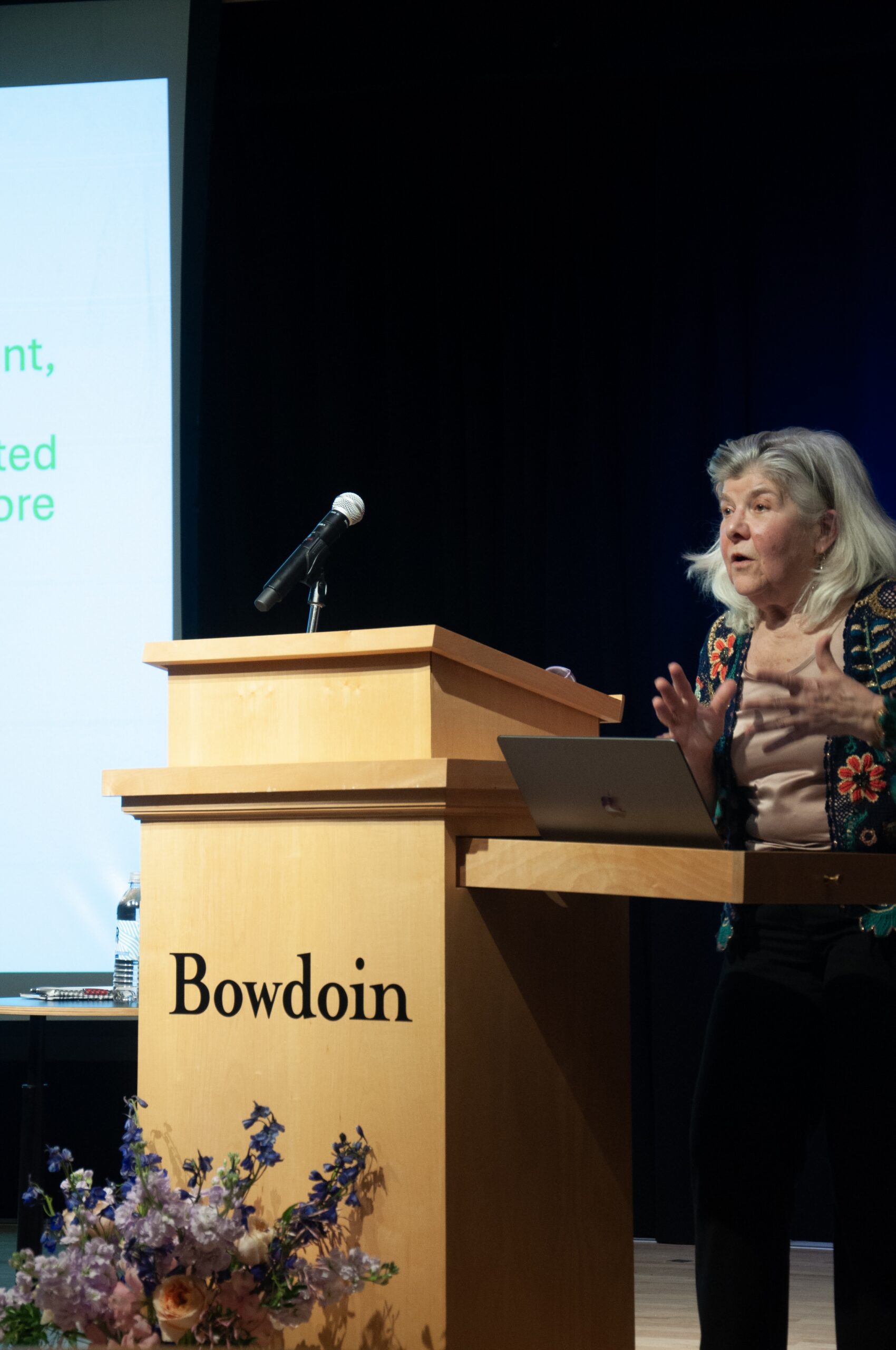
On Thursday evening, Jennifer Hochschild, professor of African and African American studies and public policy at Harvard University, presented a lecture titled “Political Responses to New Technologies: Surveillance? Security? or Meh….” Sponsored by the John C. Donovan Lecture Fund, the lecture focused on Hochschild’s ongoing research project regarding how new technologies can shape the nature of political dispute and policy.
Hochschild’s research hones in on the specific technology of Forensic DNA Phenotyping (FDP) in Germany. This technology would allow the forensic DNA profiling of a person with details regarding their ancestry, age and physical appearance. Hochschild quickly moved this discussion of the use of genomic science past ideas of surveillance and justice, placing it into the context of what its use might be in enabling big, unanticipated public incidents that affect public policy.
“I want to ask two questions, or think about two phenomena. One is the role of unanticipated incidents in shaping a country’s politics and policy.… How do we think about unanticipated incidents, serendipity, accidents as a cause of politics and policy?” Hochschild said. “The second question is the more focused one, which is the role of technological innovations in enabling these unanticipated incidents to shape politics and policy.”
The two big unanticipated public incidents Hochschild focused on are the stories of Alan Kurdi, a two-year-old who drowned in the Mediterranean Sea with his family as they attempted to flee Syria, and German student, Maria Ladenburger, who was raped and murdered by an Iranian migrant.
Hochschild recalled how Kurdi’s death led to a large amount of outrage regarding the Syrian refugee crisis, but essentially led to no significant policy changes, in contrast to Ladenburger’s rape and murder which sparked debate, protests and parliamentary debates in Germany due to FDP technology used in response to a murder investigation.
“These two cases are kind of equally horrific…. The Kurdi case generated a huge amount of talk and essentially no other [outcome],” Hochschild said. “So, the broad contrast I’m trying to draw is, under what conditions does technology help to explain when a horrific incident of moral panic produces a demonstrable outcome in a society as distinguished from just being a horrible case that goes away.”
Hochschild continued to speak on the specific debates had in Germany between varying political parties regarding the usage of FDP, putting this into contrast with the lack of any concrete action sparked by the death of Kurdi. While officials from multiple countries said they would take in more Syrian migrants, they did not.
“The right … and the police union … are seizing on this incident to promote the use of [FDP], which had otherwise been prohibited in Germany. The technology is slotting into an ongoing social crime. Politicians take advantage of it,” Hochschild said. “All these countries said, ‘Oh my god, we’re going to invite 20,000 more Syrians because we don’t want babies to die in the water.’ And they just didn’t do it. It just didn’t happen.”
Associate Professor of Government Jeffrey Selinger attended the talk and spoke on Hochschild’s courage to come and work through a developing research question.
“Research questions evolve all the time, and here she’s an extraordinarily accomplished academic, and she made herself vulnerable, and that was just really refreshing to see,” Selinger said.
Comments
Before submitting a comment, please review our comment policy. Some key points from the policy: