
“What Did They Wear?”: BCMA examines ancient apparel through new exhibit
September 25, 2026
 Andrew Shi
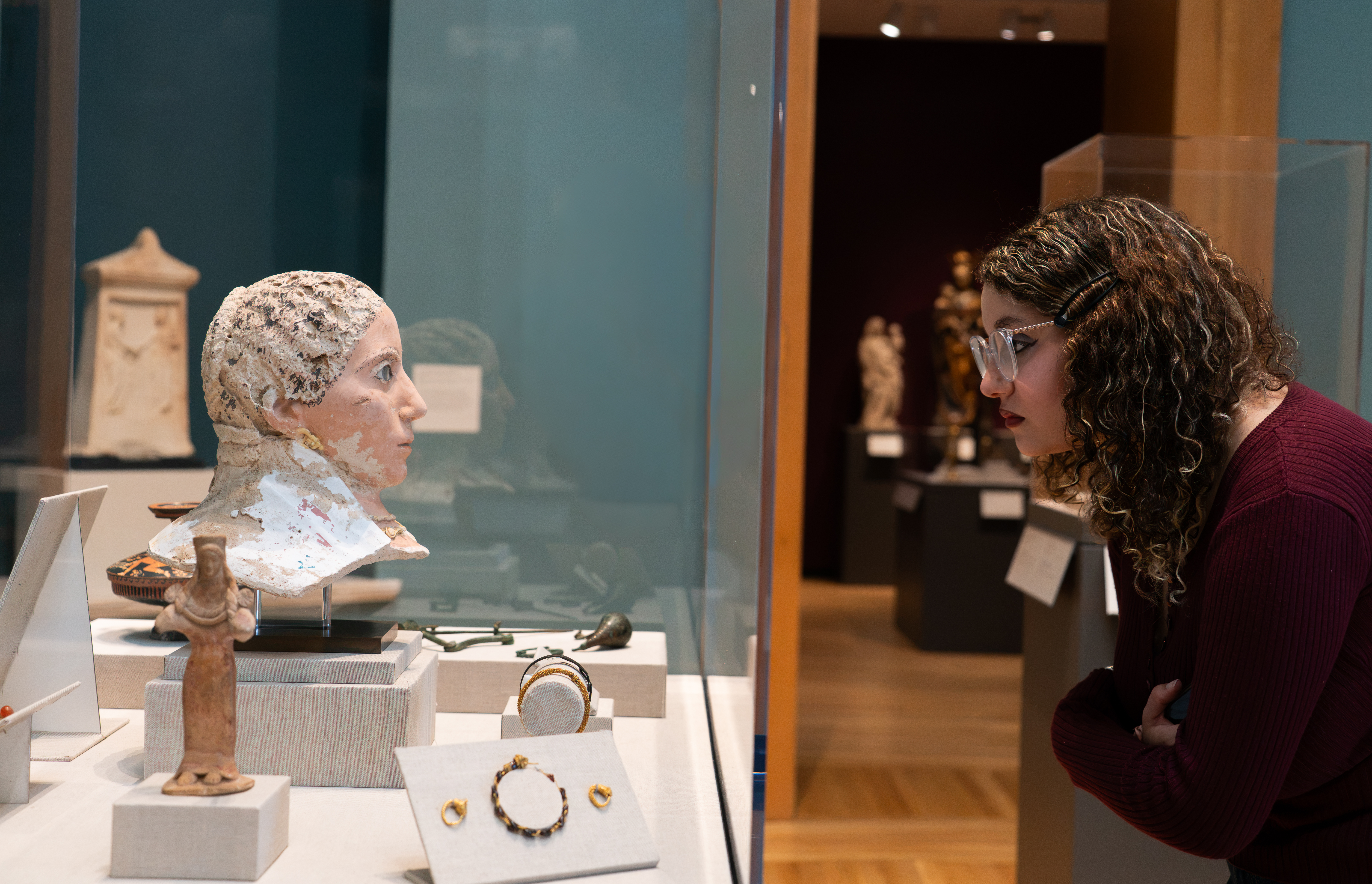
From September 19 until August 26, 2027 the Bowdoin College Museum of Art (BCMA) is presenting a new exhibition surrounding ancient apparel in the Mediterranean region. “What Did They Wear?: The Art of Personal Adornment in the Ancient Mediterranean” features over 100 pieces from the College’s collection, primarily from Greece, Egypt and Italy.
“Appearance matters, right?” Associate Professor of Classics Jim Higginbotham, the curator of the exhibit, said. “One of the most common features in human cultures, … is how to identify, how to represent yourself by your hairstyle, your clothes, what kinds of perfume or colognes you wear. All those things are sending messages, connecting the past with the present. Appearance matters. It did thousands of years ago, and it does now.”
Across the exhibit is a wide array of curated pieces, ranging from hair pins and jewelry to scraps of colorful embroidered fabrics. Even among painted and sculpted depictions of togas and jewelry, observers can learn a lot about the figures on display through their apparel.
Of the many pieces on display, Higginbotham pointed out a small sculpted boot, complete with an upturned toe.
“It was understood to come from … Asia, and it makes its way into the Mediterranean. Men and women both wore these things, and the Roman orator Cicero actually mentions this boot. He associates it with a deity, a version of Juno Sospita, who comes into Italy from the east. And so they depict her with these upturned shoes.”
Outside of the mythological realm, these remnants also communicate a great deal about daily life thousands of years ago. Different cultures utilized various fabrics, precious stones and metals to craft their attire, both out of practicality and a desire to display social status. The likenesses frozen in clay and paint provide a unique snapshot of the fashion trends popular at that moment. Higginbotham expressed the importance of art in shaping our perceptions of fashion.
“The artists, where they come from, what happens to be the fashion of the day, will mold the way that they depict an individual. The artist here is consciously trying to relate a kind of up-to-date fashion. As it comes down, passes down through time, our minds are already keyed to its origin just by virtue of the fashion and the style.”
Higginbotham stressed how the role of artists in reinforcing contemporary fashion trends extends beyond ancient times.
“Later artists also are working with those kinds of stereotypes. That’s why I added this painting by Jean-Léon Gérôme. It’s a portrait of an American woman who was in France at the time, but he painted her as a Greek poetess. Fastened up above the sleeves with the mantle on there, so when you look at it, you go, ‘Oh yeah, she looks like she’s from antiquity, right?’”
Initial audience reactions favored the artifacts on display from Ancient Egypt, which included a golden funerary mummy mask along with protective amulets and accessories meant to be buried with the body.
Higginbotham explained how the inclusion of burial artifacts can expand our understanding of ancient fashion.
“Dress was very important for the afterlife,” Higginbotham said. “That’s why I included pieces of mummy decoration, some of the amulets like scarabs that you would wear to help protect the body as it journeyed into the afterlife. There’s life and death being represented here.”
Visitors found pieces they connected with across regions, time periods and mediums in the case of community member Frank Bifaro, who recently visited the new exhibit.
“I like some of the pottery,” Bifaro said. “That might be my favorite [part],” he added, referring to the denarius coin.
Above all else, the exhibit underlines the importance of fashion in ancient and modern life and how we use it as a method of communication even today.
“You walk around campus, and it’s interesting to observe what people are wearing and to imagine the decisions that go into putting on that type of apparel,” Higginbotham said. “Everyone gets up in the morning trying to send a statement based on what they wear. We can look at bracelets and amulets and rings and earrings, and still see people using those things today. They mean something.”
Comments
Before submitting a comment, please review our comment policy. Some key points from the policy: