
You go without me: Ovid in exile
April 10, 2026
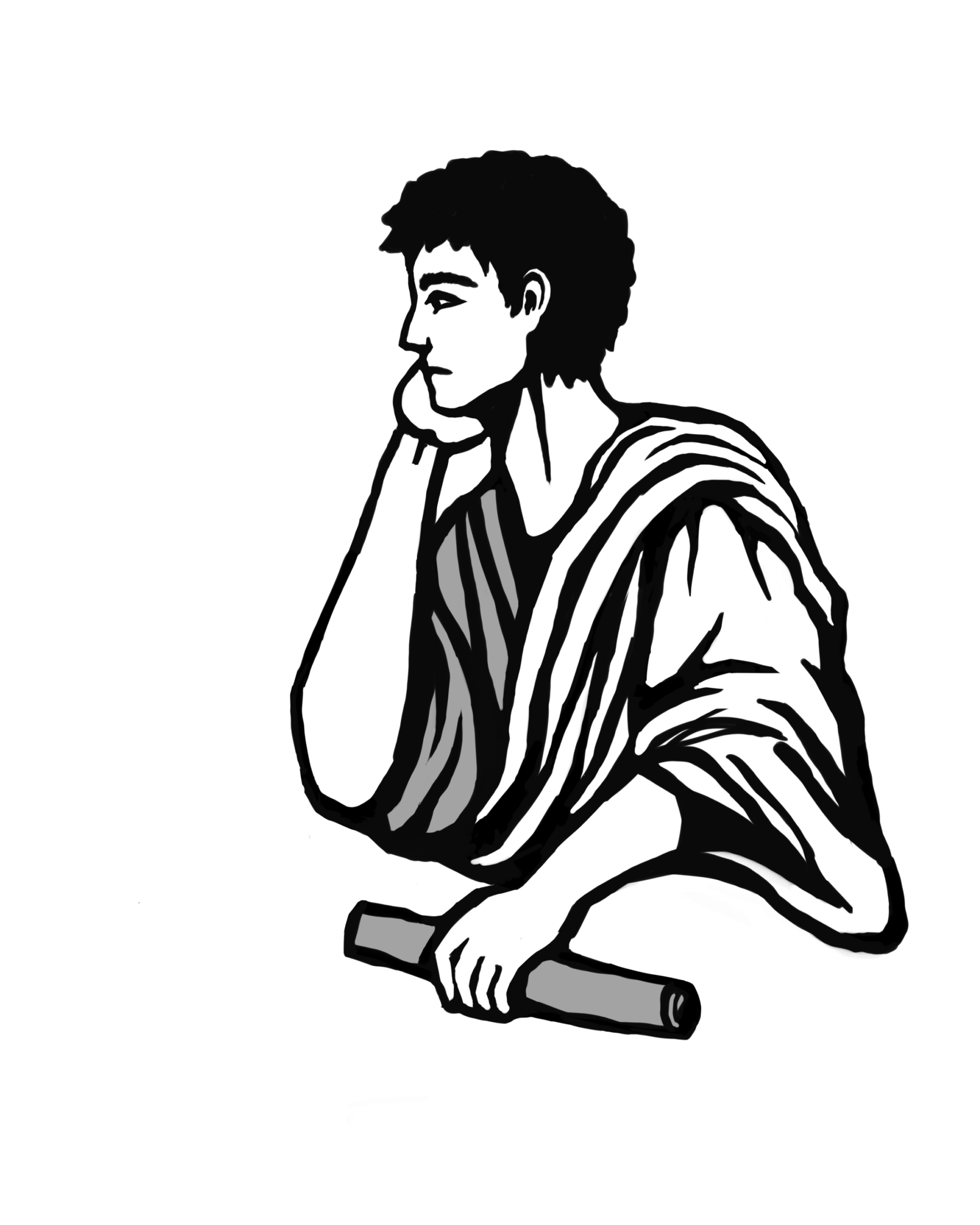 Maggie Xu
What happens when a writer loses the world that made him legible? That is the question that keeps bringing me back to Ovid’s exile poetry, the “Tristia” and “Ex Ponto,” written after Augustus banished him in A.D. 8 to Tomis, a city on the Black Sea far from Rome. If Ovid’s name is familiar, it is usually because of the “Metamorphoses,” that dazzling epic of transformation, or the “Ars Amatoria,” the elegant and mischievous poem that may have helped send him into exile. The exile poems receive far less attention. They are quieter, stranger and far sadder.
Part of what makes them so exciting, at least to classicists, is how central they are to the development of interiority in Western writing. Ovid tells us more about himself than almost any other ancient writer. In “Tristia” 4.10, he composes a full autobiographical sketch from exile, naming his hometown, his family, his education, his literary circle and finally the imperial anger that drove him to Tomis. I won’t linger on how useful it is that Ovid narrates his own life, though it is. I’m struck, though, and want to convey the condition that produces it: The autobiographical emerging under pressure, out of loss, from someone removed from the place that once gave his identity its shape, who turns to writing because it becomes the only place where that identity can still take form.
That pressure remains constant as Ovid contends with what is, for him, a kind of lived nightmare. He gives the reason in the famous phrase “carmen et error,” a poem and a mistake, where the poem was likely the “Ars Amatoria,” while the mistake, more strikingly, remains unnamed. He returns to his suffering again and again, describing its effects with precision, yet the central event never fully comes into view, so that the poems move around it, repeatedly, and that absence begins to shape both what he can say and how he can say it.
You can see that condition most clearly at the very opening of the work, which Ovid likely composed while still in transit. “Little book, I do not envy, but you will go without me into the city.” The line is self-explanatory; he sends his little book to Rome without him, and in doing so admits, almost in passing, that he does not envy it. In Latin, though, nec invideo, meaning “I do not envy,” lands with a quiet brutality that is difficult to reproduce, precisely because of how lightly it is placed within the line, carrying a humiliation that settles at its center. The book returns to Rome. The poet remains where he has been sent.
From that moment, the poem begins to organize itself around a clear solution. The book travels to Rome in his place, moves through its streets, greets his friends and enters spaces now closed to him. Ovid treats it with careful insistence, as something capable of standing in for his presence. At the same time, he determines how that presence will appear, instructing it to arrive plain, worn and unpolished, marked by exile—so that even in absence he continues to shape the terms under which he is seen.
Over time, as he comes to understand his exile as something enduring, the work of writing takes on a different weight. His poems begin to stand apart from the earlier Ovid, whose work is shaped by an incessant need for attention. His voice continues as the world that once sustained it falls away, and writing becomes the place where continuity can still be maintained, even as it turns outward as a plea to someone, anyone, who might still hear him. He writes letters into a silence we cannot recover, addressing friends, patrons and the emperor himself. What remains is only his side of the exchange.
The result is as striking as it is sad: A voice sustained across distance, with no answer returning to meet it.
That, I think, is why the “Tristia” and “Ex Ponto” continue to demand my attention: that constant sorrow and silence that never ends for Ovid. He dies in exile. But his works, his wonderful “little book,” ask a question that cannot help but stand resolute in that pain: What remains of you when you are cut off from the place, the people and the structures that gave your life its shape? Ovid’s answer is spare, but it holds. Under centuries of criticism and derision, his voice remains, and with it the page that carries it forward, even when no reply comes back. For him, and perhaps maybe for all of us, that is enough to continue.
Comments
Before submitting a comment, please review our comment policy. Some key points from the policy: