
Who’s calling the shots?
April 3, 2026
 This
piece represents the opinion of the author
.
This
piece represents the opinion of the author
.
 Mia Lasic-Ellis
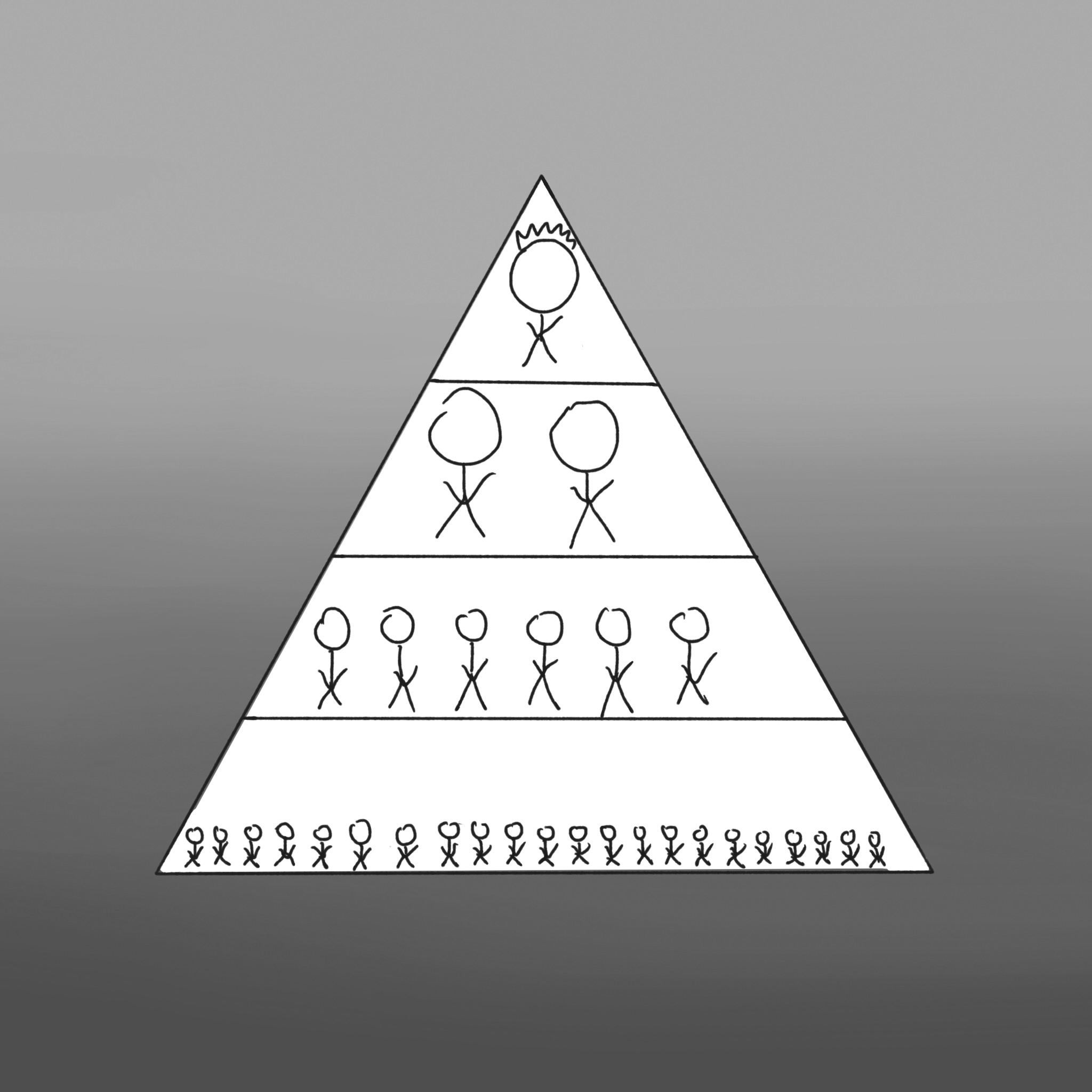
Yay, welcome back from spring break! I don’t know about you all, but the break sparked a lot of thought for me, especially with time away from our Bowdoin bubble. And I couldn’t help but think about what happens when you step outside of the spaces that quietly shape your internal monologue? This week, I want to unpack a topic that might spark some debate: power dynamics. The kind that exists in friendships, relationships and even between students and professors.
I wrote an essay before spring break and got some feedback saying I needed to be less “feely,” that I was too emotionally invested in the sources I was analyzing. And yes, I understand that as students we’re supposed to take feedback without getting upset. But I found myself tangled up in a topic that already meant something to me. And isn’t it thrilling to uncover new layers about something that already matters to you?
So when my professor told me to back off, I felt myself wanting to push back. It made me start thinking about authority. When does guidance become control? We’ve been programmed our whole lives to listen to people in positions of power. To follow directions, meet expectations and work our way up some invisible ladder of “success.” Until, maybe one day, we get to have authority, too. But sitting there reading that feedback, I kept thinking: It was my paper, my research, my time, my education that I’m paying for. So who gets to decide when it’s “good enough”? And what does “success” even mean?
So much of school is about following instructions, but maybe the challenge isn’t doing the work, but deciding how it’s done. I like to imagine a classroom where professors are actually trying to learn from you too. Where the conversation doesn’t just flow one way, where your ideas matter as much as the syllabus. I’ve been lucky enough to see it happen, but let’s be honest, it’s rare and out of style in the mainstream education system.
The problem is, I’m not someone who easily pushes back. I’m nonconfrontational. Systems with hierarchies, like education, have a way of making you feel like speaking up isn’t your place, that you might get in trouble for it. Can you ever challenge the system without breaking the rules? Nonetheless, once I started thinking about authority in this way, I started seeing it everywhere.
Take heterosexual romantic relationships, for example. There is often an unspoken power structure. Masculinity has historically been the dominant force, and that carries into relationships. Men are often seen as holding authority, while the women who do are labeled as bossy, dramatic or “too much.” And this shows up in queer relationships, too. The “masc” person often ends up holding more authority. In all of its stigma, a show like “Heated Rivalry” is a great example. Their dynamic felt balanced. They both existed in masculinity and femininity at the same time, so there wasn’t this constant question of dominance. It felt equal in a way that you don’t always see.
So, in thinking about authority and power in your own life, I urge you to look at things honestly. To question the dynamics that feel automatic. To challenge dominant power, but not by putting someone else down.
The point is finding a way to exist in relationships, whether with partners, professors, friends or even the environment, where authority doesn’t take away your autonomy. Because at the end of the day, I keep coming back to this question: Why is it that people in power seek authority to feel valued?
Comments
Before submitting a comment, please review our comment policy. Some key points from the policy:
- No hate speech, profanity, disrespectful or threatening comments.
- No personal attacks on reporters.
- Comments must be under 200 words.
- You are strongly encouraged to use a real name or identifier ("Class of '92").
- Any comments made with an email address that does not belong to you will get removed.
I really enjoy Lily Mott’s columns. She has great insight and I admire her writing style. Look forward to her next column.