
The haunted history of Bowdoin’s medical school
October 2, 2026
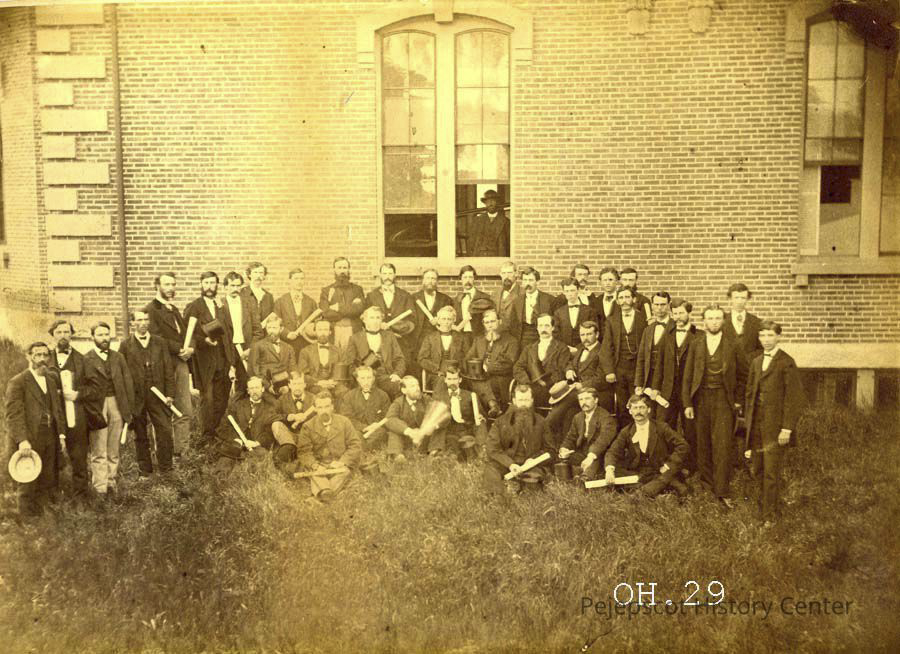 Courtesy of the Pejepscot History Center
Most students go through Bowdoin never knowing there was a medical school on campus for over a century. Others know only the ghost stories it left behind. The Medical School of Maine first opened its doors in 1820, the year Maine gained statehood. It was founded under the Bowdoin Trustees and Overseers, but was legally separate, despite sharing buildings and faculty.
In its early years, the school was in Massachusetts Hall. Medical school in the 1820s took only 24 weeks and required no college degree. By 1904, it took nearly three years and included lectures, dissections and apprenticeships. To graduate, students had to handwrite their theses.
Adams Hall was built in 1861 after Professor Paul Chadbourne pushed to expand science teaching. After the school relocated there in 1862, Adams Hall became the center of the medical school.
“It is the most haunted building on campus,” David Francis, creator of the Haunted Bowdoin Tour, said. “For years, it had a lot of bodies being brought in for medical research.”
The top floor of the building was where dissections took place, while the basement stored the cadavers.
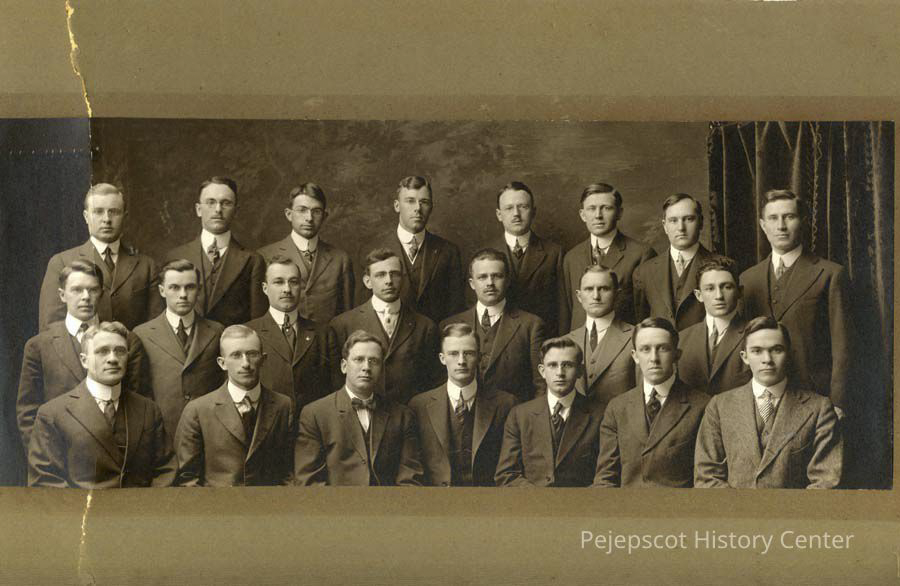 Courtesy of the Pejepscot History Center
“You can actually go see the coffin lid that was uncovered and you can see the cadaver hook and the little areas in the basement where the bodies used to be kept,” Francis said.
As dissections became more common in the 19th century, the demand for cadavers was greater than the legal supply, resulting in widespread grave robbing, disproportionately from poor and Black communities. In an 1830 letter to Parker Cleaveland, Bowdoin’s first math teacher and one of the school’s first lecturers, Nathan Smith recommended a Maryland grave robber and estimated the cost of shipping cadavers in barrels of alcohol, John Cross ’76 explained in an email to the Orient.
In its 101 years, the Medical School of Maine graduated 2,138 doctors, most of whom stayed in the state to practice. In 1849, John Van Surly DeGrasse and Thomas Joiner White became the second and third African Americans to graduate from an American medical school.
“[The school was] among the first medical training programs in America to admit Black students,” Cross wrote.
DeGrasse went on to become the first African American admitted to the Massachusetts Medical Society and served as an assistant surgeon with the 35th U.S. Colored Infantry. According to Cross’s research, more medical school alumni served in the Civil War than undergraduates did.
“While plaques in Memorial Hall list the names of undergraduates who served on the Union side, there is no plaque or other recognition on campus for Medical School alumni who did so,” Cross wrote.
Salustiano Fanduiz, born in Santo Domingo to Afro-Caribbean parents, came to Maine at the urging of a Brunswick diver he met there. After graduating in 1892, he practiced in town for seven years, caring for residents of the local poor farm.
“He wanted to bring his medical training back to his homeland and help people there,” Pejepscot History Center Executive Director Larissa Vigue Picard wrote in an email to the Orient.
Fanduiz returned home in 1899 and was jailed for three years for political activity.
Frank Whittier ’85, an 1889 graduate of the medical school, taught pathology and bacteriology. In his Adams Hall lab, he developed the first test to tell human blood from animal blood.
“So not only was the medical school training people to become physicians, people there were doing world-class science,” Picard wrote.
The school also faced many challenges. There was no hospital in Brunswick. The Maine General Hospital opened in Portland in 1874 and became the school’s clinical site, so students had to travel there. In 1834, the state stopped its $1,000 annual payment, forcing the school to run on tuition and gifts. Then, in the early 1900s, the Carnegie Foundation and the American Medical Association funded Abraham Flexner to evaluate every medical school in the U.S. and Canada.
“Education started to become more specialized,” Francis said.
Flexner visited Bowdoin in 1909 and found inadequate equipment, no full-time lab faculty and recent graduates running the dissecting rooms, not professors. His 1910 report advised Bowdoin, Dartmouth College and the University of Vermont to stop teaching medicine.
“The medical school closed its doors pretty abruptly,” Francis said. “Its review was not flattering.”
The Medical School of Maine closed in July 1921, 101 years after the state’s first legislature created it. Maine did not have another medical school until 1978, when an osteopathic college opened in Biddeford.
The national overhaul that ended Bowdoin’s school also narrowed who could become a doctor. After the Flexner Report, five of the country’s seven Black medical schools closed.
Adams Hall stayed. Today it holds seminars, classrooms and faculty offices across social science and humanities departments. The cadaver hook still hangs above the stairwell.
The rest of the school survives in Special Collections & Archives: lecture notes, class photographs, a coffin lid pulled from the floorboards in 2007 and hundreds of handwritten theses. Their titles include “Influence of the Imagination upon the Foetus in Utero” (1830) and “Injurious Effects of tight Lacings” (1831).
“I think it’s wild to see what students were researching/writing on,” Special Collections Education and Outreach Librarian Marieke Van Der Steenhoven wrote in an email to the Orient.
Comments
Before submitting a comment, please review our comment policy. Some key points from the policy: