
Franklin Leonard named the College’s first Herman S. Dreer Leadership Fellow, will visit campus twice this year
September 18, 2026
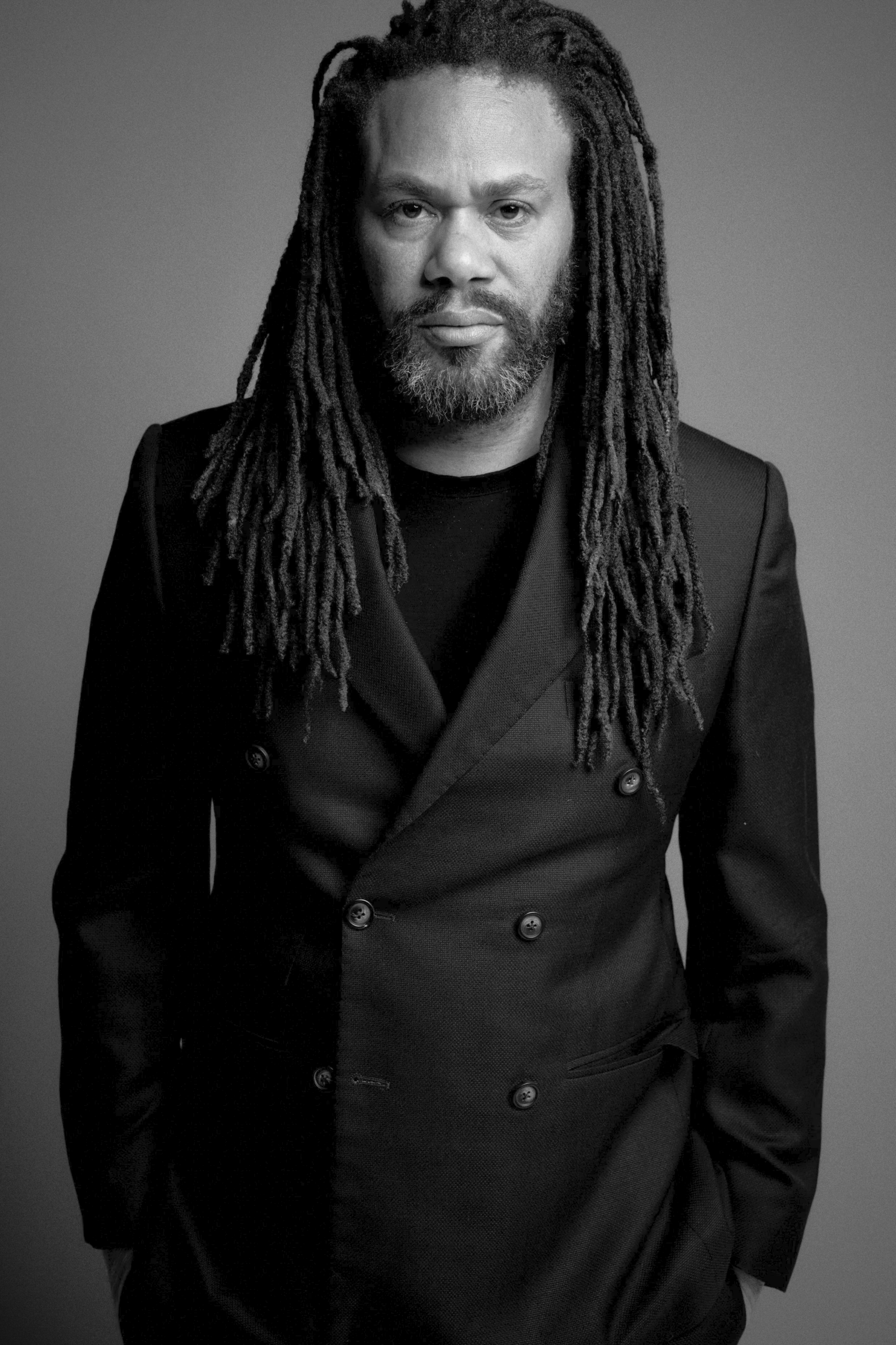 Courtesy of Bowdoin Communications
Franklin Leonard, a Hollywood producer, entrepreneur and founder of the Black List, a survey of unproduced film scripts, has been named the College’s first Herman S. Dreer Leadership Fellow. The position honors Herman S. Dreer, Class of 1910, a scholar, educator and civil rights leader who was the second Black graduate in Bowdoin’s history.
In addition to virtual programming, Leonard will visit campus twice this academic year, first on September 28 for a public conversation alongside writer and producer David Simon. During this visit, Leonard will also work closely with students in both classroom and mentorship settings.
Leonard’s career has been driven by the desire to recognize talent, no matter where it comes from.
“I think that there are many, many, many people everywhere who’ve contributed substantially to society whose names we’ve since forgotten or never really paid attention to,” Leonard said. “And I think that’s one of the things I’d love to fix about the world.”
What began as Leonard’s way to find good scripts evolved into the Black List, an annual survey of film executives and producers who vote on their favorite unproduced screenplays. Today, through its open online submission system, any aspiring writer can be evaluated solely on the quality of their work, bypassing the need for a talent agency or industry connections.
Leonard takes a sympathetic approach to addressing Hollywood’s exclusivity, focusing primarily on building better systems rather than blaming the individuals who work within them.
“Most people are doing their best. They’re just trying to get through the day,” Leonard said. “They have obligations, they have anxieties, they have stresses, and they just don’t have the capacity or time to say … ‘What if we did this thing differently?’ and don’t often realize that doing that may solve a lot of their other anxieties or stressors.”
The Black List has seen enormous success, with its movies earning more than 250 Academy Awards nominations and 54 wins to date. A Harvard Business School study found that films produced from Black List scripts generate 90 percent more box office revenue than their counterparts.
Leonard suggested that challenging our assumptions about where talent can be found helps address broader institutional blind spots.
“Maybe the quietest person in the room actually has the most to say, and they’re choosing not to say it for some reason,” Leonard said. “Or maybe they’re the most capable of leadership if given the opportunity to have it.”
Considerations like these, Leonard suggests, are how individuals and societies can begin to address existing dynamics of exclusivity and talent discovery.
“I think often if everybody did that, a lot of these problems that I think are institutional could be solved,” Leonard said.
Leonard will bring this mindset directly to Bowdoin’s campus. For Leonard, this is a transaction that goes both ways. He views his role partly as a chance to “demystify and clarify” the professional sphere by answering as many questions as possible and being open about his own experiences in fields from screenwriting and filmmaking to politics.
“I’m not [the] single source of truth,” Leonard said. “But if I can just [gift] as much of what I know that can be helpful about the world to as many students as possible, I’ll definitely consider that a win.”
In return, Leonard finds fuel in connecting with the next generation.
“When I have conversations with students in general, especially right now, I learn a lot, and I come away really excited about the work that I’m doing, re-energized about it because I’m like … the kids are all right,” Leonard said. “So, selfishly for me, I’m trying to free ride y’all’s energy into my sixth decade.”
As the Black List expands the film industry’s understanding of where talent comes from, it echoes a similar lesson that Dreer demonstrated to his Bowdoin classmates. As Kenneth Chenault ’73 wrote in his 1973 honors thesis, “The Blackman at Bowdoin,” the “‘mere fact of [Dreer’s] presence ‘exploded’ many of the stereotypes of Blacks commonly held by whites at that time.’”
At Bowdoin, Dreer was “tolerated … rather than accepted socially,” Chenault wrote. Despite the profound exclusion and institutional challenges he faced, Dreer graduated in three years as the second-highest-ranked student in the Class of 1910.
After getting his master’s degree in Latin theology from the Virginia Theological Seminary, Dreer and his family settled in St. Louis, Mo. There, he became involved with Stowe Teachers College, a training institution for Black teachers, and reopened Douglass University, a four-year institution dedicated to providing Black students access to higher education.
This was only one facet of Dreer’s sprawling legacy, which established him as a formidable civil rights strategist and author, a key figure behind the landmark housing case Shelley v. Kraemer (1948) and a pioneer of Black history curricula across the nation, including the celebration of Black History Month.
Dreer dedicated his life to expanding opportunities for people whom existing institutions had too often failed to recognize or advance.
Fifty years later, Kenneth and Kathryn Chenault’s gift to the College would establish the Herman S. Dreer Leadership Fellowship to honor Dreer’s legacy. For Leonard, honoring Dreer’s perseverance is a path to identifying where barriers to access still exist today and his motivation for the work remains remarkably simple.
“I don’t know that I’ve found anything more fulfilling in this life than creating opportunity for people who wouldn’t otherwise have it when they deserve it,” Leonard said.
Comments
Before submitting a comment, please review our comment policy. Some key points from the policy: