
A meditation on nostalgia
March 27, 2026
 This
piece represents the opinion of the author
.
This
piece represents the opinion of the author
.
 Ethan Lam
I am constantly falling victim to nostalgia. The borders of my memory often feel more akin to a cell than a palace. It has been this way for me as long as I can remember. In childhood, I would mourn the past before it even happened, spending weekends with my mother counting down the seconds until I had to leave rather than just enjoying that time. I held onto reminders of the past, birthday cards, notes passed in class, clothes I no longer fit into like they were precious jewels, anticipating that sad sensation before it had the chance to take hold of me.
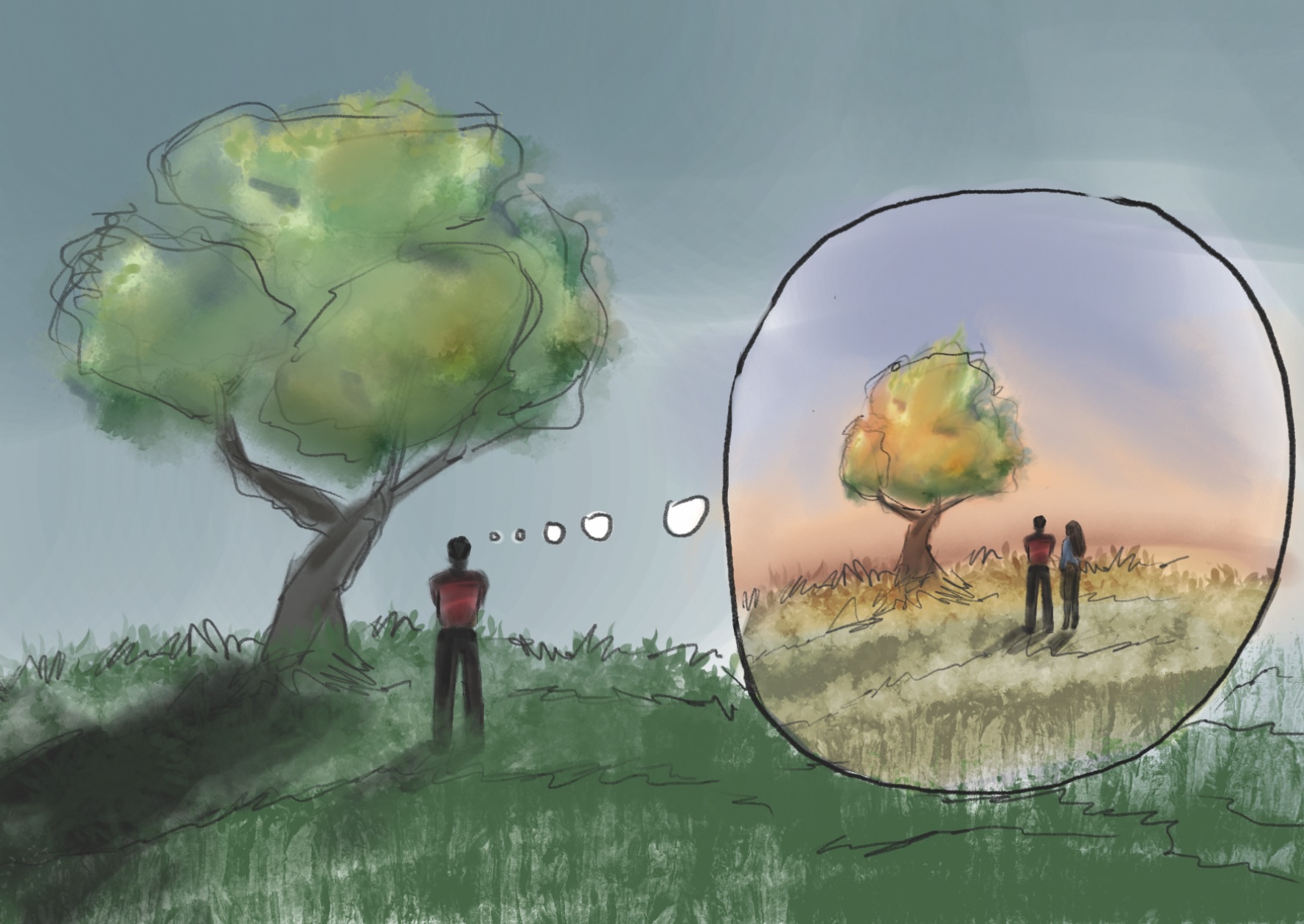
As I have repeatedly made evident in my additions to this column, I am incredibly prone to homesickness. The past, for me, takes on a hazy, dreamlike quality and becomes an ideal, elevated to a pedestal I recognize as a farce but cling to nonetheless. It is my goal in writing this piece to investigate that romantic desire and to appreciate the pitfalls of this way of thinking that I find myself so often engaged in.
Nostalgia is, I believe, a near-universal psychological experience, and one I have been reflecting on heavily as of recent. I couldn’t afford a plane ticket home for spring break this semester, so instead, I took the opportunity to visit my best friend from home in Vermont, where she attends Middlebury College. It was the first spring in three years that I hadn’t gone home, which made for an interesting emotional experience.
While it was a wonderful two weeks, there was certainly a bittersweet longing for that blistering heat and blinding sunshine characteristic of my hometown. Of course, that much time spent with my best friend sent memories of our childhood and adolescence flooding back as well. It was the trip back to Bowdoin, though, that really triggered this meditation on nostalgia. If you know me, then you know it was a pretty terrible experience. To put it simply, my 12-year-old Nissan sedan was no match for an unexpected winter storm.
As I stood in the aftermath of my car accident, out two hundred dollars to a tow company and indebted to a kind old man who drove me back to Middlebury to spend one more night, I couldn’t help but become entangled in a web of nostalgic fantasy. My best friend had left, gone on her own spring break, and I, alone in her dorm, spent the night wrapped in her blankets and consumed by my own thoughts. This culminated in one of the most emotionally exhausting weeks of my life, but I’ll spare you the drama. What I am more interested in discussing is whether or not nostalgia is something to be desired.
Nostalgia is generally categorized as a positive feeling, a wistful tenderness and affectionate yearning for the past. I believe it is an emotion that has the powerful ability to anchor us in the present by reminding us of what has passed. It’s a connecting sensation that brings us together. In writing about it, I’m hoping to do just that. At the same time, while nostalgia is both comforting and grounding, in excess it morphs from solace into anguish. It can be paralyzing, detrimental to our growth and maturation. As I become an adult, I’m beginning to realize that the past was usually never as good as it seems, and the future is usually better than it appears.
Latching onto nostalgia is not only dangerous for our personal development—it is easily distorted into a political weapon, threatening our collective growth as a society. Trump’s promise to “Make America Great Again,” for example, plays on the fear of an uncertain future and the imagined security of the past. In reality, there is absolutely no mythic past to return to. The imagined “great America” does not exist: The truth of this country’s history is nothing to glorify. When we hold so tightly to our perceptions of the past, we abandon the possibility of a better future. As powerful as it is, I think nostalgia is something we must gradually let go of, lest it hold us back. I’d like to start embracing the present.
Comments
Before submitting a comment, please review our comment policy. Some key points from the policy: