
ResLife announces Reed House renovation, looks toward future College House updates
February 27, 2026
 Bergen Pickett
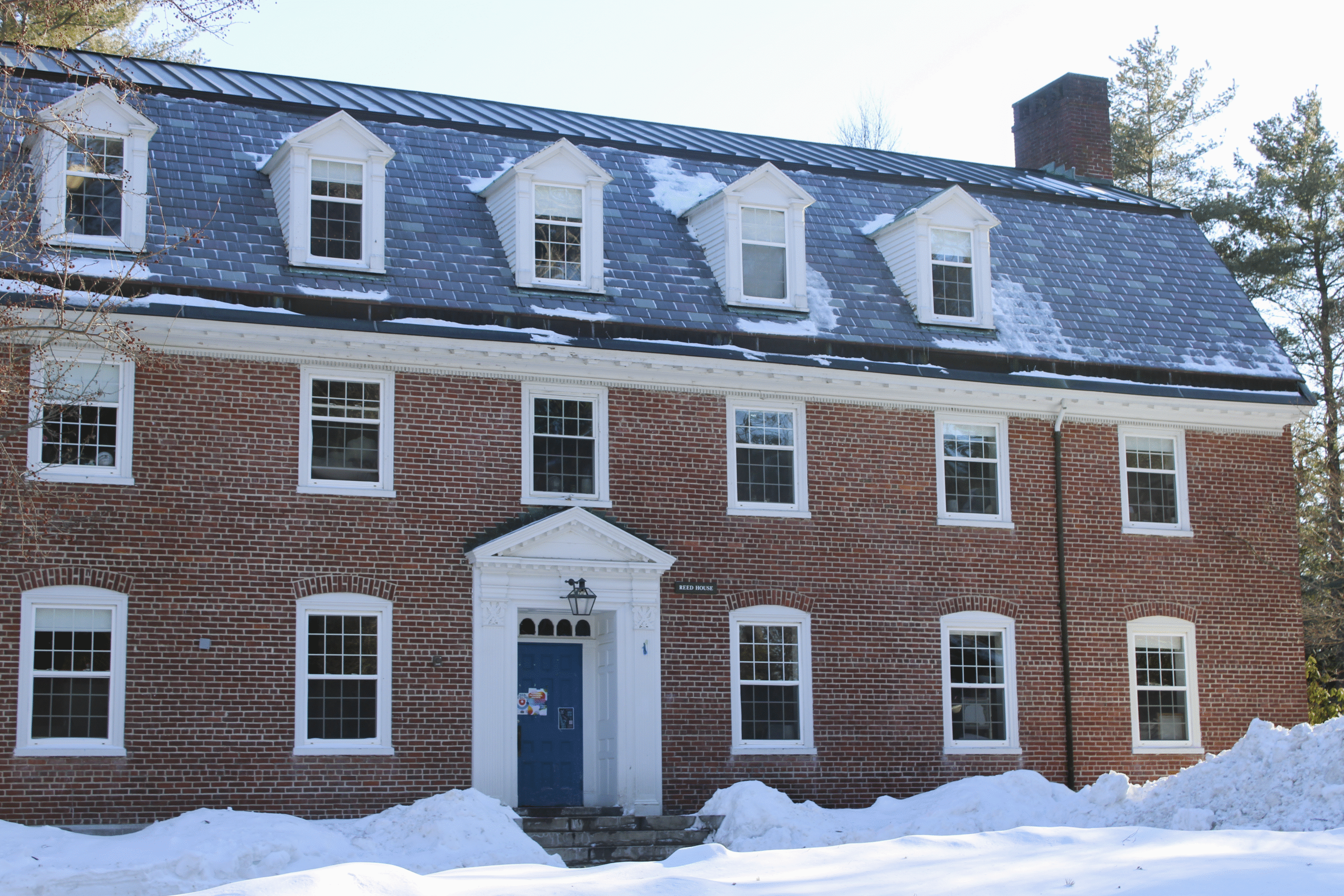
Last Friday, the Office of Residential Life (ResLife) announced that Reed House will undergo renovation during the 2026–27 academic year. The announcement came amid the College House application process for current first-year students and several other infrastructural challenges in the houses, including mold in Reed House, a burst pipe in Quinby House and recurring drainage problems in Howell House.
Assistant Director for Residential Life Alex Gates ’22 explained that Reed’s renovation will be the first of several projects under the new campus master plan, with the goal of renovating one house each year for the foreseeable future.
“This has been something in discussion for ten plus years, as far as the general idea that the College Houses will eventually need some work, some renovations,” Gates said. “I think our hope is that one [will be renovated] a year.”
Gates explained that Reed was chosen for the first renovation due to the age of the house.
“It’s hard to think of an order, but I know that Reed has been at the top of the list for a while just because it’s one of the older houses as far as the infrastructure,” Gates said.
One persistent challenge faced by previous Reed residents is mold, forcing the temporary evacuation of several students from their rooms for cleaning earlier this year. Reed proctor Isa Fernandez ’27 explained that some residents were experiencing allergy symptoms.
“It’s not black mold that we have; it’s just generic, allergen mold that’s causing issues, but I [had] a couple students having asthma-like symptoms, cold-like symptoms for a couple weeks at a time,” Fernandez said.
Fernandez noted that Director of Environmental Health and Safety (EHS) Charly Wojtysiak met with Reed residents to explain that the house’s plaster and brick structure traps heat inside the house, which can lead to mold growth. Wojtysiak helped students identify ways they could reduce humid conditions and prevent mold.
“Since the mold issue is [caused by] a lot of student activity, like how they have their rooms, it was really helpful for a lot of my residents who didn’t really realize that keeping their blinds open during the day would help because having the blinds closed against the windowsill traps the heat behind the blinds,” Fernandez said. “And a lot of them also got [High-Efficiency Particulate Air] filters from EHS.”
In an email to the Orient, Wojtysiak explained how ventilation issues can contribute to humid conditions in the houses.
“One of the biggest challenges that we face in College Houses and in many other buildings on campus is that they lack mechanical building ventilation to all spaces. This makes it more challenging to control temperature, humidity and air exchange within buildings or rooms within buildings,” Wojtysiak wrote.
Following confirmation of Reed’s imminent renovation, Gates sent an email last Friday to all College House applicants who listed Reed as one of their house preferences. Throughout the week, applicant blocks responded with updates to their preference lists without Reed.
College House applicant Brendan Ledwick’s ’29 block originally ranked Reed as its first choice. While his block decided on Boody-Johnson as their new first pick, he expressed frustration with the timing of the announcement.
“We geared our interview answers toward the benefits of living in Reed, so having to make a last second application change after the house we shaped our application for was closed was pretty inconvenient, to say the least,” Ledwick wrote in an email to the Orient.
Without Reed, fewer spots will be available for this year’s crop of College House applicants.
“The catch with all this is [that] without Reed, we are selecting 26-ish less people than we would in the previous year. So a pool that was already pretty competitive, numbers-wise, is now even more competitive because there’s 26 less spots for people to get into the College Houses,” Gates said.
Gates predicts that this will result in around a 60 percent acceptance rate for College Houses, compared to previous years’ average of around 70 percent. If the renovation schedule continues as planned, College Houses will house around 175 sophomores each year until the renovations are complete.
When asked about where the remaining students would be housed, Gates confirmed that the College has adequate housing to accommodate the Reed renovation.
“[Director of Residential and Housing Operations] Lisa [Rendall] has a good understanding of where we’re going to be able to find the 25 odd beds. I think my understanding is that some buildings that might be less popular in the lottery might be a little busier than typical, just because we’ll be filling in spaces wherever possible,” Gates said.
After Reed, Burnett House and Helmreich House are slated for renovation.
“They might not be seeing the same grand scale issues that we’ve seen in a couple houses this year, but they are often the ones that people might look past when applying to the houses and that’s something that we’re super aware of and want to get the chance to reinvigorate those if possible,” Gates said.
In the past two weeks, water damage has been an issue in both Quinby House and Howell House, which experienced a pipe burst in the middle of the night and a leak in the dining room, respectively.
Gates said the pipe burst in Quinby’s basement was an example of the Office of Safety and Security, Facilities Management and ResLife collaborating to rapidly address an infrastructure issue. While residents had to temporarily evacuate the building in the middle of the night, they were able to return by around 6 a.m.
Quinby House proctor Alice Fang ’27 expressed appreciation for the College’s quick response.
“The houses are old and are prone to damages, but it only brings the house closer,” Fang wrote in an email to the Orient. “I appreciate all the deans and ResLife staff members that reached out to me early in the morning before sunrise to check in.”
In addition to improving critical infrastructure, Gates hopes that renovations will create community spaces across all houses, including Helmreich, Burnett and Howell, which currently do not have basements for gathering.
“When you think of houses like Quinby or Baxter that have the big gathering spaces, they’re known for having those, and it would be awesome if we could spread out that involvement to all the other houses, ” Gates said. “That’s something that I’m really hoping for.”
Comments
Before submitting a comment, please review our comment policy. Some key points from the policy: