
From sonar to solar: A history of the Brunswick Naval Air Station and Bowdoin College
February 27, 2026
 Isa Cruz
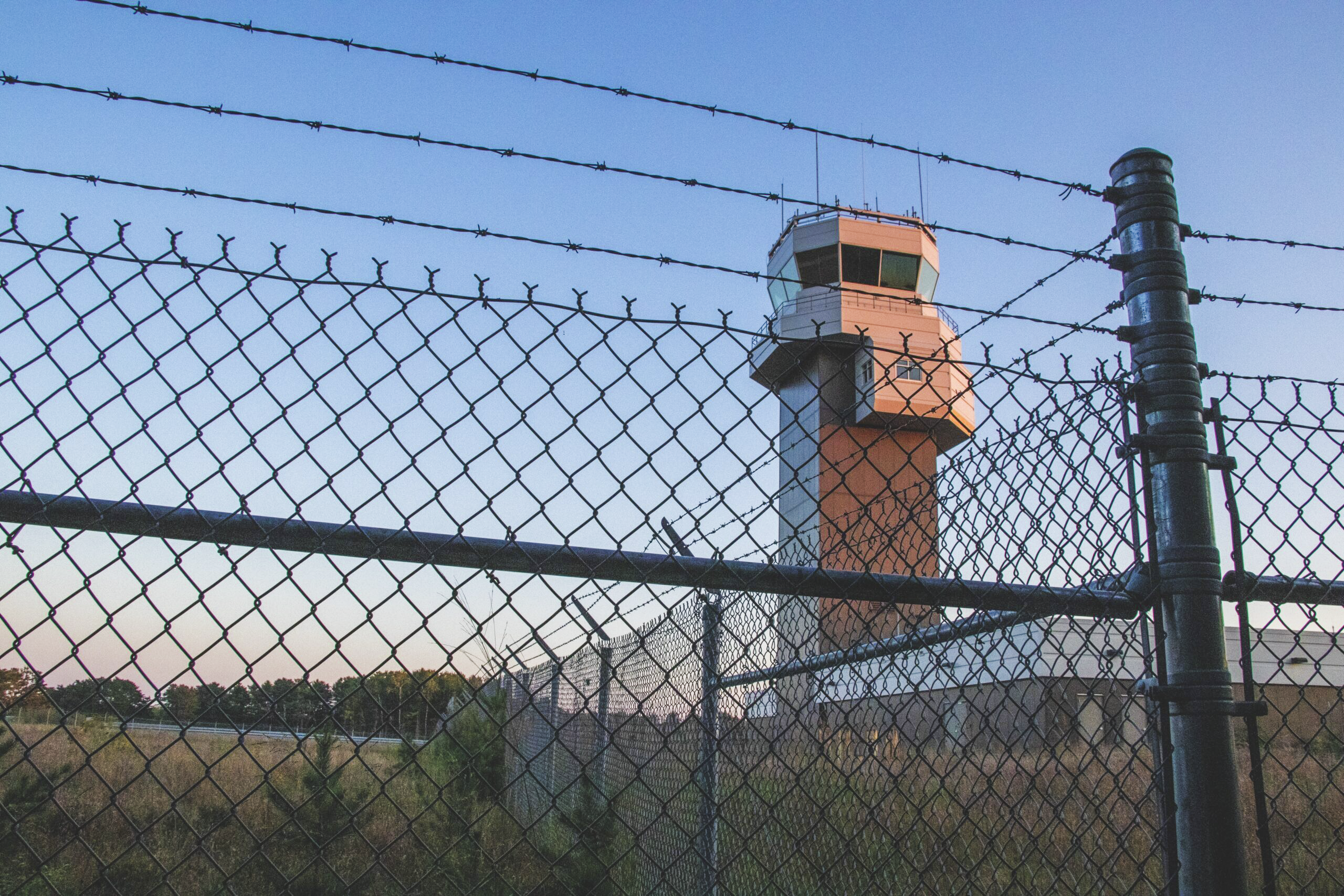
Fifteen years ago, the Brunswick Naval Air Station (NASB) shut down its runways for good. Caught between the closure of the second-largest employer in Maine and the start of the 2008 financial crisis, Brunswick’s future teetered on a cliff: Could the town stand?
But today, Brunswick is a bustling college town with a resurgent downtown and housing market. The College has helped to fill in the hole left behind by the NASB and keep Brunswick afloat, but not without issues.
How did Brunswick weather this change? We start with a history of the NASB, the town and the College, examining ebbs and flows in the land’s ownership and use.
April 1943: The NASB opens
An April 15, 1943, article in The Bowdoin Orient reported that “the town of Brunswick is the site of a gigantic U.S. Naval Air Station, now under construction. This and other war activities in the region and on the campus have put heavy pressure on room accommodations and meal facilities both in town and on campus.”
The NASB was opened alongside auxiliary stations in Lewiston-Auburn, Sanford and Rockland on April 15, 1943.
The Army and Navy continued to expand into student life as many students prepared to join the armed services in the midst of World War II. But some interactions were more collaborative: On multiple occasions, the Orient reported on baseball games between the Polar Bears and workers at the NASB.
Former Governor of Maine Sumner Sewall noted at the NASB opening ceremony that “[there] is the joy and satisfaction of seeing lands of little value turned into resources of great value to our state and nation…. Thus by the construction of this magnificent Naval Air Station we move forward from the chaos and destruction of war toward a more united world of freedom and hope.”
Fall 1946: The College moves in
As early as August 1946, the College began housing students in buildings at the NASB due to a record high enrollment of around 950 students. As part of the demobilization from World War II, the Navy turned over parts of the NASB’s property to the College and the University of Maine for a campus branch. A bus service was established between the main campus and the repurposed officers’ quarters. At this time, the College also purchased a warehouse at the NASB for food storage.
The NASB was still very much a military operation. “A marine sergeant stepped from behind a building and asked where we thought we were going. We told him we were going to find out about living quarters for college men,” a report from the Orient stated.
1951: The NASB reactivates
As soon as the College had begun to move onto the NASB, the NASB pushed it out. With the outbreak of the Korean War, the U.S. Navy reactivated the NASB, though crews from the NASB never saw actual combat. However, Orient coverage from this period makes clear the Navy’s growing necessity for the NASB as the Cold War progressed.
1986: The NASB during the Cold War
In 1986, Bowdoin students were welcomed to the NASB on guided tours by base employees, providing as many insights as possible into the base’s operations. Though students on the tour did not get to see aircrafts such as the Lockheed P-3 Orion up close, they learned about the P-3 missions patrolling the North Atlantic for Soviet submarines. These missions, based out of the NASB, were intended to deter Soviet attacks, though the P-3 aircraft were equipped to carry weapons.
Beyond warcraft and military tactics, students also appreciated the NASB’s connection to the Brunswick community.
“The base pours a lot of revenue into the local businesses—some of which, I would guess, are almost totally dependent on it,” an October 31 article from the Orient reported.
1987: NASB declared a Superfund site
Following the passage of the Comprehensive Environmental Response, Compensation, and Liability Act by Congress in 1980, the Environmental Protection Agency (EPA) added the NASB to its National Priorities List (NPL) of sites to be investigated, making it a Superfund site. The EPA’s primary concerns at the site included volatile organic compounds and petroleum hydrocarbons, found in cleaning solvents and fuels, respectively, and widely considered hazards to human health.
By 1990, 12 of the 13 sites identified at the NASB had been added to the EPA’s NPL, leading to a partnership with the Navy to begin the cleanup of environmental contamination. During the cleanup, six squadrons operated out of the NASB 24 hours a day, 365 days a year.
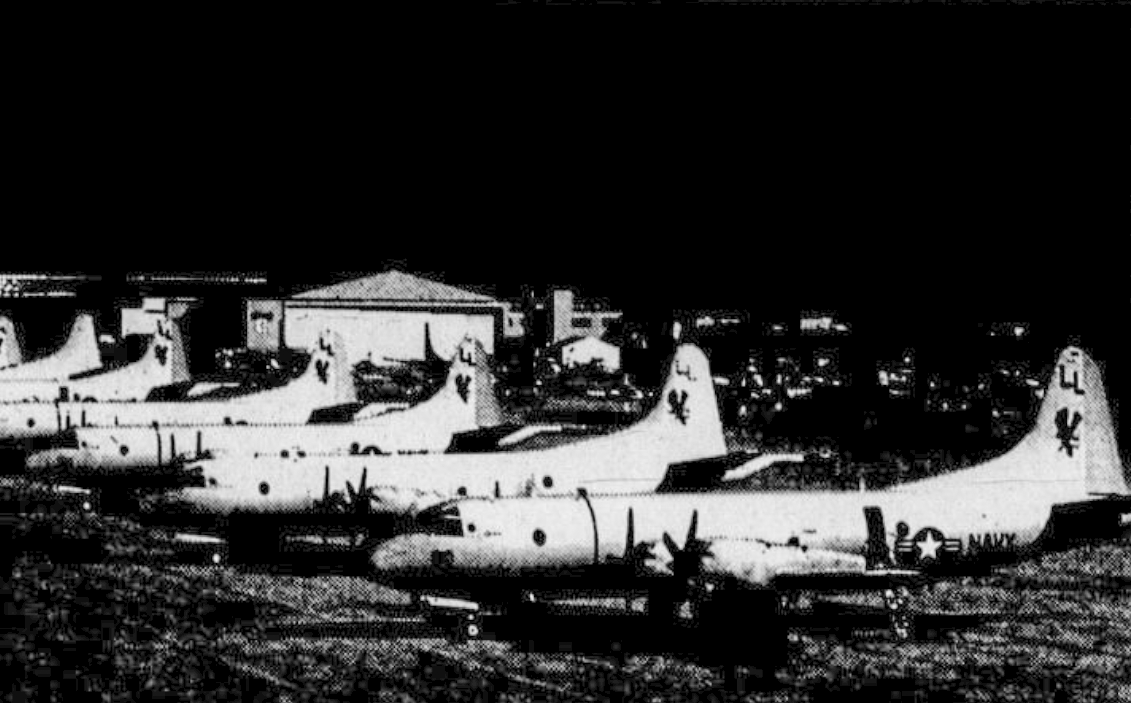 Courtesy of NASB Public Affairs (May 6, 2005)
Spring 2005: Closure on air station’s radar
Congress passed the Defense Base Closure and Realignment Act of 1990 to shrink the size of the U.S. military following the end of the Cold War, gradually shutting down bases seen as unnecessary. In 1994, nine airfields were active in the northeast; in 2005, only the NASB remained—but not for long.
In 2005, the Department of Defense released a list of bases recommended for closure, including the NASB.
The NAS Brunswick Task Force was originally created in 1987, given the looming closures on Congress’s agenda. According to the Chairman of the task force at the time, Richard Tetrev, “We sincerely believe that NASB’s military value is the highest it has been since the 1950s.”
Though it began as a key supporter of national security, the NASB became a cornerstone of the regional economy.
A 2004 report from the NAS Brunswick Task Force claimed, “The economic contribution from [NASB] to the region’s economy will be $2.4 billion over the next ten years.”
A professor of English at the College during this time, William Watterson, suspected that “certainly a short-term depression of the local economy” would follow the NASB’s closure.
According to a May 2005 Orient article, “By all accounts, the closure of NASB would result in a catastrophic blow to the economy of the Midcoast region and to the financial stability of the state of Maine. Unemployment in Brunswick would soar 66 percent, according to the NASB Task Force.”
At the time, the base employed over 5,000 people, making it Maine’s second-largest employer.
In an interview with the Orient, then-Governor John Baldacci shared his thoughts on the College’s role in the closure of the NASB.
“Another thing is that Bowdoin College is an economic engine.… It is a partner in the redevelopment, along with [Mid Coast] Hospital,” he said.
Fall 2007: Planning ahead
The College developed plans to acquire land from the NASB upon its closure to expand campus—and all for free. The Brunswick Local Redevelopment Authority (BRLA) and the State and Local Screening Committee had just approved the College’s move to acquire 182 acres of the 3,200 acre NASB and recommended it be transferred at no cost as a “public benefit conveyance.”
According to the Orient, the College had projected the student body to increase by 600 students over the next 40 years. The College expected this growth to stimulate jobs in Brunswick and planned to use the land for dorms, administrative buildings, parking lots and athletic fields.
Envisioned as a satellite campus, administrators imagined transportation would be necessary to use the land.
“It would appear that by sometime between 2030 and 2050, the College would need more room,” former Treasurer and Vice President for Finance Kate Longely said in the article.
“This [project] is vitally important to the College’s future, and it’s vitally important to the town’s future,” Former President Barry Mills added.
In 2008, the U.S. Department of Education approved the transfer of 175 acres of land from the NASB to the College at no cost, with only U.S. Navy approval needed to seal the deal.
Spring 2009: Local businesses contend with slow economy
In the wake of the 2008 financial crisis, the College and Brunswick turned to reevaluate their financial security as the NASB was also slated for closure—a potentially crippling combination of economic deflation.
As local business owner Tony Sachs said, “It’s going to get worse before it gets better,” and estimated the closure of the base would result in a direct ten percent loss to his business.
Despite losing business from the closure of the NASB and penny-pinching consumers in a global economic downturn, business owners were adamant about staying in Brunswick.
Fall 2009: The College plans for carbon neutrality by 2020
The College approved a plan for the campus to become carbon neutral by 2020, which included plans to install large solar panel systems at Farley Field House and the NASB. The solar farm later opened at the NASB in 2014. Though the College had not yet formally acquired the land, it was projected that solar installed there alone would offset 2,000 tons of carbon dioxide annually.
January 29, 2010: NASB runways close
“Now, the burden is on Bowdoin, Brunswick and the Midcoast Regional Redevelopment Authority (MRRA) to make the most of the 3,200 acres soon to be left vacant,” an Orient article reported.
The College continued on a path toward acquiring 175 developable acres of land from the closure of the NASB.
Deputy CIO Rebecca Sandlin noted that the College acquiring so much land for free created tension with the Brunswick community at the time.
“I’ve had a lot of flak from people in the town who know I’m working at Bowdoin and say, ‘Couldn’t we do something better with the land?’” Sandlin said in the article.
However, Bowdoin’s initial plans for the land included community recreational resources, including a bike path. Additionally, the MRRA’s Reuse Master Plan allocated 51 percent of the base’s land to development and 49 percent for recreation, open space and natural areas.
Still, the article noted that redevelopment of bases often takes 15 to 20 years, and the short-term economic impacts, especially on local businesses, would be significant.
“What hurts Brunswick is going to hurt Bowdoin,” Katy Longley said in the article. “Bowdoin’s part of Brunswick, and Brunswick’s part of Bowdoin.”
Winter 2011: Navy finishes environmental review for NASB land transfer
As part of decommissioning the base, the U.S. Navy issued an Environmental Impact Statement—the final hurdle for the College to acquire 146 acres of developable land and for the MRRA to take control of the base’s airport, reopening as the Brunswick Executive Airport (BXM) months later.
Fall 2020: Bowdoin transfers 144 acres back to the MRRA
After years of trying to convert this land into a campus expansion, the College returned 144 acres of land to the MRRA. The College made this decision based on the expense associated with developing the area.
“We had this whole laundry list of needs for financial investment,” Catherine Ferdinand, government relations and land use specialist for the College, said. “That included demand for housing space and $100 million of deferred maintenance. So the decision was made to not reapply for this portion of property.”
Tensions persisted about the best allocation of the College’s resources and its responsibility to preserve the ecology of this area.
August 19, 2024: Chemical spill at the Brunswick Executive Airport
A fire extinguishment system at the BXM spilled 1,450 gallons of aqueous film-forming foam (AFFF). The U.S. Navy required the use of AFFF at its naval bases—including the NASB.
Though the Maine Department of Environmental Protection quickly responded to the spill, the AFFF contains polyfluoroalkyl substances (PFAS), which are known carcinogens and environmental contaminants. The College’s operations were largely unaffected by the spill.
“I came to realize how risky this whole situation is,” Brunswick Town Councilor-at-Large James Ecker said in the article. “Another big spill could devastate Brunswick depending on which way it went.”
The rise and fall of the NASB encapsulates all the environmental, economic, military, educational and community tensions that make Brunswick what it is. Today, what was the NASB is now home to solar panels, walking trails, new housing, businesses and a private airport. What once housed dozens of planes is taking flight again.
This is the first in a series of articles published this spring documenting Brunswick’s transition from a navy town to a college town.
Comments
Before submitting a comment, please review our comment policy. Some key points from the policy: