
Embodying pain and defiance in vocals
February 27, 2026
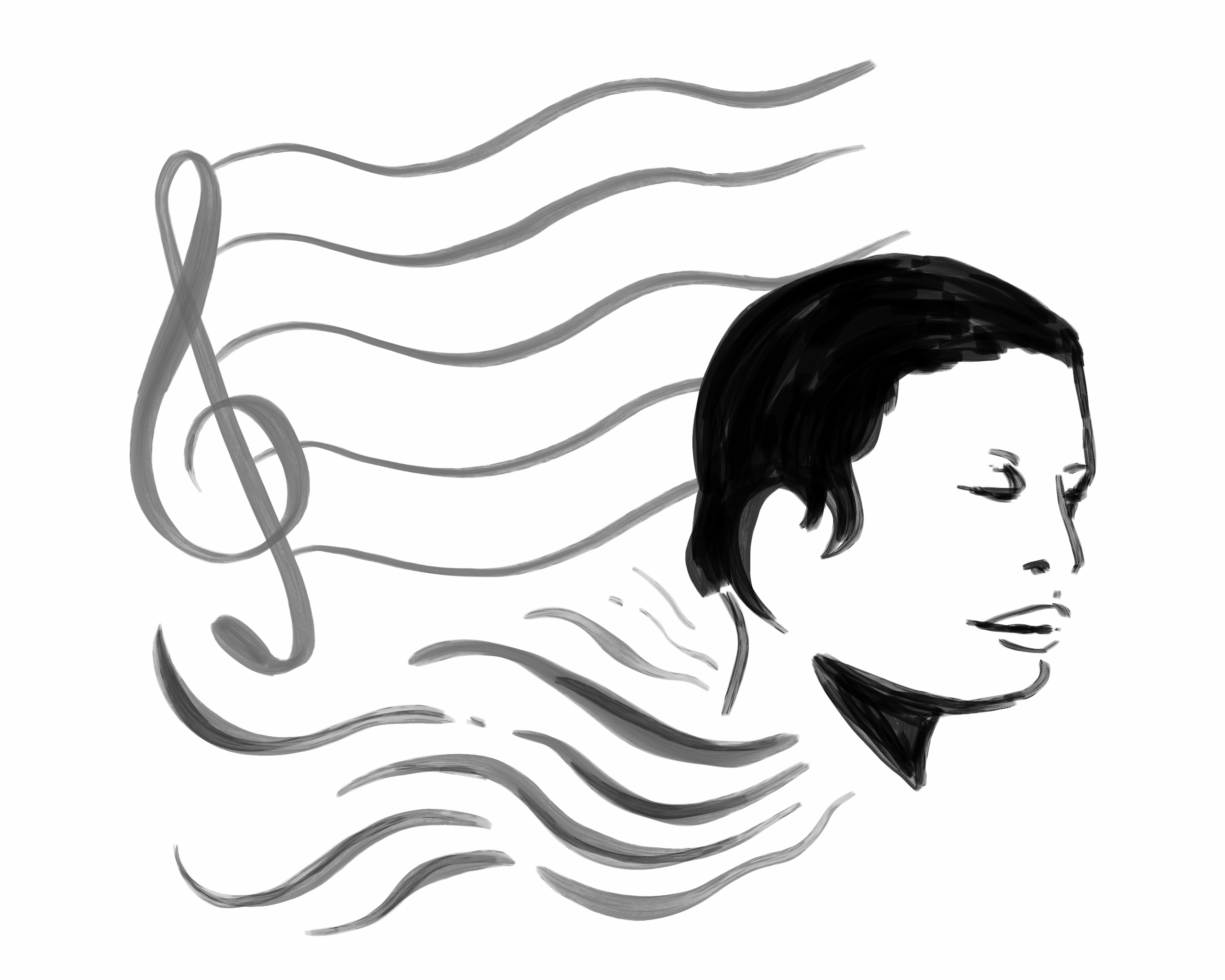 Eva Ahn
The other night, my friend Maiara Rebordão ’27 and I spent several hours sitting in her room and exchanging Brazilian songs we grew up with. While I don’t understand Portuguese, I have a deep appreciation for songs sung in the language. Fortunately, Maiara is fluent, which made our evening of listening all the more insightful and intriguing. She sang along to most songs, and we shared stories about how we came across different artists. And then, some time after a personal—and incredible—performance of “Águas de março” by Maiara, she exclaimed suddenly and pressed play on Elis Regina’s 1972 rendition of “Atrás Da Porta.”
The piece begins with a simple rhythm section accompaniment, filled by strings. Listeners are enveloped by soft bass, gentle piano, the steady flow of violin and gradually developing percussion. The vocals that enter, almost invisibly, are outlined by the tempered instrumentation, and Regina lets her sound soar and dip as easily and sweetly as a bird. She plays with reluctance, holding back her volume at times in a thin, whispery voice before driving in with greater power. The song builds halfway through, and both the percussive elements and strings swell with the rising and falling of her voice. Regina pulls on the volume of the notes, changing various dynamics within the same breath. Her style of turning the melody, slowly and meditatively, imbues the song with intense emotion—a personal emotion.
Although Maiara is the one who showed me the song—meaning her knowledge of it precedes mine—I chose to interview her about it based on how she reacted to it the first time we listened. I recall her leaning back against her window with eyes closed and her brow furrowed in deep concentration, lips moving to the words. She explained the song to me that night, telling me that Regina had an experience with domestic violence in a marriage and recorded this song after divorcing her husband.
Written by Chico Buarque and Francis Hime, “Atrás Da Porta” was famously performed by Elis Regina on her album “Elis” from 1972. While I tried to research the background of its conception, I unfortunately couldn’t find much. What is evident through the lyricism is the conflict of domestic abuse and love, which Maiara also detailed in relation to Regina’s personal life. Further information regarding the inspiration behind the work of Buarque and Hime wasn’t readily available. However, Maiara did mention a documentary on Regina that discusses the song, so I see myself looking into that in the near future.
During our conversation, Maiara and I discussed the usual topics: initial reaction, feelings and lyricism. I asked about what her first time listening to the song was like versus what it feels like listening to it now. Maiara told me she first heard the piece with her dad, who also taught her about its history from his own experience in Brazil.
“I really fell in love with how beautiful it is and how heartbreaking it is as well,” Maiara said. “And I feel like nowadays every single time I listen to it, it’s one of those songs that I can’t not listen to the lyrics.”
I asked her what feelings the song elicited. Her immediate response was “heartbreak” and “the complications of marriage.” She then began a comprehensive translation and analysis of the lyrics, connecting her prior knowledge of Regina to the significance of the piece. Considering that I don’t know Portuguese—as I dramatically stressed earlier—Maiara’s breakdown of the song’s meaning was very enlightening.
“With domestic abuse, it’s not as simple as [not loving] a person anymore because they abused you,” Maiara said. “She kind of starts with this idea of ‘you’re looking at me.’ It’s kind of like a goodbye, basically.”
She continued to organize the lines within the sequence of events occurring in the scene of violence.
“And it’s calm at first, the song. And then it kind of moves into a very violent type of interaction, and he’s hurting her.… She doesn’t feel the love that he gave her at the beginning, and she’s starting to feel that passion isn’t love anymore. It’s hate,” Maiara said. “I think that’s what she’s trying to show. And with the last fall of the song, she’s talking about how she still feels like she needs to prove that she’s his, in a sense. So it’s just like a complicated relationship.”
We discussed the agency of Regina and/or the song’s narrator and how the song itself provided them with some form of empowerment. Maiara focused on some of the final lines to express the dilemma of the singer: “She did leave him. But at the end of the song itself, she’s like, ‘I’m loving you inside out … to show that I’m still yours. To prove that I’m still yours.’”
I asked Maiara if she felt like Regina was trying to prove this to herself or to her partner.
“I think all of this is very internal. Like, it’s explicit, but it’s also very internal,” Maiara said. “And I don’t see this much in music. It’s so private. It’s something that no one really wants to put out and express to the world.”
Reflecting on the lyrics of “Atrás Da Porta” with Maiara allowed me to contextualize the emotional intensity conveyed by Regina’s voice. As opposed to regurgitating the words of others, Regina prioritizes the performance of her individual and unique sound. In turn, she openly reveals to her listeners the rawness of her experience and does so in a singular manner.
Comments
Before submitting a comment, please review our comment policy. Some key points from the policy: