
The case for leaving your phone at home
February 19, 2026
 This
piece represents the opinion of the author
.
This
piece represents the opinion of the author
.
 Lauren Russler
Recently, when a one-on-one meal goes quiet, I’ve started posing a provocative question: “What would Bowdoin be like without our phones?”
The reaction is instant. “It’s unimaginable,” someone declares, hands raised. “How would you coordinate anything?”
Our days are now carefully optimized by our phones. We schedule meals days in advance, texting a rotating list of contacts—“Lunch next Wednesday at 12:15?” In five-minute class breaks, we pull out our phones to squeeze in productivity. When we wake up 17 minutes before an 8:30 class, we put on our headphones, listening to the news or exactly 3.7 songs on the walk over.
The idea of Bowdoin without phones triggers worries about inefficiency and general social panic.
“Are we just supposed to show up at the dining hall?”
“Sit with our thoughts, or make random conversation while waiting?”
But the point of a small liberal arts school is to think big thoughts and create community. Thinking deeply isn’t about efficiency; it’s about letting ideas linger as you walk from class to class rather than immediately replacing them with a podcast. Community isn’t formed by checking your email in the minutes before class, it’s formed by talking to the person sitting right next to you.
Phones promise smoother transitions and optimized time to do more. But are they quietly sabotaging the very point of being here?
A Bowdoin without phones feels unimaginable to many. But a “real world” without phones feels even more foreign. Outside this campus, where we live in individual silos and systems not designed to support us, phones provide lifelines for connection and information. Operating in the real world without them is a thornier challenge.
At Bowdoin, though, where you live among your friends, on a campus dense with libraries, professors and shared spaces, this may be the rare moment in our lives when we actually don’t need them.
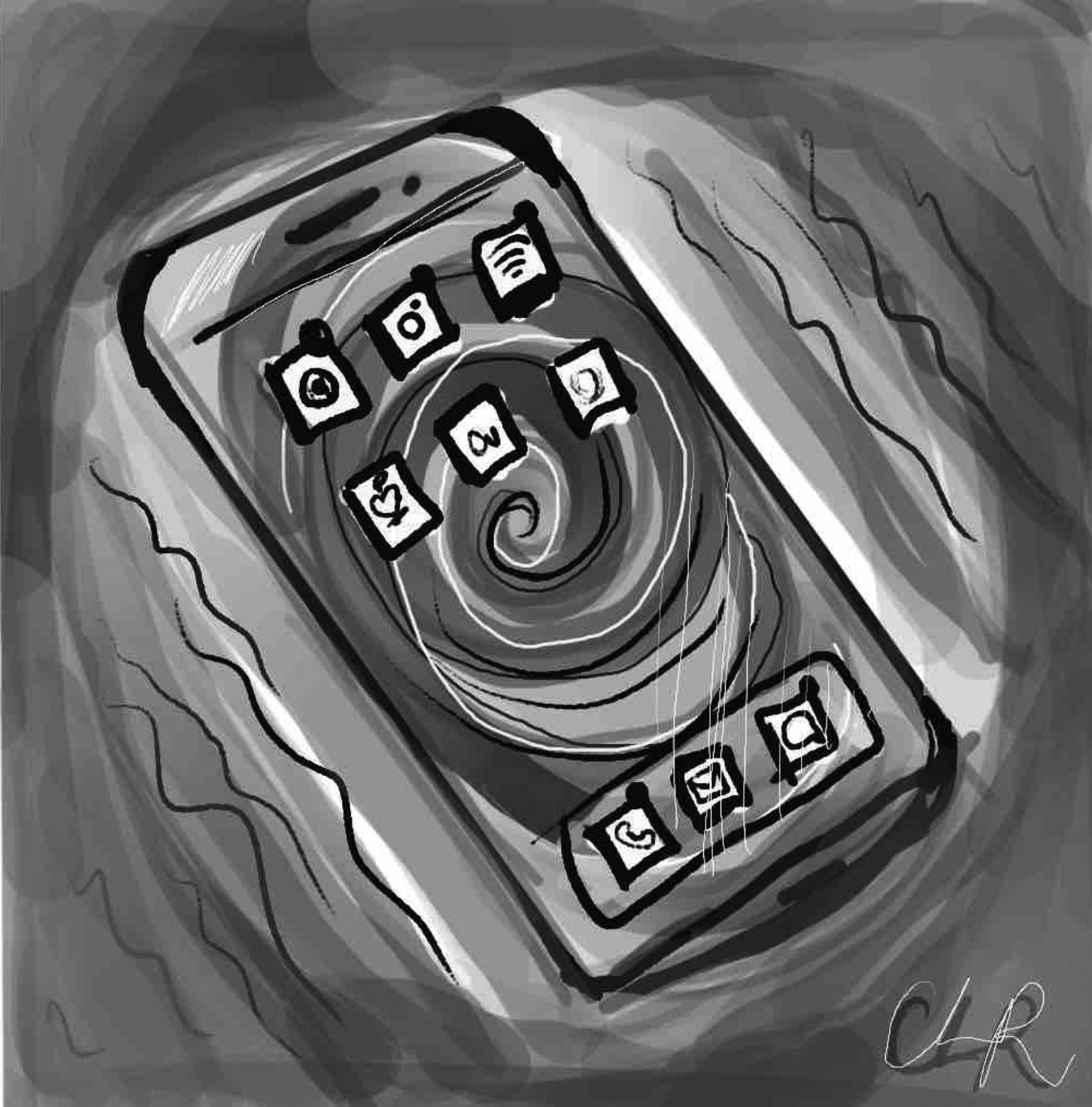
So I want to challenge us, during these unique college years, to put our phones down on campus. Leave them in your dorm in the morning.
I’ve been experimenting with this myself, leaving my phone in my dorm during the day and returning to a pile of notifications at night. I keep only my OneCard in my coat pocket and use Mac iMessages for emergencies. There’s a power to this feeling of “out of sight, out of mind.”
When a friend gets up from the Thorne table to get tea, I don’t instinctively grab my phone to look busy. Instead, I catch someone walking by to tell them their sweater looks really warm. Or I simply stare at my plate and wonder how many peas Bowdoin Dining cooks during a semester.
Bowdoin is a place where you show up to events, talk to your neighbors and share countless points of connection simply because you’re living remarkably similar lives within a small square of land in Brunswick, Maine. It’s something special that shouldn’t be shut out by scrolling.
Last semester, I accidentally left my phone behind when traveling to Connecticut for a cross-country meet. I realized it was still in my dorm just as the bus pulled away. There was a fleeting moment of anxiety. I can’t listen to music for the five-hour bus ride? What if I lose the group? How will I update friends and family about the meet?
But those anxieties never materialized. I adjusted, relying on my teammates instead of my phone for entertainment, security and connection. It turned into my favorite meet of the season, largely because of my greater presence.
Bowdoin teaches us how to think, but it also teaches us habits. In a community where it is possible, and even optimized, to live without constant phone reliance, this campus becomes a training ground for existing without one.
So I challenge you to embrace the promise of the liberal arts, form a new habit and leave your phone at home.
Charlotte Tagupa is a member of the Class of 2026.
Comments
Before submitting a comment, please review our comment policy. Some key points from the policy: