
To bleed or not to bleed
February 13, 2026
 This
piece represents the opinion of the author
s.
This
piece represents the opinion of the author
s.
 Mia Lasic-Ellis
My cycle feels off, I’m bleeding heavily, exhausted and strangely creative…. Is this normal? All of these questions are normal, and our answer is that you should understand that menstruation looks different for everyone. According to the “Cycle Book,”a guide to understanding your hormones, manifestations of a cycle are different from person to person, creating unique feelings, sensations and patterns that should be monitored and supported on an individual basis. The best thing you can do for your body is to listen to it, track it, advocate for it and speak to a medical professional if you are experiencing pain. In a world filled with biohacking and balancing of hormones to the romanticization of eating chocolate and a tub of ice cream, social media trends can portray harmful stereotypes on how you should feel and act throughout your cycle. However, it is important to know that there is no one correct diet or regimen that can “normalize” your cycle to a calendar-based system. We have found that tracking by hand enables you to understand patterns of emotions, physical sensations and bodily fluids without notifications from an app.
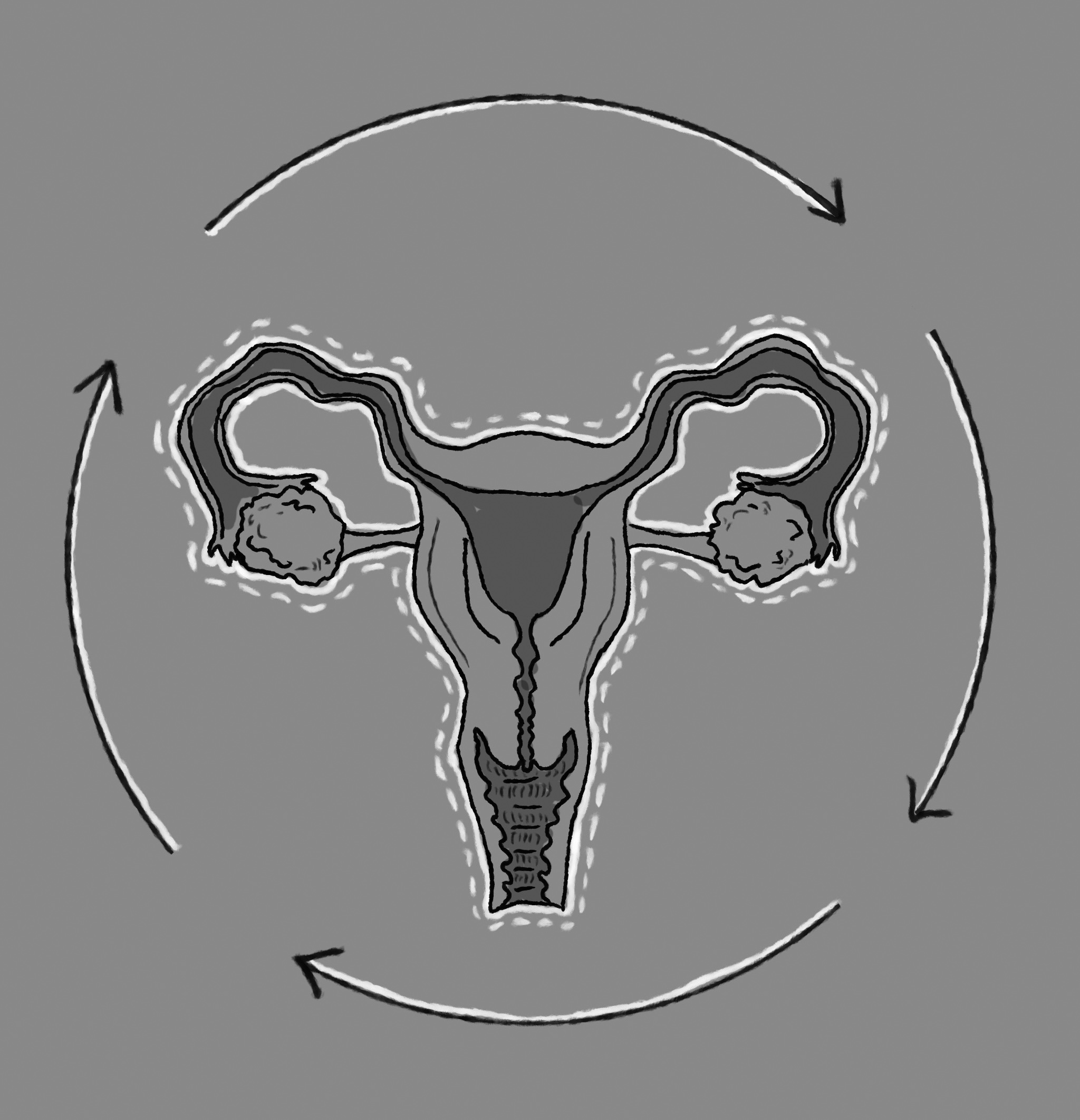
Tracking observations such as bodily fluids, basal body temperature, feelings and sensations can show how cycle changes manifest in your body. A menstrual cycle consists of a menstrual phase, where the uterine lining separates from the uterus and bleeds, the follicular phase, where follicles grow inside the ovaries, the ovulatory phase, where the most mature follicle releases an egg, and the luteal phase that plumps the uterine lining and prepares the body to bleed again. Basal body temperature and bodily fluids serve as indicators of core hormonal fluctuations, such as changing from one phase of the cycle to the next. Tracking these changes across a few cycles can help you notice regularity or variability in your cycle shifts. This knowledge can help you make informed decisions and feel more confident.
Often, atypical menstrual symptoms are treated with birth control without much attention to their underlying causes. I recall seeing a doctor after experiencing constant menstrual cramping for 36 hours. Rather than explaining why it was happening, I was prescribed the pill and sent on my way. However, abnormalities in the menstrual cycle can signal issues in other body systems, and cycle analysis in particular can offer valuable insight into overall bodily health.
Pain in and around the vulva can indicate several conditions. These include endometriosis, a chronic condition in which endometrial cells that are typically inside the uterus exist outside, fibroids, a common condition in which noncancerous tissue grows within or on the uterus, polycystic ovary syndrome, a condition in which one has few or long periods, or vulvar dermatological conditions like eczema, contact dermatitis or psoriasis. This highlights how critical it is for those with vulvas to take ownership of their health when some healthcare professionals seem to turn a blind eye.
There are several important steps that you can take to advocate for your reproductive health. First, tracking your individual symptoms, instead of those most commonly emphasized by algorithms on popular online period trackers. This can present doctors with more accurate and personalized data to pinpoint a diagnosis. Second, researching and getting familiar with menstrual health, reproductive anatomy and common gynecological conditions can help equip yourself with knowledge about your body. While those with vulvas should be able to trust the healthcare system to properly diagnose and treat menstrual abnormalities, the system can often fail us. Thus, it is imperative for people to understand their anatomy and proactively take steps to ensure that their needs are met.
Natalie Peralta is a member of the Class of 2026 and Grace Tétreault is a member of the Class of 2028. They are Peer Educators on behalf of the Office of Gender Violence Prevention and Health Education.
Comments
Before submitting a comment, please review our comment policy. Some key points from the policy: