
What’re you Bow-doin this for?
February 6, 2026
 This
piece represents the opinion of the author
.
This
piece represents the opinion of the author
.
 Juliet McDermott
I hate going home. Most of the time, it feels like walking through a time capsule, which emphasizes the vast disconnect, a tension, between myself and the home I left behind. It’s bittersweet.
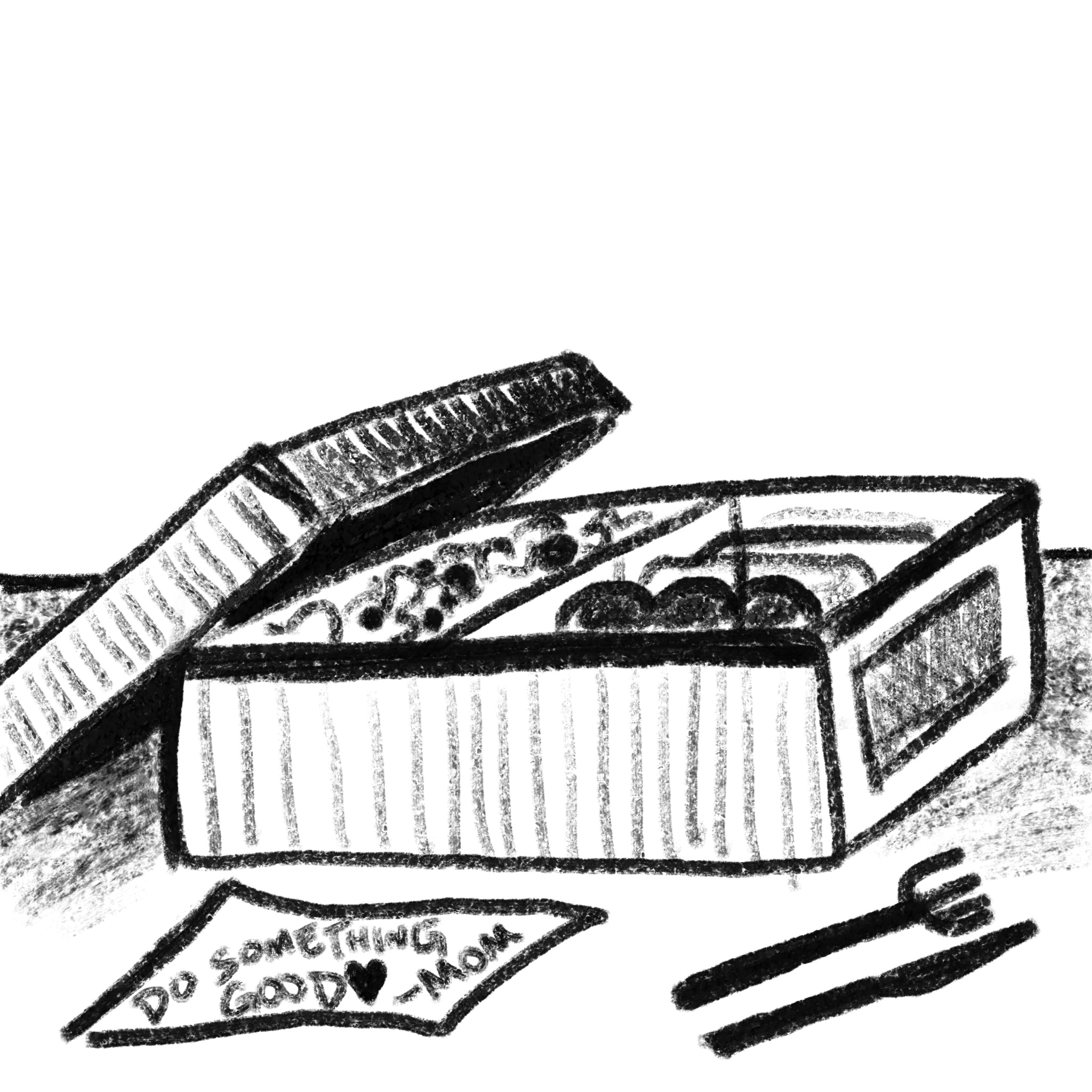
It’s odd how just a few days in my hometown can send me back to elementary school. I relive the days when I was jealous of the kids who were able to afford ski trips or had lunches packed from home. It’s silly, being envious of a full Jansport lunchbox, but for all the kids who ate the same bland FreshPicks pizza every day, the feeling was palpable. I won’t belabor the “traumas” of the reduced lunch program. Truthfully, as a growing kid, I was just happy to be eating; yet for those of us who ate at school, a lunch from home symbolized more than a better sandwich. It meant that a loved one took the time (and had the time) and resources to send their kid to school with a little piece of home each day. Some kids even got notes.
I, like many others in positions of need, worked tirelessly in high school, hoping to make positive, meaningful change, even at small scales. Acceptance to Bowdoin was more than the promise of education: It was an opportunity for stability, mobility and, most importantly, a step toward someday giving back to the community that had poured so much into me. Despite this, sometimes my Bowdoin education feels like the antithesis of everything I’ve worked to be. There is a discordance here, too.
Attending Bowdoin sometimes feels like watching a live replay of the Spider-Man meme: Everyone is so quick to point their finger, but from an outside point of view, we all look the same. The truth is, my grandpa’s worn work boots, which he hasn’t replaced in my lifetime, can only offset so much of the jetfuel wasted on the next Melanzana hoodie colorway. My neighbors have guns in their homes, but they eat everything they hunt, stabilizing deer populations, feeding their family for months and reducing demand for mass produced animal products. Grandpas in MAGA hats totally empty their wallets at the PTO bake sale every single time. Folks in my hometown likely haven’t even heard of the Starbucks boycott; there isn’t a shop for miles, and that overpriced sugar-milk isn’t half as effective as a cup of Folgers drip coffee anyway.
This is not an excuse for uneducated behavior or bigoted political takes, but rather to point out that at Bowdoin it can often feel like we do a whole lot of talking and not enough listening. So many of us apply here in hopes of returning some good to the world. And while a handful will go on to be public servants, teachers and activists, many more seem destined to go into corporate law, investment banking or consulting. Doomed to move to Silicon Valley and remain silent from a corner office, while our neighbors are kidnapped from their homes and disappeared, and a Bowdoin degree looms behind the desk. The common good seems to have become an abstraction, to be discussed in a handful of classes and quickly discarded, often, among people who have never experienced a true need for it. It has me wondering, who the hell are we really doing this for? This is the tension from the other end.
I don’t hope to convince anyone against their career aspirations, but rather, urge those of us who share this experience of discomfort to stay present in these conversations and grounded in our communities. Those who physically cringed when the administration seemed to cite financial aid—and low-income enrollment by presumable extension—as the barrier to responsible investment following demonstrations of political speech in a publicly accessible building. Those who release a long-held breath each move-in day, which is immediately followed by a wave of guilt. Don’t shy away from the sting, from both places you call home. These growing pains are necessary to be, as we have been, the bridge between our communities and true change. They serve as painful reminders of both where we have come from and how far we have yet to go. I believe that it is us, with both hearts that long for lunches from mom and Bowdoin-educated brains, who can help reconnect our institution and our peers to the common good.
Lex Renkert is a member of the Class of 2027 and a student leader at the McKeen Center for the Common Good.
Comments
Before submitting a comment, please review our comment policy. Some key points from the policy: