
The dangers of being a diary
November 13, 2025
 Charlotte Ng
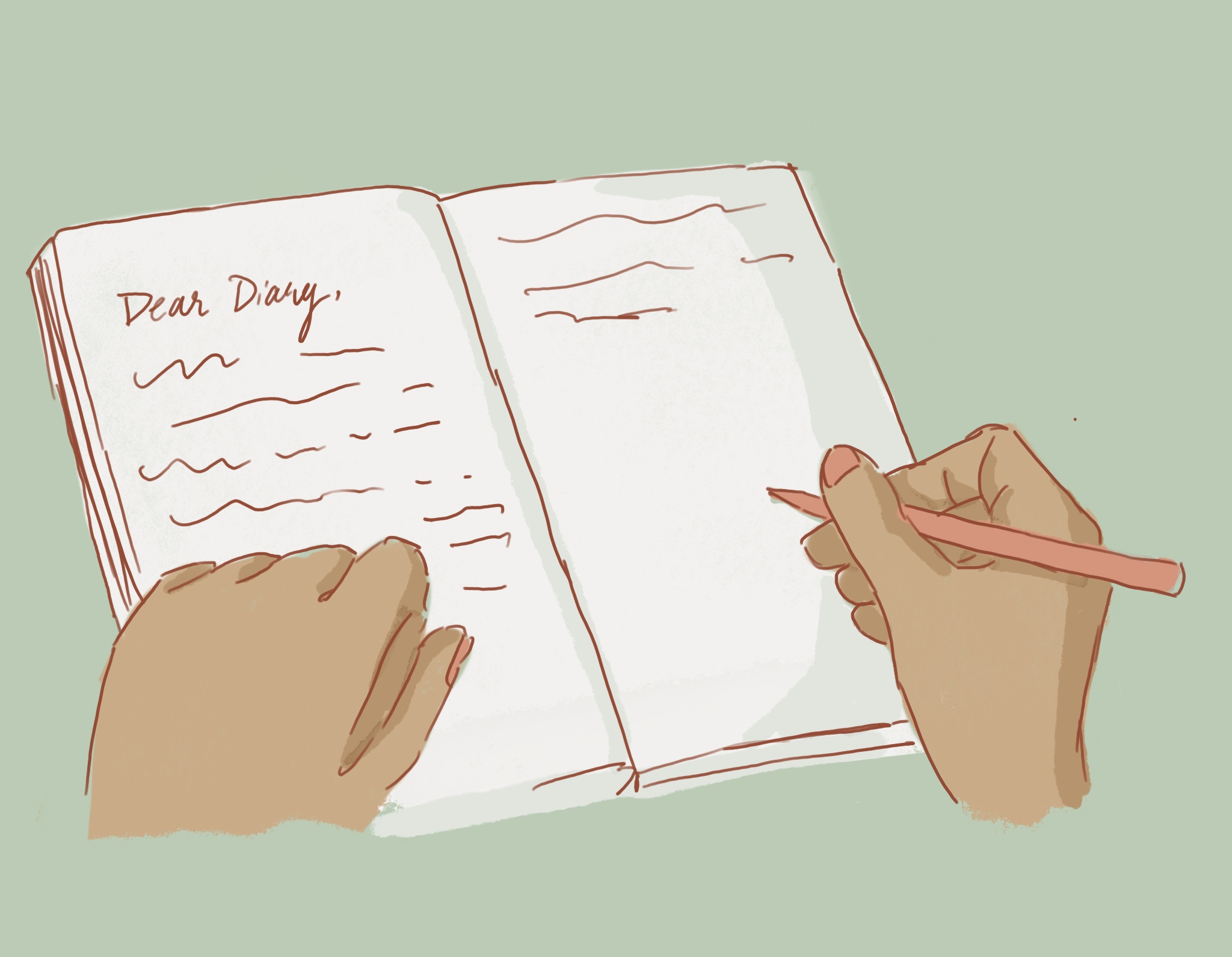
For those seeking a compassionate confidant, there is nothing more tempting than the blank pages of a diary. Diaries are the sacred secret holders and imaginary sympathetics of our childhood, the commiserator that remained when we felt more inclined to complain than contend with the practicality of a vocal listener’s solutions.
Unresponsive and endlessly patient, they expect nothing of us, the writers, in return for concealing our feelings. Those spiral-bound havens for scribbled emotional strife exude tolerance; there’s nothing we could write that would evoke judgement.
What happens when this dynamic is misconstrued as connection?
At one time or another, we’ve all been someone else’s diary and recognized the one-sided relationship in turn. Somewhere along the strand of text messages, the mutual discussion becomes more of a question-and-answer session, revealing the subtle distinction between having a conversation and simply exchanging words.
By sacrificing the shared stage, we become a captive audience to a one-man show.
As someone who has trouble vocalizing disagreement and remains non-confrontational to a fault, I’ve found myself prone to friendships like these.
No one ever pauses the show to reprimand the character, “Hold on. I think you should reconsider how you handled everything in Act One,” and, likewise, I’m reluctant to offer anything resembling criticism when I’m subjected to someone’s monologue.
Diaries are alluring in part because of their promise of emotional acceptance and inability to contradict us, and people who struggle to articulate their opinions often align perfectly with that need. Like agreeable friends, diaries allow us to stray from the story as much as our conscience permits, avoiding accountability through silent validation.
I sometimes shy away from saying what I think to avoid being perceived as impolite, instead assuming the role of the uncritical diary myself. Although this prevents an immediate conflict of beliefs, it can also be a profound disservice to the other person.
Prior to Bowdoin, I partially failed to understand that the reciprocity I so desperately wanted and honesty go hand-in-hand.
Stranded in the depths of the wilderness (30 minutes from campus with access to running water) during my o-trip, I began to reconcile with my diary-like tendencies. Huddling around pretend campfires and the shared hysteria of phone deprivation lend themselves to abnormal authenticity.
I soon realized that the greatest intimacy wasn’t in our effortless agreements with one another but the honesty that induced uncertainty, the silences of disagreement and doubt that interspersed our late-night conversations while sprawled on Schiller’s dock. Existing in their company wasn’t a performance.
I encountered the same thing at my first-ever floor dinner, immersed in an unexpected discussion with my proctor and a pair of roommates from across the hall about their interests in the German language and the church organ. Like many Bowdoin students, they were uninterested in prepared responses and truly fascinated by what everyone at the table had to say.
While “diary” relationships provide the illusion of intimacy through confessions and secrets, the closeness is deceptive because of its one-sidedness. When we prioritize reciprocity, mutual honesty becomes an act of respect, even when our words prove controversial or inconvenient.
There is kindness in holding those we love accountable, and there is care in not enabling them when they’re wrong. It’s not confrontation for confrontation’s sake; it’s the conviction that our relationships can withstand the truth.
Sooner or later, after being ensnared in the confines of relationships like these, the universe (or ResLife; I think the terms are interchangeable) assigns you a roommate who gently reminds you that the exam is only worth three percent of your grade and you repeatedly forget to turn off the lights.
You encounter friends who can empathetically disagree with your opinions and reflect on your mistakes, who love you enough to confront your faults and stay anyway.
Although we’re in a community conducive to genuine relationships, stripping the pages out of a diary still requires conscious effort. By thoughtfully asserting our opinions and speaking even when we’re tempted to retreat into silence, we take the ever-terrifying risk of being known exactly as we are. With the right companions, these moments of tension allow for clarity, not division.
Rather than pouring our emotions into an apathetic diary, reciprocal relationships provide something in return. It’s through these courageous and seemingly simple exchanges that we consistently practice the art of listening and being heard.
After all, words were never intended to only go one way.
Emma Landry is a member of the Class of 2029.
Comments
Before submitting a comment, please review our comment policy. Some key points from the policy:
- No hate speech, profanity, disrespectful or threatening comments.
- No personal attacks on reporters.
- Comments must be under 200 words.
- You are strongly encouraged to use a real name or identifier ("Class of '92").
- Any comments made with an email address that does not belong to you will get removed.
This is just great in every conceivable way—well-written, sincere, witty. A treat to read.