
Mica boss: shine bright like a diamond with bold editorial makeup
October 24, 2025
Scrapes from one rock striking its more durable competitor ignite a stone’s value like a set of the world’s most lucrative matches, despite the box’s flammable phosphorus residue scoring only half a point relative to the remaining matter’s scores on the 1 to ten leaderboard. The Mohs scale is the standard metric for determining the hardness of materials.
Conversely, it’s the type of value that makes us scream, “Damn, she’s got a rock!” when seeing those celebrity engagement photos and zooming in on some smug lady’s left fingers.
A diamond’s unattainable record of ten on the Mohs scale is a double entendre. Its ranking intentionally marks the gemstone’s unmatched durability yet simultaneously determines the coefficient I imagine salespeople apply to the variable (in thousands of dollars) to calculate the price the rock warrants from only the richest clientele, i.e., ten times 1,000 equals a 10,000 dollar ring. (I wish I could insert a designer signature to make this textual representation of a price tag and authenticity label appear more legitimate, like the real designers do.)
Regardless of my blatant pseudomath and the boom in press coverage of Sofia Richie and Elliot Grange-type unions, wedding culture has gotten out of hand in a more literal sense, beyond the palace venues and extravagant performances, like Rihanna’s private performance at the Ambani family reception in India. Tiffany and Co. touts bands adorned with gems sized suitably for necklace pendants for only the wealthiest patrons, but, as of 2025, there remains no market for gypsum or fluoride engagement bands.
Can we consumers stop thirsting after these so-called blood diamonds? Open your eyes instead to the class of rocks that conceal the veins across your face with gentle brushstrokes instead of the stone that limits the circulation in your left ring finger.
I suppose you could also stay tuned for the “Stepping Stones for Style: Tesserae” reprise on Bijoux de Terre in December if you’re less willing to compromise on having bling. When in doubt, you can also promote blood flow on your face and neck through periodical gua sha techniques with a jade tool—anything but worship the monolith of the world’s most costly gem.
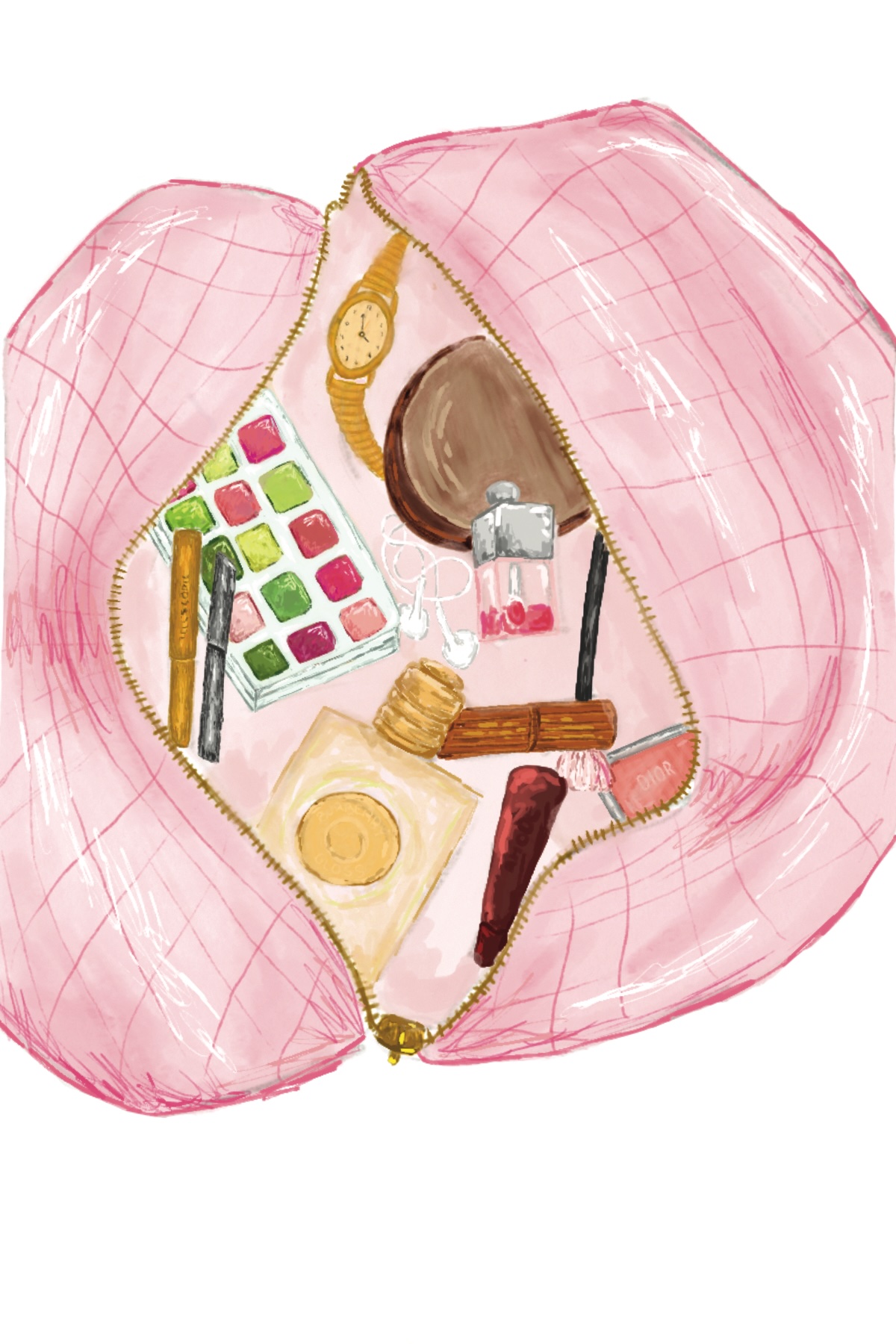
Silicates like talc and mica are spread across a goldilocks zone between the virtual dust of the Mohs spectrum’s softest end and the less forgiving and abrasive values on its opposite side. While accessories like watches, necklaces, bracelets or earrings might be the most obvious quotidian uses of minerals for self expression, eyeshadow and other types of pigmented makeup are widely overlooked, especially when recent trends emphasize looks that are more corrective than differentiating, hence the “clean-girl aesthetic” craze.
Some cosmetic companies pay homage to the earthly origin of their powder products. Huda Beauty released a set of viral “Gemstone Obsessions” mini palettes containing nine colors each, with each collection being based on the appearance of one precious stone: amethyst, sapphire, ruby, topaz and emerald. However, the most obvious influence of these roots comes from the marketing of a brand with origins in the subtle in 1995: Bare Minerals. The ingredients are in the name.
My personal favorite palette from Tarte, “Energy,” features rich mauve-based tones perfect for complexions with cool undertones. Cruelty-free and smelling faintly of vanilla, it’s already an ideal product, but the allure attributed to the shadows comes from a secret purifying and non-irritating ingredient: Amazonian clay.
The naturally occurring flaky sheets of talc and mica from which most vibrant powder products originate may resemble the nails of a person struggling with the side effects of an iron deficiency, but once mined, processed and packed into little cakes, they have the ability to convert dull and lifeless skin to a surface resembling a Texas Roadhouse bun. Solid highlighters only became a staple in most makeup looks rather than exclusive to red carpet events within the last decade or so.
Applying an illuminator to your face can make certain areas like your nose bridge, cheekbones and inner eyes appear closer to whoever is viewing you, and thus pronounce your favorite features. It’s like adding the squiggles of a white Jelly Roll pen to finish the process of creating a two-dimensional drawn or painted portrait, but you’re the subject.
Besides attaining a moisturized and youthful appearance, the matte and shimmer variations of pigmented makeup also tells a narrative beyond the unique shade names engraved in most products’ packaging. Besides the 1980s blue eyeshadow and the cut creases of the last decade, these days it’s not uncommon to soften a cat eye look with a halo of black shadow or create the perfect halloween costume inspired by “A Bad Case of Stripes” (mark your calendar). Another creative experiment I saw involves applying combinations of the primary and secondary colors to make oneself appear as if through the lens of a thermal camera.
Huda Beauty should promote a Diamond version of the “Gemstones Obsession” palette to sell if there is ever another colored shadow renaissance in this generation. This seems like an appropriate alternative to the literal extraction of diamonds, even though mica and talc extraction in certain regions still relies on child labor and other unethical practices.
Diamonds should be figuratively idealized for their strength and everlasting relevance. Hopefully, one day minerals will only be named relative to parts of the human body because of their ability to adorn rather than physically tax victims of exploitation.
Comments
Before submitting a comment, please review our comment policy. Some key points from the policy: