
The faculty meeting: A true democratic forum?
April 3, 2026
 Celeste Mercier
Throughout the academic year, typically on the first Friday of every month, the College holds what academic institutions refer to as faculty meetings, a practice held by colleges and universities across the U.S.
During these meetings, faculty discuss agenda items concerning academic affairs at the College. These agenda items are proposed by committees or individuals, discussed with everyone present at the meeting and can be forwarded to a vote if necessary.
These meetings are a part of the College’s “shared governance.” This is the idea that the success of the academic program at the College is a process that requires collaboration between faculty, the dean of academic affairs and the president of the College. This shared governance is often complicated by the efficacy of faculty meetings regarding the facilitation of communication between faculty and administration.
When asked about her experience on both sides of the conversation, previously as a faculty member and now as an administrator, Senior Vice President and Dean for Academic Affairs Jennifer Scanlon highlighted the College’s sentiments regarding shared governance.
“I don’t see this so much as a ‘both sides’ concern as I do through the lens of shared governance,” Scanlon wrote in an email to the Orient. “[It’s] something unique to the academy and so important to our context at Bowdoin.”
Bowdoin faculty meetings are not new, with official records of meeting minutes dating back to 1871. However, the structure of the meetings has changed, especially over the last two decades. Some of the more notable changes concern the Committee on Governance and Faculty Affairs (GFA). In 2007, GFA was tasked with structuring committees and distributing committee assignments across the faculty.
Currently, some of GFA’s responsibilities include appointing faculty committees, representing the faculty at Board of Trustees meetings and selecting a moderator for each of the faculty meetings.
Chair of GFA and Professor of English Aaron Kitch emphasized the numerous ways in which the faculty meetings contribute to shared governance.
“[Faculty meetings] offer a vital opportunity for faculty and staff to hear from and ask questions of senior leadership at the College,” Kitch wrote in an email to the Orient. “They allow for debate and discussion about important issues on campus; they facilitate vital business at the College; and they allow faculty and staff to meet colleagues and learn about parts of the College beyond their own departments and programs.”
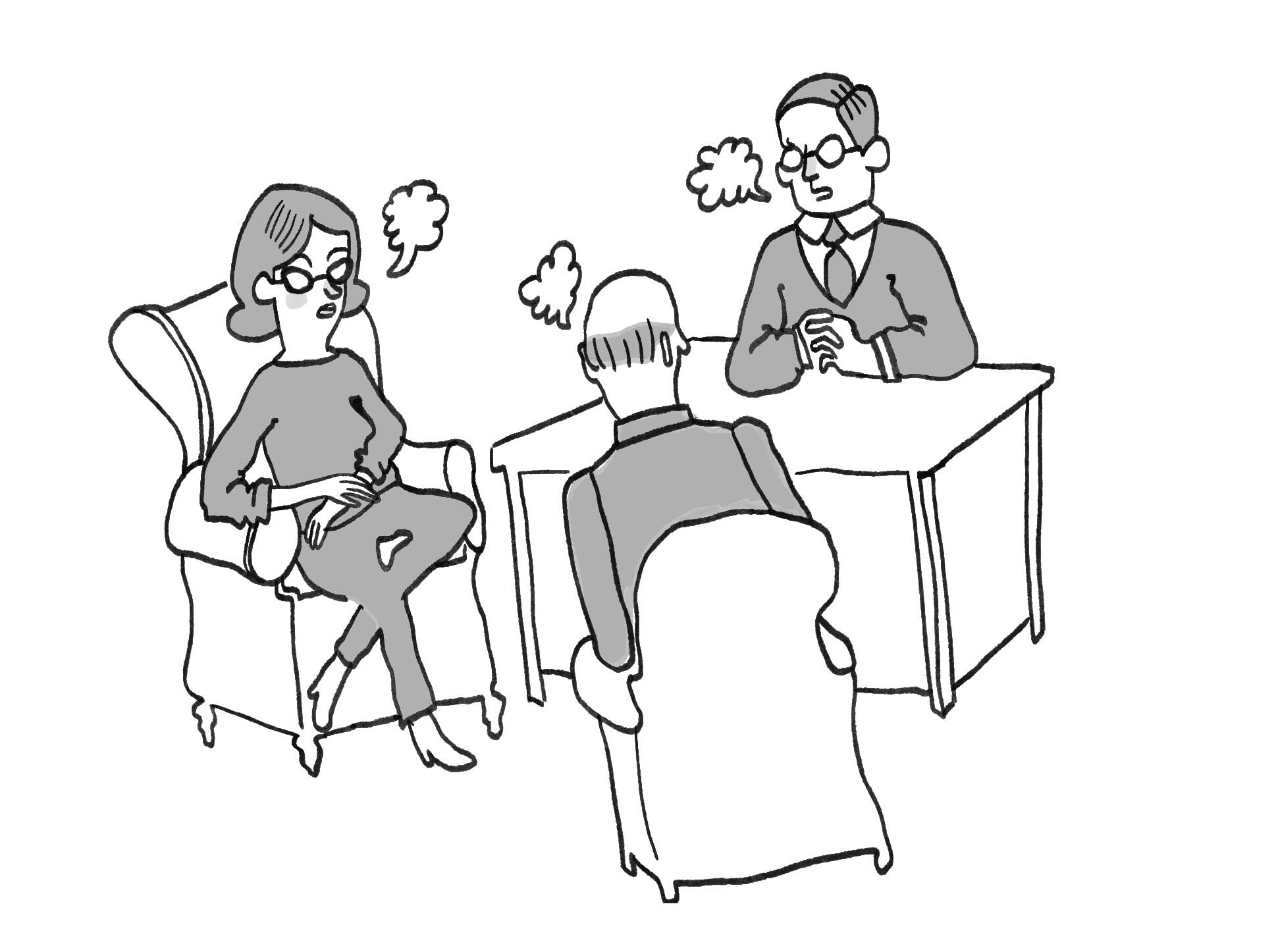
Faculty meetings are intended to serve as democratic forums in which there can be a free exchange of ideas that lead to concrete change in how the College is governed. While this may be how these meetings are framed, many faculty members have more complex views regarding their effectiveness as a venue for communication.
Professor of Physics and Astronomy Madeleine Msall reflected on GFA’s efforts to improve faculty meetings and the persistent obstacles that remain despite those efforts.
“The ongoing problem is creating true dialogue, where there are real choices and opportunities to find compromise. Faculty governance is not an efficient system, but it’s meant to encourage deliberation and inclusive debate,” Msall wrote in an email to the Orient. “GFA works really hard to find a balance of action and deliberation, but it’s a very tough job.”
Prior to this past year, the senior vice president and dean for academic affairs and president of the College were ex officio members of GFA. Last April, a motion was approved by faculty to remove the dean and president from their automatically endowed positions. This move has marked a clear separation of power between faculty and administration. Some saw this separation as necessary for the democratic exchange of ideas.
During the summer of 2019, Msall and other faculty members gathered to hold faculty forums separate from the regular faculty meetings. These forums became popular because they did not include the vice president and dean for academic affairs or the president, a significant difference from faculty meetings.
“My view of why they were both popular and motivated such effective faculty action is that faculty were (and still are) passionate about College issues but frustrated by, and cynical about, committee service that does not drive policy,” Msall wrote. “Many faculty, including some of the most committed senior faculty, felt excluded from key decisions at the point where ideas turn into priorities, directives and new investments.”
For some, the decision not to include the vice president and the president was a necessary one but was not easy. Professor of Cinema Studies Tricia Welsch attended the summer forums and reflected on the decision.
“We have a large administration composed of faculty, whom we love, going into the administration for a period of time. To say they didn’t have a role to play was really kind of draconian and not something anybody wanted to do. But … I was a supporter of having the administration not in those meetings, because I thought we would have freer conversations,” Welsch said. “I know [President Safa Zaki] doesn’t like that, and I don’t really like it either because we’re all human.”
Additionally, a junior faculty member discussed how, in their attempts to have open conversations during faculty meetings, they are often told to share the same ideas in private one-on-one meetings instead.
“How many faculty meetings have we had where we say something and get told to talk over coffee instead? We can’t silo these conversations outside of these supposed democratic faculty meetings,” a faculty member said.
Another problem Welsch attributed to how faculty meetings are currently run is their “over-efficiency,” or a lack of time to fully discuss ideas. She recalls a time when the meeting ran longer and resulted in more effective discussion.
“Faculty meetings have become more, unfortunately, efficient over the years, and that really … cut[s] back on conversation, and ultimately cuts back on our consensus when we’re ready to decide something. We’re deciding [things] too quickly,” Welsch said. “In the past, we used to discuss something until we discussed it to death.… We weren’t going to vote until then.”
Along with previously longer meetings, past presidents and deans also had different methods of conducting shared governance. Welsch described the relationship between faculty and administration during the time of former College President Clayton Rose, Zaki’s predecessor.
“[Rose] had an idea of administration that was, ‘we advise, and he decides.’ He told us that in [different] words. Shared governance then becomes a problem. You’re really not sharing; you’re advising. We were in the process of pushing back on that pretty hard when the pandemic happened, [but] he was an excellent leader through [that],” Welsch said.
Associate Professor of Government Jeffrey Selinger recognized a change in communication between faculty and the administration under Zaki’s presidency while also acknowledging the continuous challenges regarding faculty relationships with college presidents.
“Since [Zaki] has arrived, lines of communication with the administration have been more open and less hierarchical—but not everyone feels this way,” Selinger said. “There are some nagging trust issues that all college presidents face in the current political climate, which still need to be worked through.”
Another junior faculty member noted concerns about what topics they felt they could talk about and what topics were taboo.
“We had to watch the ways in which certain voices that support American imperialist ideas were heard and how other voices that don’t see eye to eye with that aren’t,” the faculty member said.
Andrew Hamilton, former visiting assistant professor of German, was a junior faculty member when he wrote an op-ed in The Bowdoin Orient about his opinions on the College’s moral entanglements, specifically with Jeffrey Epstein, Rose’s position on the Bank of America board and other positions various trustees hold. After Hamilton’s op-ed was published, Rose publicly criticized Hamilton at a faculty meeting and wrote a letter to faculty responding to the op-ed.
“I was leaving the College. I didn’t have a sort of direct institutional reason to be worried about anything. But a lot of people aren’t in that position, and I think they’re right to be worried,” Hamilton said. “I think that seeing the administration, or people in the administration, react in a kind of petty way shows that there is a good reason to be concerned about speaking out about things that they could be sensitive about.”
The discomfort and concern many feel when speaking during faculty meetings are driven by multiple factors. Although Hamilton was leaving the College, many other faculty account the power of tenure, or lack thereof, as part of this concern. Associate Professor of History Salar Mohandesi, a recently appointed member of senior faculty, expressed how he felt participating in the meetings prior to receiving tenure.
“I never spoke at faculty meetings when I was untenured because I feared retaliation,” Mohandesi wrote in an email to the Orient.
Selinger echoed similar sentiments about his time as a junior faculty member.
“In general, I’m a person who likes to talk and participate, but I do remember how it could be really inadvisable in certain situations,” Selinger said.
Another junior faculty member mentioned the challenge of speaking in opposition to the College’s way of conducting operations.
“There’s a strategy of family and ‘how things are done the Bowdoin way.’ And when you speak up, there’s a sanctioning in both senses of the word,” a faculty member said.
The communication issues in faculty meetings have produced some disagreement over various proposals, such as the intricacies of summer advising and the faculty hiring process.
Welsch was part of the original working group for a proposal to change summer advising. The working group was reconstituted, but they pulled together research to aid in the proposal for how summer advising should be run.
“We did a lot of work. To figure out what other schools did, to talk to other people at other places, to really think about what would be the ideal here…. We did a lot of research, but it didn’t get rolled out in a very thoughtful way,” Welsch said. “I remember hearing at the first meeting when the dean [of academic affairs] was supposed to be bringing it up and proposing the things that we had recommended—it didn’t quite go that way.”
A junior faculty member commented on how the issue of communication within faculty meetings is symptomatic of a larger problem at the College and other colleges in the academy.
“The implications of all of this threaten the very nature of learning and research at the College,” the faculty member said.
Junior faculty were quoted anonymously out of concerns regarding tenure evaluations.
Comments
Before submitting a comment, please review our comment policy. Some key points from the policy: