
Reflections on wristlessness
April 3, 2026
 Ellie Chen
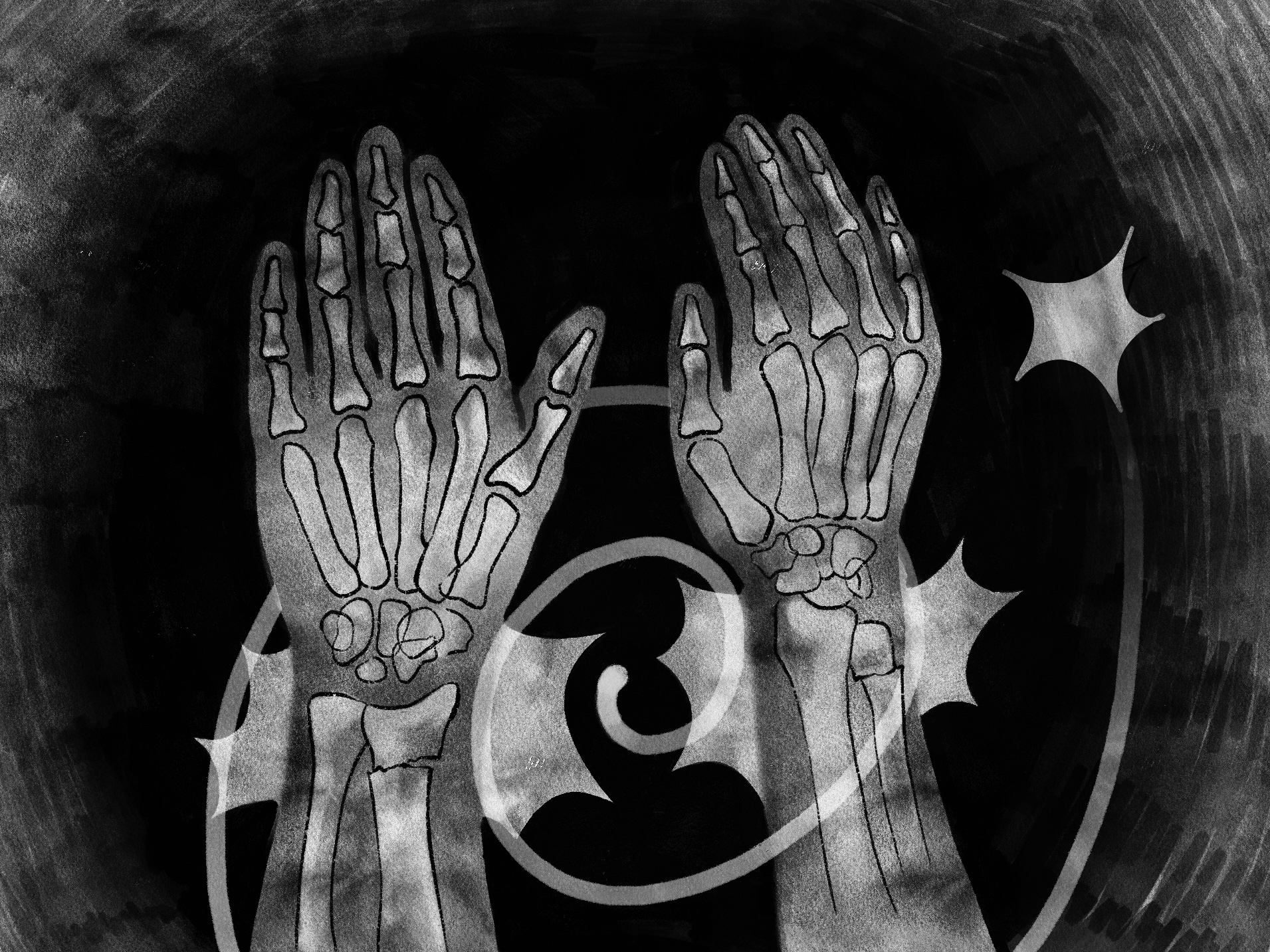
Breaking a bone can mark a majorly distinct life period. Snap anything other than a toe or finger, and you have at least a month in recovery to look forward to with many daily inconveniences along the way. The result is often a singular moment in time, easy to look back on with a kind of disbelief. However, what I find more creeping is the ensuing hard-earned recognition that physical mobility, seemingly the most fundamental of things, can quickly go away. Little could have been more instructive in this feeling than breaking both of my wrists at the same time during my junior year of high school.
It was October, a gray and rainy month in my home city of Seattle. I was halfway through an ultimate frisbee match, the scoring close in a rivalry game (look, this is a big thing in Seattle). Sprinting on the field at full speed to prevent a player on the opposing team from receiving the disc, a foot emerged from nowhere and caught mine.
Prone on the turf, I was hit with the sickening and immediate realization that my left wrist was broken. Whether or not there was a sound I can’t be sure, but my left hand was visibly pointing in a new direction. I had fallen flat on my face and instinctively held both my arms straight out in front of my body in the process. Though both wrists hurt immediately, it was only the left that seemed like a real issue. After all, two wrist breaks at once is impossible, right?
A quick yet agonizing trip to the emergency room later, the doctor suggested an X-ray of not just the left but both of my wrists. This was casually framed as a “you-might-as-well-see” type of deal, given that the odds of a double break seemed laughably low. “Whatever,” I thought. “Might as well be 100 percent sure.”
The news that came an hour later seemed so absurd that there was little to do but laugh. Even the doctor seemed stunned. But I had indeed broken both of my wrists at the same time and did so playing ultimate frisbee of all things. The left was undeniably the worse break, requiring surgery to fix, but both would be unusable for months. I was sent home with a comically giant cast on each arm.
Bringing up this story always seems to invite a million questions. Could I pick things up? What about writing and using a computer? Was it possible to open a door, drive a car, use a water bottle, cut food, on and on. The answer to almost any such question is no. If you can think of any task that would require even a modicum of wrist strength, I couldn’t perform it. Cutting a piece of meat, unscrewing a water bottle, using a door handle, lifting basically anything, all impossible.
Still, I could type on a computer with my arms locked in place (though not flip open the screen), so I could go to school. This would not have been possible without near nonstop assistance from my friends and peers with everything from pulling out a chair to removing notebooks from my backpack, proving remarkably humbling.
It’s said that we don’t know just how much we really have until we lose it. This was certainly the case for me, all of a sudden constantly reliant on others for the countless little tasks I used to perform without a second thought. Today, I feel strangely grateful for this awful experience, not only because it makes for a good story. Like the usage of a pair of wrists, every day we do a million little things that seem so natural and ordinary that we don’t appreciate them for a second. Put into perspective, the ability to merely move through the world physically unencumbered becomes a miracle.
Evan Carr is a member of the Class of 2028.
Comments
Before submitting a comment, please review our comment policy. Some key points from the policy: