
Filmmaker dream hampton joins Ayana Elizabeth Johnson for a conversation on the future of climate change and narrative
November 21, 2025
 Alexandra “Sasha” Berson
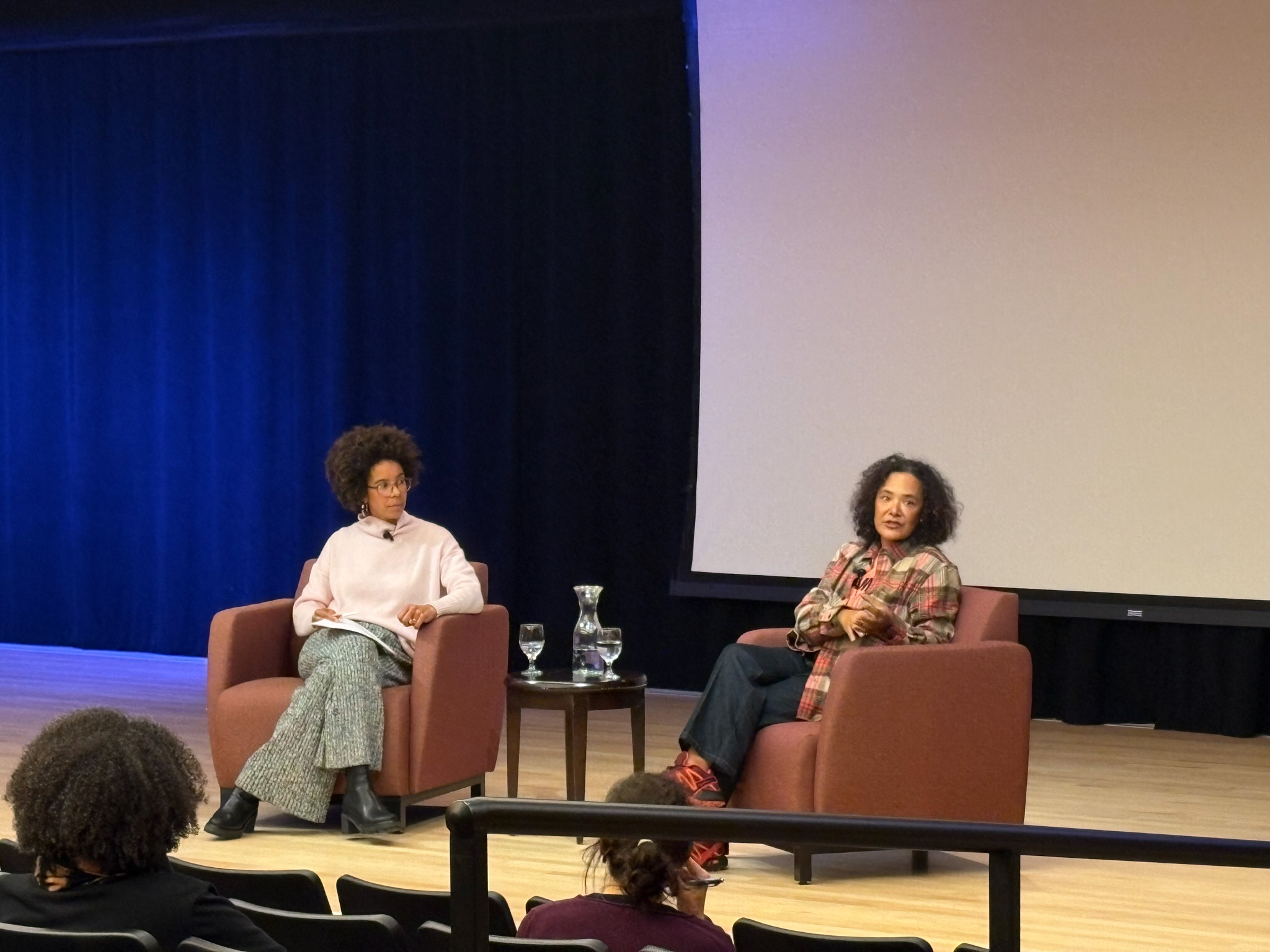
Last Friday, guests gathered in Kresge Auditorium for “Film, Culture and Climate: A Conversation with dream hampton.” Roux Distinguished Scholar Ayana Elizabeth Johnson joined hampton, the award-winning filmmaker and film producer, on stage for an evening of reflection on climate change and the narratives that shape action on the issue.
The event was part of the College’s Viewpoint Exchange series. A selection of screenings of hampton’s work framed the conversation between hampton and Johnson about storytelling in environmental activism.
Johnson shared her admiration as she introduced hampton to the audience.
“[hampton’s] artistic practice …combats erasure and exposes the entanglement of art, violence and power,” Johnson said. “In 2019, TIME Magazine caught up with what everyone near her already knew, which is that dream hampton is one of the most influential people in the world, when she was named to their TIME100 list.”
As hampton took the podium, she quickly illuminated her critical reflection on the realities of climate activism. She emphasized the need to inject new energy into climate narratives.
“The stories that we tell about climate will define our future. Facts alone won’t save us…, and fear alone [will paralyze us],” hampton said. “We need a new narrative, one that calls for courage and imagination.”
She emphasized the power of storytelling in shaping progress and presenting questions to the audience about the climate future they imagine.
“Stories don’t just reflect the world. They create it. They decide who the heroes are, what problems matter and what futures feel possible,” hampton said. “So what story is shaping your worldview? What story could you help write? What future do you want for Maine and who stands beside you in that story? How will your generation turn anxiety into action and possibility into progress?”
Produced in 2022 for The New York Times and PBS, hampton’s short film “Freshwater” was the first of her works screened to the audience. With the support of a grant from the Rockefeller Foundation, hampton embarked on the creation of the personal, poetic film about flooding in Detroit, Mich.
Using “Freshwater” as an example, hampton and Johnson explored the social, political and economic forces that entrench climate injustice throughout the United States and beyond.
“I had an opportunity to do films the way that I’m used to doing them, which was like three or four friends getting together [with] a camera,” hampton said. “Detroit had just dealt with some major flooding. There are areas that are particularly vulnerable for all kinds of complicated reasons: decades of that infrastructure of divestment, so we look at personal failures and the solutions end up being personal ones.”
For Johnson, the conversation was a persistent reminder of the new narrative challenges activists experience in the face of worsening climate change.
“It reminds me that for so long, the climate narrative was about poor, brown people somewhere else … as opposed to this coming for all of us? For decades, it was … framed as a faraway problem for other people. It wasn’t going to be something that came for us,” she said. “Now we’re having to come up with new stories to talk about.… What does home mean in the context of climate change?”
After discussing “Freshwater,” hampton shared her short film collaboration with rapper Jay-Z and artist Molly Crabapple: a 2016 opinion video titled “The War on Drugs Is an Epic Fail.” The film highlighted social and political concerns that shape much of hampton’s work.
“I was working with the Drug Policy Alliance, [which was] responsible for the state-by-state campaign to decriminalize marijuana … in Colorado. [We] learned all of the things … that legislation wasn’t getting right,” she said. “[The] people who were most affected by these laws … were barred from participating in this new multi-billion dollar [economic market].”
Once again, the construction of accessible, effective narratives through film came into focus. Another collaboration between hampton and Crabapple, featuring narration by New York Congressional representative Alexandra Ocasio-Cortez, “A Message from the Future with AOC,” focused on communicating the goals of the Green New Deal, a massive climate bill on net-zero emissions. Johnson praised hampton’s ability to present accurate information on the proposed legislation while also captivating over a million viewers on YouTube.
“The actual document itself, people either didn’t read it or believed whatever they heard about it in the news,” Johnson said. “That short film is one of very few examples of someone trying to depict a better version of their future that’s also still realistic.”
Comments
Before submitting a comment, please review our comment policy. Some key points from the policy: