
Loretta Ross speaks against cancel culture and emphasizes discussion despite differences
September 26, 2025
 Sebastian Sahlman
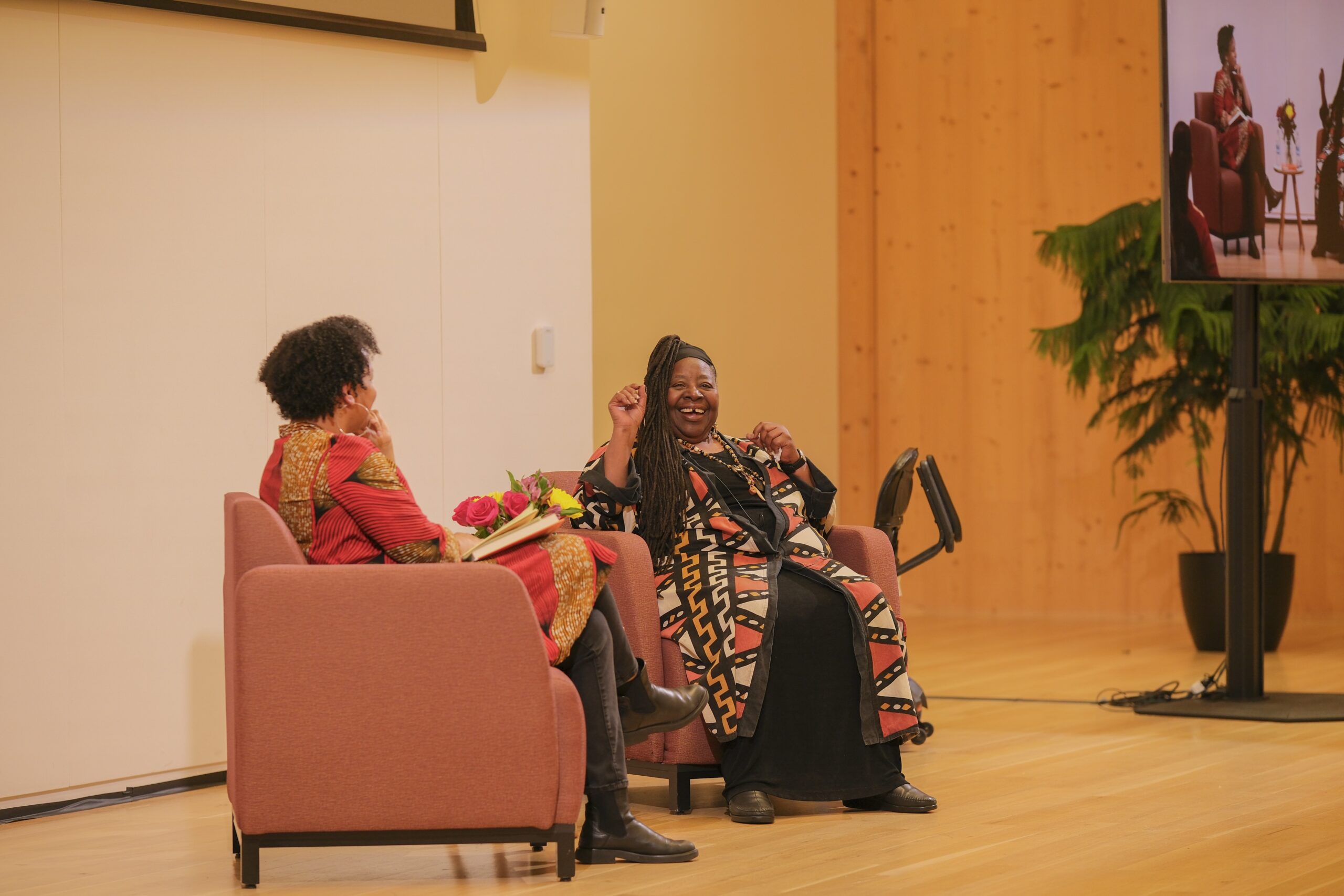
On Wednesday night, activist, scholar, and reproductive justice leader Loretta J. Ross hosted a conversation titled “The Radical Power of Calling in Those You’d Rather Cancel.” Ross spoke with Associate Professor of Africana Studies and Anthropology Bianca Williams in Mills Hall about making change alongside those you disagree with.
Ross opened the talk by describing her past work as a community organizer, noting that it often involved working with people she disagreed with.
“I started processing how many times as a community organizer I had to work with people that were my nightmares,” Ross said. “Because when you do community organizing and try to produce change, you don’t have the luxury of only working with people that agree with you, you have to convince people not to agree with you but to be with you at the right time.”
Older activists, Ross argued, taught young people how to practice radical politics responsibly. This insight sparked her interest in researching the importance of calling in instead of calling out.
Ross recounted how she discovered the concept of calling in from a young activist named Ngọc Loan Trần. Trân developed the idea after attending a racial justice conference that disintegrated because attendees began calling each other out. Trần argued that calling out wasn’t right, but he was severely attacked for even naming the call out culture he had witnessed.
Ross argued that in order to change minds, one must create a connection before beginning a conversation.
“Establish that human-to-human connection, because one of the paradoxes of humanity is that we … only believe information from people we trust. That’s why all our facts and information have never convinced a MAGA person. They don’t trust us to respect them, to have their interests at heart, and so they’re going to discount everything we have to say, because it is just human to only believe information from sources you trust,” Ross said. “So the art of calling in is focusing on building that trust first.”
Ross articulated her belief that the practice of calling in those we disagree with will be an equally important tool for the human rights movement of the 21st century as nonviolence was for the civil rights movement of the 20th century.
“Humanize our opponents instead of stereotyping and disposing of them and hating them back,” Ross said.
Calling out, Ross argued, is about publicly shaming somebody for something you think they got wrong and need to be held accountable for. Ross advocated for calling yourself in and recognizing your own biases before calling other people out.
“First, accept that every human being you deal with is as complicated as you are. So they’re going to have good stuff they’ve done and messed up stuff that they’ve done,” Ross said. “People are far more complicated than the label you want to attach to them for your convenience.”
Professors’ fear of being called out by their students, according to Ross, is another form of cancel culture that has degraded the conversations and vibrancy of the intellectual community on many campuses.
“I find that because of this call-out cancel culture, a lot of the professors in classes are afraid of their own students, for fear of being canceled [or] for fear of having negative reviews,” Ross said. “The call-out culture is contaminating the education process.”
Cancel culture, Ross argued, stems from the same impulses of white supremacy, because it occurs when people are insecure and afraid of losing power.
“I find that people insecure about their personal power are the ones that see power as a zero-sum game. If I share power, then I’m going to lose power,” Ross said. “Isn’t that the fundamental definition of white supremacy? We’re replicating white supremacist practices, using and wrapping radical language around them.”
Near the end of the discussion, Ross reminded the audience of professor and activist Toni Cade Bambara’s advice that activists need to “make the revolution irresistible” so that everyone wants to join.
“People should have fun learning about how to become a bigger, better person, and how to deal with the challenges that the world offers…. Nobody needs help feeling miserable. They can do that all by themselves,” Ross said. “So if you’re trying to attract people into learning, into the human rights movement, into growth, you have to be about positive activism.”
Attendee Jaeleen Baffour ’28 appreciated Ross’ remarks about seeing others as human beings even in a polarized climate.
“I think just trying to find the humanity in people, the humanity that has been taken away from us, that’s just ever so important now,” Baffour said.
Ray Mitchell ’28, who also attended the talk, echoed those sentiments and was impressed by how Ross has remained positive, optimistic and energized despite the obstacles she has faced.
“I’m leaving this talk feeling very empowered,” Mitchell said. “[Ross] is an amazing person and someone who has gone through so much adversity, who has still prevailed, still shown up for people in ways that I didn’t think [were] possible.”
Comments
Before submitting a comment, please review our comment policy. Some key points from the policy: