
The end of boredom
April 10, 2026
 This
piece represents the opinion of the author
.
This
piece represents the opinion of the author
.
 Evelyn Vega
“And why should we go hunting for a substitute for youthful desires, when youthful desires never fail? A substitute for distractions, when we go on enjoying all the old fooleries to the very last? What need have we of repose when our minds and bodies continue to delight in activity?”
As Aldous Huxley stared down the barrel of technological advancement and totalitarian control in 1931, he did not imagine a world of fear, but a world of comfort—one where freedom is lost because nothing feels oppressive at all.
The government of this brave new world has chosen the tenets of machinery, medicine and happiness to rule over their utopia, one freed from war and poverty and freedom itself. What could go wrong?
By regularly ingesting a fictional narcotic called soma, the citizens of the World State remain in a stasis of constant entertainment and ignorant satisfaction, unburdened by pesky things like thought, anxiety and human emotion.
If soma exists to repress human nature, and it is consumed at the first hint of boredom or discomfort, then Huxley is suggesting that boredom and discomfort must themselves be part of what it means to be human.
The World State eliminates boredom by preventing the conditions under which it would arise, raising the question: What is it about boredom that such a society fears? What, exactly, disappears when boredom does?
Boredom has afflicted humanity since the ancient Greeks. To early Christian monks, that Greek word for listlessness, acedia, signaled a lack of attentiveness to prayer and an inclination toward sin. The emerging popularity of ennui in the literature and society of the 18th century made this malaise modern and fashionable, a symptom of the idleness of wealth. With the Industrial Revolution, boredom was extended to the masses—and so the task of distracting them began.
As children, boredom was a major concern, one that demanded rectification as soon as possible. The relief offered through toys, books or, God forbid, an iPad gave only temporary satisfaction. To ask a toddler to sit with their boredom brings tears, temper tantrums and belligerent protestation. The feeling demands novel engagement, a feat which they cannot yet produce for themselves.
It seems that, from the first moment we are sentient enough to be confronted with boredom, we never stop running from it. As we get older, we no longer rely on our parents for distractions or entertainment. Both are seemingly everywhere. The magazine in the waiting room, the screen in your pocket, the 24-hour news cycle, the friend you brought to the library who was meant to help you focus. Boredom has seemingly met its match in the 21st century. The soma of Aldous Huxley’s “Brave New World” has been realized.
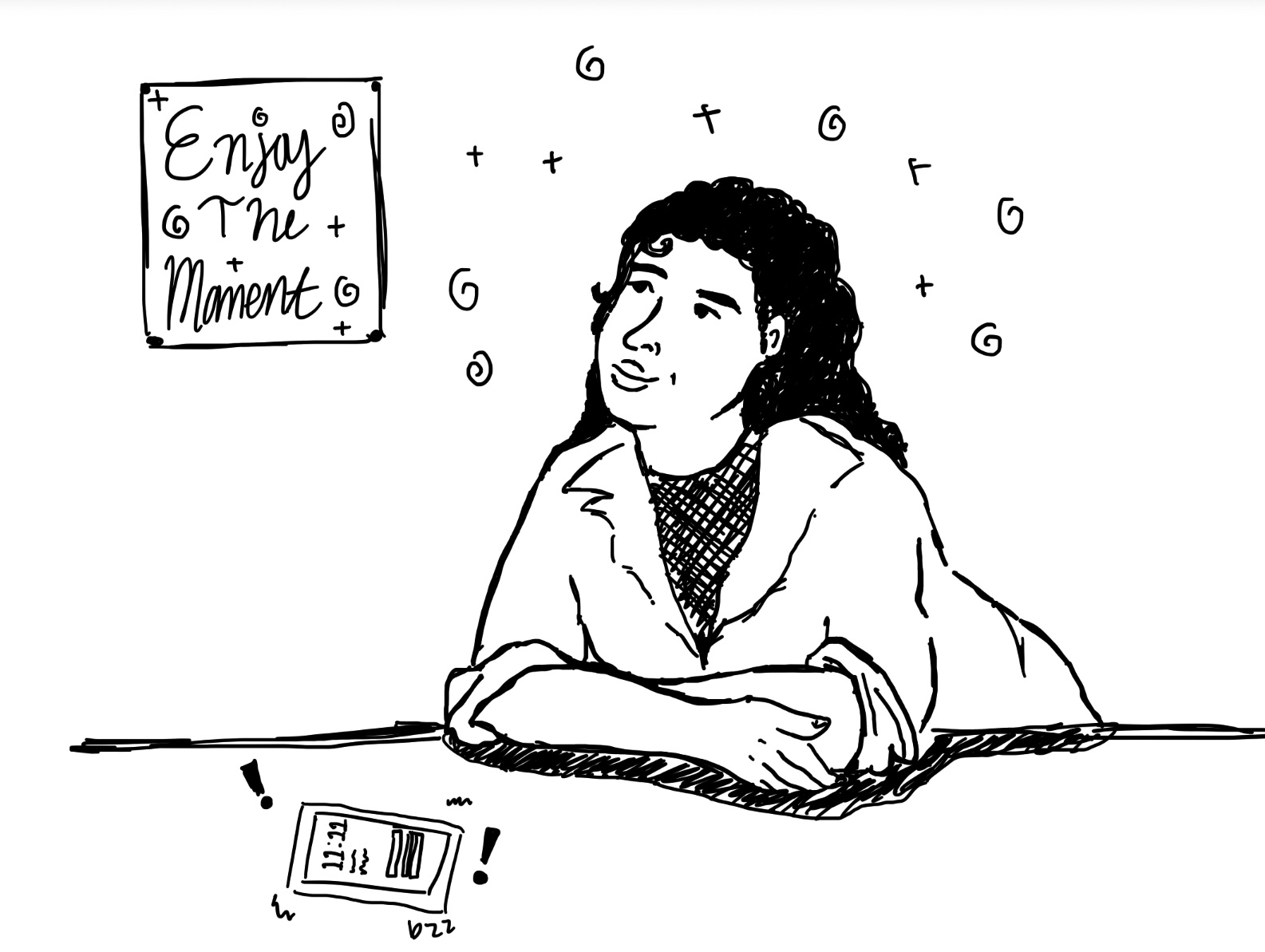
And yet, we are still not satisfied. Like children, we grow tired of the myriad solutions offered to us and demand novelty. The question, then, is whether we proceed with the tantrum or sit with ourselves for just a moment longer.
Many great writers have needed exactly this—sitting with themselves—to work at all. George Orwell spent 18 months on a remote Scottish island composing “1984.” Maya Angelou isolated herself in hotel rooms where she’d request that all decoration be removed from the walls. Mark Twain composed “Tom Sawyer” and “Huckleberry Finn” from an octagonal hut in upstate New York.
To Nietzsche, boredom is a necessary precursor to great creativity. To Walter Benjamin, it is “the dream bird that hatches the egg of experience.”
So what is it about boredom that ostensibly inspires genius (or at least innovation) in those who pursue it?
Perhaps the very same thing that makes it so deeply uncomfortable. It leaves us alone.
What boredom makes possible is an encounter with the self. We confront what we think, what we feel, what we know and what we want—things that Huxley’s World State could not afford its citizens to begin to consider, things that inspire great art and invention and propel humanity forward.
On a smaller scale, we learn things about ourselves. We discover what we find engaging enough to keep boredom at bay. One of my favorite childhood babysitters used to set aside an hour in the afternoon for my little brother and I to spend alone in our rooms, without the amusements of screens or each other. At five or so years old, this was excruciating. At 19, I remember this as the time I first began to love reading, where I found I could regale myself with stories about my dolls and the potentiality of a monster under my bed.
I’m not suggesting that boredom is the only means of self-discovery, or that writing a great novel requires retreating from society. Only that spending more time with ourselves is a condition not in need of a cure.
Comments
Before submitting a comment, please review our comment policy. Some key points from the policy: